Customer feedback management software: Boost Growth Quickly
Explore how customer feedback management software turns insights into action, helping you improve products, service, and customer experience.
Customer feedback management software is your company's mission control for understanding what your customers are really thinking. It’s a dedicated platform built to collect, organize, analyze, and act on customer opinions from just about anywhere. Think of it as taking the old-school suggestion box and giving it a massive, intelligent upgrade for the digital age.
What Exactly Is Feedback Management Software?
Imagine trying to piece together a massive puzzle without ever seeing the picture on the box. You've got all the pieces scattered around—support tickets here, social media comments there, a pile of survey responses, and a few online reviews. You know they're related, but you have no idea what the final picture is supposed to look like. That's what managing customer feedback feels like without the right system.
Customer feedback management software gives you the box art. It pulls all those scattered pieces together into one place, creating a single, clear view of the entire customer experience. This lets you stop just collecting comments and start understanding the why behind what people are saying and doing. It's about finally connecting the dots between a bad review and a hidden product bug, or seeing that five different feature requests are all pointing toward your next big revenue opportunity.
From Data Collection to Actionable Insights
The real magic of this software is how it turns a flood of raw, messy opinions into structured intelligence you can actually use. This is so much more than a simple survey tool. We're talking about serious analytics power under the hood.
Here's a look at what these platforms are built to do:
- Centralize Feedback: They pull in data from emails, social media, review sites, and in-app surveys, putting it all on a single dashboard.
- Analyze Sentiment: Using smart technology, they can automatically tell if feedback is positive, negative, or neutral, giving you a quick read on the overall customer mood.
- Identify Trends: These tools are fantastic at spotting recurring problems or popular ideas that would otherwise get lost in the noise.
- Automate Workflows: You can set up rules to automatically send certain types of feedback to the right teams—like sending bug reports straight to engineering—so nothing falls through the cracks.
This organized approach is a game-changer for any company serious about putting customers first. Instead of guessing, your teams get to make decisions based on what customers are actually telling you they need. If you're ready to dig deeper, exploring different methods for customer feedback analysis is a great next step.
The table below breaks down these core functions and why they matter for your business.
Core Functions of Feedback Management Software
| Function | Description | Business Impact |
|---|---|---|
| Data Aggregation | Gathers feedback from multiple channels (surveys, social media, reviews) into one central repository. | Provides a 360-degree view of the customer experience, eliminating data silos. |
| Sentiment Analysis | Uses AI and NLP to automatically classify feedback as positive, negative, or neutral. | Offers a real-time pulse on customer sentiment, helping to prioritize pressing issues. |
| Trend Identification | Analyzes text to pinpoint recurring themes, keywords, and emerging customer issues or requests. | Enables proactive problem-solving and identifies opportunities for product improvement. |
| Workflow Automation | Routes feedback to the appropriate teams and triggers alerts or tasks based on predefined rules. | Speeds up response times, improves internal accountability, and closes the feedback loop faster. |
| Reporting & Dashboards | Visualizes feedback data through customizable dashboards, charts, and reports. | Helps teams track key metrics (like NPS or CSAT) and share insights across the organization. |
Ultimately, a solid feedback platform turns a chaotic stream of customer voices into a strategic asset.
The Growing Importance of Feedback Systems
It’s no surprise that the demand for these tools is exploding. Companies are finally connecting the dots between happy customers and a healthy bottom line. The global market for this software was valued at around 14.32 billion and is expected to more than double, hitting a projected ****31.5 billion by 2029. That kind of growth signals a huge shift in how businesses operate—listening to customers in real-time is no longer a "nice-to-have," it's essential for survival.
A critical piece of this puzzle is having a solid complaint management system. This provides a structured process for handling negative feedback, which is crucial for turning unhappy customers into loyal advocates. By systematically resolving complaints, you don't just fix one person's problem; you gather the data needed to prevent hundreds more from happening in the future.
A Look Under the Hood: Core Features of Modern Feedback Tools
To really get what customer feedback management software is all about, you have to look past the dashboard. These platforms aren't just glorified suggestion boxes. They're powerful engines built to gather, make sense of, and, most importantly, act on the voice of your customer.
The real power comes from how the different features work together. Think of it like a three-stage process: first, you gather the raw feedback; second, you analyze it to find the gold; and third, you use those insights to take action.
Stage 1: Feedback Collection
Before you can do anything else, you need to collect feedback. The first job of any platform is to cast a wide net, meeting customers wherever they are. The days of relying solely on email surveys are long gone. A modern approach means capturing input from every possible touchpoint to get a full, unbiased picture.
Here’s what that typically looks like:
- Multi-Channel Surveys: This is your bread and butter. You can send out targeted surveys like Net Promoter Score (NPS), Customer Satisfaction (CSAT), and Customer Effort Score (CES) through email, SMS, or even a pop-up in your app.
- In-App Widgets: Small, unobtrusive widgets and pop-ups are perfect for catching contextual feedback right when a user is interacting with your website or product.
- Review Site Integration: Why not bring the outside in? These tools can automatically pull reviews from public sites like G2, Capterra, or Google Reviews, giving you a central hub for your brand's public reputation.
- Social Media Listening: A lot of feedback is unsolicited and brutally honest. These platforms can monitor mentions and comments on sites like Twitter and Facebook to capture that raw, candid input.
Getting this first step right is everything. If you're not pulling in a steady stream of high-quality data from different places, your insights will be skewed from the start.
Stage 2: Data Analysis
Once the feedback starts pouring in, the real work begins. A mountain of raw comments, ratings, and scores is just noise. This is where the "management" part of customer feedback management software really comes into play, using smart tech to find the signal in that noise.
Key analysis features include:
- AI-Powered Sentiment Analysis: Smart algorithms automatically read through text-based feedback to tag it as positive, negative, or neutral. This gives you a quick, at-a-glance health check on how your customers are feeling.
- Keyword and Topic Tagging: The software is smart enough to spot recurring themes. It can automatically tag feedback about "slow loading times" or a "confusing checkout process," showing you exactly what’s trending.
- Trend Identification: Dashboards bring the data to life, showing you how sentiment and specific topics change over time. This is how you can measure the impact of a new feature launch or a change in your support process. Exploring different customer feedback analysis tools can show you just how deep this analysis can go.
These features are what transform a chaotic flood of opinions into a prioritized to-do list for your team.
Stage 3: Closing the Loop
Here’s a hard truth: collecting and analyzing feedback is a complete waste of time if you don't do anything with it. The final, and arguably most important, function of these platforms is to help you take action and communicate back to your customers. This is called "closing the loop," and it’s how you show people you were actually listening.
Action-oriented features make this happen:
- Automated Workflows: You can set up "if-then" rules to get feedback to the right people instantly. For example, any comment containing the word "bug" could automatically create a ticket in Jira for your engineering team.
- Ticketing and CRM Integrations: These tools play nice with others. They can connect directly with platforms like Zendesk or Salesforce, linking a piece of feedback directly to a customer's profile or an existing support ticket.
- Personalized Follow-Ups: This is a game-changer. You can set up automated emails to thank customers for their ideas or, even better, to let them know when a feature they asked for has gone live.
This final stage is what separates a decent feedback program from a truly great one. It turns customer input into a genuine driver for growth and proves to your customers that their voice actually matters. You can check out the core features of modern feedback tools to see how different platforms package these three essential stages.
How Feedback Software Drives Business Growth
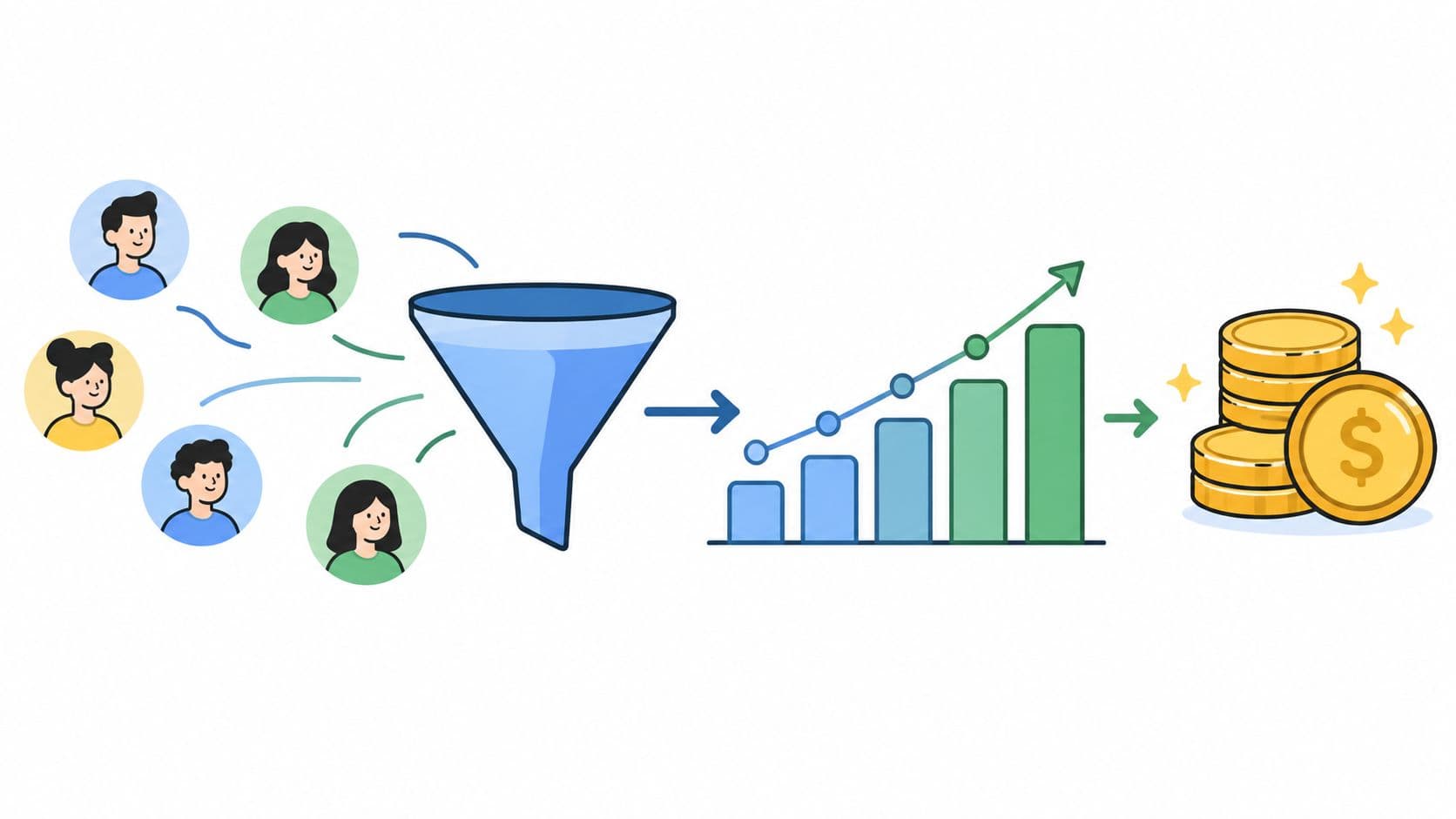
Bringing in customer feedback management software is about so much more than just keeping a log of complaints or watching survey scores tick up. Think of it as a strategic investment that plugs the customer's voice directly into your business results, turning abstract opinions into real, measurable ROI. This is where a feedback system stops being a passive listening tool and becomes a powerful engine for growth.
When you centralize all that feedback, you’re essentially creating a direct hotline from your users to your product roadmap. Instead of guessing what to build next or relying on internal assumptions, your development priorities get shaped by what customers have explicitly told you they need. This focus on what people actually want dramatically increases the odds of product success and enthusiastic user adoption.
Enhance Product Development with Validated Ideas
One of the first places you'll see a major impact is in product innovation. Good feedback software sifts through all the noise, automatically bubbling up the feature requests and improvement ideas that multiple customers are clamoring for. This gives your teams the confidence to decide what to work on next.
Picture a SaaS company that keeps hearing from users about its clunky reporting feature. The software spots this as a recurring pain point, tagging and grouping all the related feedback. Armed with clear data, the product team can prioritize a redesign, knowing for a fact that it will solve a genuine problem for a huge chunk of their user base.
This data-first approach takes the guesswork out of product development, minimizing the risk of sinking time and money into features no one asked for. It ensures every update is rooted in real user demand, which naturally leads to higher engagement and satisfaction with every release.
Directly Reduce Customer Churn
A high churn rate can be a silent killer for a business. The good news is that the warning signs are almost always hiding in your customer feedback. Features like negative sentiment analysis act as an early-warning system, flagging at-risk customers long before they hit the "cancel" button.
For instance, a subscription box service could set up alerts for any feedback mentioning "damaged items" or "late delivery." The moment these keywords pop up, an automated workflow can notify the customer success team. They can immediately reach out with a sincere apology, send a replacement, or offer a credit. This simple, proactive step can turn a frustrating experience into a showcase of incredible customer service, saving a customer you might have otherwise lost for good.
Improve Operational Efficiency and Save Resources
Automation is another game-changer that fuels serious growth. By automatically sending feedback to the right people—bug reports to engineering, billing questions to finance—you cut out all the manual sorting and dramatically slash response times. This newfound efficiency frees up your team from administrative busywork so they can focus on bigger, more strategic initiatives.
The demand for these efficiency gains is driving massive market growth. The global customer feedback software market, valued at 1.78 billion, is expected to surge to ****5.42 billion by 2033. This boom shows just how much businesses are banking on customer insights to innovate and create more personal experiences. You can dive deeper into these projections by reading the full research on customer feedback software trends.
Think about a large hotel chain. It can use location-based feedback to instantly route a comment about a hotel's cleanliness straight to that specific manager's inbox. The manager can then tackle the issue on the spot, improve service quality, and ultimately boost loyalty and repeat bookings. This kind of streamlined process doesn't just solve problems faster; it empowers local teams to own the customer experience.
Seeing Feedback Management Software in Action
It’s one thing to talk about the benefits of feedback software in theory, but where the rubber really meets the road is in how it solves real-world business problems. This isn't just about pretty dashboards and charts; it's about fixing the tangible issues that make or break customer loyalty and, ultimately, your bottom line. Companies across every industry are figuring out how to turn customer opinions into a genuine strategic advantage.
Let's dive into a few scenarios to see how real businesses are using this feedback to make changes that actually matter.
The Retailer Perfecting Its Omnichannel Experience
A national retail brand was dealing with a classic modern-day headache. Their online shoppers raved about the slick, easy-to-use website, but their in-store customers were constantly complaining about painfully long checkout lines and messy, disorganized displays. The feedback was pouring in from all over—Google reviews, social media messages, even QR code surveys at the register—but the marketing and operations teams were in their own separate worlds, so no one was connecting the dots.
Once they brought in a centralized feedback platform, all those scattered data streams started telling one cohesive story. Suddenly, the patterns were impossible to ignore. The software’s keyword and sentiment analysis automatically tagged all the comments flooding in about "checkout," "store cleanliness," and "website experience."
The results were immediate and incredibly practical:
- Smarter Operations: The data clearly showed that the worst checkout lines were happening between 4 PM and 6 PM on weekdays. Armed with that knowledge, they adjusted staffing schedules to bring in more cashiers during that peak rush, cutting average wait times by a massive 40%.
- Cleaner Stores: Complaints about messy shelves were automatically routed to regional store managers. This prompted them to roll out new daily tidiness checklists for their teams.
- Bridging the Online-Offline Gap: They also discovered that their popular "buy online, pickup in-store" service was a major point of confusion for customers. The platform flagged this, leading them to create clear in-store signage and send automated instructional emails to smooth out the entire pickup process.
The Healthcare Provider Boosting Patient Satisfaction
A regional healthcare network was wrestling with inconsistent patient satisfaction scores. While the quality of their medical care was top-notch, post-visit surveys were filled with comments about long wait times, baffling billing statements, and feeling rushed by administrative staff. These seemingly small friction points were chipping away at their reputation.
They started using a feedback management system to send automated surveys via SMS and email right after an appointment. The real game-changer was being able to filter all the responses by clinic location, department, or even by a specific doctor. This granular view let them pinpoint exact problems instead of just guessing based on network-wide averages.
Here are some of the key changes they made:
- Cutting Down Wait Times: One clinic consistently got hammered with negative feedback about waiting. The data revealed a major bottleneck at the check-in desk. After streamlining their intake process, they managed to shave an average of 15 minutes off patient wait times.
- Clearer Communication: Sentiment analysis flagged "billing confusion" as a recurring theme. The finance department took this to heart and redesigned their statements with simpler language and a direct helpline number, which led to a 25% drop in billing-related support calls.
The B2B Tech Firm Slashing Support Tickets
A fast-growing B2B SaaS company had a powerful product but was drowning in support tickets from new users. Their onboarding was a generic, one-size-fits-all video tutorial, and it just wasn't cutting it. A quick look at their in-app surveys and support ticket logs showed that a whopping 60% of new tickets were about the initial setup and configuration.
Using customer feedback management software, they started feeding user feedback directly into their product development cycle. The platform helped them identify the most common sticking points users hit during their first week. For product teams, learning how to effectively manage feature requests is a critical skill that turns this raw feedback into a product roadmap.
The company used these insights to completely rethink its onboarding:
- Segmented Onboarding: They built different onboarding paths for administrators, analysts, and everyday users, catering to the unique goals of each role.
- Contextual Help: They introduced in-app pop-ups triggered by user behavior, offering proactive tips right when someone was most likely to get stuck.
- Closing the Loop: When they later released a feature that simplified the setup process, they automatically notified all the users who had complained about it in the first place.
This customer-focused strategy resulted in a 30% reduction in support tickets from new users within three months and a noticeable jump in how quickly new teams adopted the software. These examples make it clear: with the right system in place, feedback is more than just data—it’s a roadmap for a better business.
How to Choose the Right Feedback Management Software
Picking the right customer feedback management software can feel overwhelming. You're faced with a mountain of options, and every single one promises to unlock game-changing insights. It's easy to get lost in a sea of feature lists and slick marketing.
The trick is to step back from the sales pitches. Think of it less like buying software and more like hiring a key employee. You wouldn't hire the candidate with the flashiest resume without making sure they fit your team's culture, have the specific skills you need, and can grow with the company. The same goes for your feedback tool—it needs to plug into your existing workflow, empower your team, and be ready to grow with you.
Prioritize Seamless Integrations
Your feedback platform can't be an island. For it to actually deliver value, it has to talk to the other tools your teams live in every day. If it doesn't, you're just creating another data silo and forcing people to manually copy-paste information, which is a recipe for errors and wasted time.
Make sure any tool you consider can connect effortlessly with your core systems:
- Customer Relationship Management (CRM): Imagine your sales rep pulling up a Salesforce or HubSpot record and immediately seeing a customer's recent bug report or feature request. That's a game-changer for a renewal conversation.
- Support and Ticketing Systems: When you link your feedback tool to something like Zendesk or Intercom, you attach real customer feedback directly to support tickets. This gives your agents critical context and helps everyone spot the root cause of recurring problems.
- Project Management Tools: This is where you "close the loop." An integration with Jira or Asana lets your team turn a piece of feedback into a trackable development task with a single click. No more suggestions getting lost in a spreadsheet.
When everything is connected, customer insights flow freely across the company, breaking down the walls between departments and making the customer's voice a natural part of every decision.
Evaluate Scalability and Future Needs
The tool that’s perfect for your first 100 customers might completely fall apart when you hit 10,000. Scalability isn’t just about handling more data without slowing down; it's also about having access to more advanced features as your business and your feedback strategy mature.
A scalable platform grows with you, preventing the costly and disruptive process of migrating to a new system down the road. It’s an investment in your future success.
There's a reason the global market for this software is projected to hit $17.3 billion by 2028. Businesses are realizing that listening to customers isn't just a "nice-to-have"—it's a core operational strategy. Choosing a platform that can keep up is non-negotiable. You can explore more market growth projections to see just how fast this space is moving.
Choosing a platform that scales is crucial, but what's essential for a small business can be different from what a large enterprise needs.
Feature Comparison for Different Business Sizes
Here's a quick breakdown of what to prioritize based on your company's size.
| Feature Category | Essential for SMBs | Critical for Large Enterprises |
|---|---|---|
| Data Collection | Simple survey tools (NPS, CSAT), email feedback forms, website widgets. | Omnichannel collection (social, SMS, in-app), voice/video feedback, review site monitoring. |
| Integration | Core integrations with CRM (e.g., HubSpot) and support (e.g., Zendesk). | Deep, bi-directional API access, custom data warehouse connections, SSO/SAML support. |
| Analytics | Basic sentiment analysis, keyword tagging, simple dashboards. | AI-powered trend prediction, root cause analysis, journey-based analytics, custom reporting. |
| Workflow Automation | Automated survey triggers, basic alerts for negative feedback. | Complex rule-based workflows, automated ticket creation, role-based access controls. |
| Collaboration | Shared inboxes, ability to assign feedback to team members. | Team-specific dashboards, internal commenting and tagging, full audit trails. |
While a small business can thrive with a solid set of core features, enterprises need the power and flexibility to manage feedback across multiple products, regions, and teams.
Ensure User-Friendliness and Strong Analytics
Even the most powerful tool is worthless if your team hates using it. A clunky interface or a steep learning curve means low adoption, plain and simple. The software should feel intuitive, whether you're a support agent tagging a ticket or a product manager building a report.
Beyond ease of use, you need real analytical muscle. Just collecting feedback isn't enough. The goal is to understand the why behind the what. Look for a platform that can dig deep with capabilities like:
- Advanced Sentiment Analysis: Go beyond just "positive" or "negative." You need to understand the intensity and nuance of customer emotions.
- Trend and Pattern Recognition: The software should automatically surface recurring themes from thousands of comments, saving your team from hours of manual work.
- Root Cause Analysis: A great tool helps you connect the dots between a complaint and its impact on bigger metrics, like customer churn or lifetime value.
When you pair a simple, clean design with robust analytics, you give your team the power to stop guessing and start making confident, data-driven decisions that push the business forward.
Integrating Feedback Software into Your Daily Workflow
Getting your hands on a powerful customer feedback management software platform is a great first move, but it's only half the battle. The real magic happens when you weave it into the fabric of your company's daily life, making it less of a tool and more of a habit. This requires a solid plan to ensure customer insights don't just sit in a dashboard but actually get put to work.
The end goal here is to create a closed-loop feedback process. Think of it as a continuous conversation with your customers. They share an idea or a problem, you listen, you take action, and—crucially—you follow up to let them know you heard them. This system makes sure every bit of feedback lands in the right hands and leads to real change.
Without clear ownership, feedback can quickly become "everyone's problem," which means it's actually no one's responsibility. The very first step is to assign a champion or a small team to own the entire feedback process. This simple act builds accountability and ensures insights become action items instead of getting lost in a digital suggestion box.
This process flow shows how you can systematically bring feedback into your organization, scale your efforts, and analyze what you've learned.
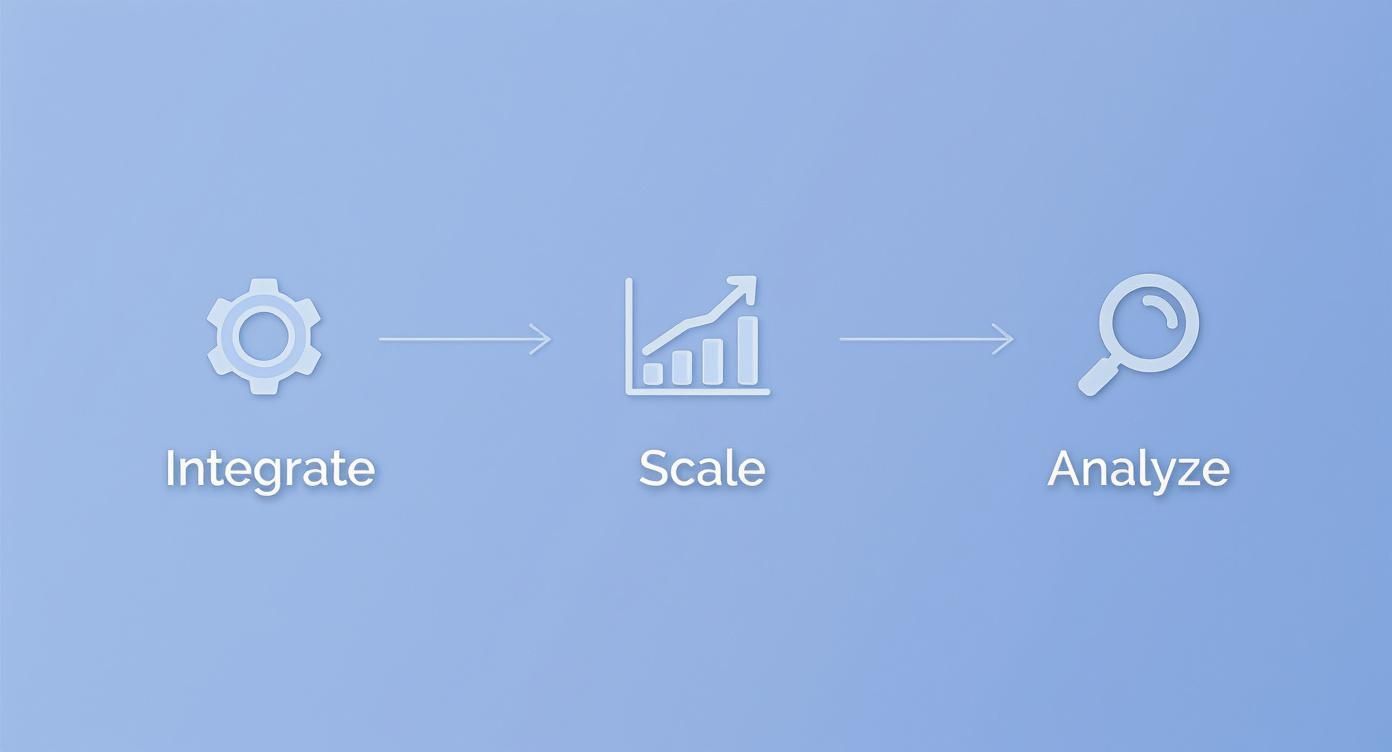
As the visual shows, successful integration isn’t a one-and-done setup. It’s a cycle of implementing, growing, and constantly analyzing what you’re hearing.
Establishing Clear Workflows
Once you know who's in charge, it's time to build the operational plumbing. This means setting up smart automations and clear rules for how incoming feedback gets handled. You want to create a system that runs smoothly in the background, so no customer comment ever falls through the cracks.
The best workflows are built on simple, clear rules. For instance, you could set a rule that any comment tagged with "bug" automatically creates a high-priority ticket in a tool like Jira for the engineering team. This kind of immediate routing cuts out manual sorting, slashes resolution times, and can turn a customer's frustrating moment into a surprisingly positive one.
A well-designed workflow transforms feedback from raw data into a prioritized action plan. It connects the customer's problem directly to the team member who can solve it, making responsiveness your default setting.
Training and Empowering Your Teams
Your teams are the engine that powers your entire feedback program. Just giving them a login to the software isn't going to cut it; they need to understand why it matters and feel comfortable using it. Good training is the key to getting everyone on board.
Try focusing on role-specific training to show each department exactly what's in it for them:
- Support Teams: Teach them how to tag feedback to spot recurring issues, which can help lower their overall ticket volume over time.
- Product Managers: Show them how to dig into the analytics to validate new feature ideas with actual customer data, helping them build a roadmap people will love.
- Marketing Teams: Train them to use sentiment analysis to see how people are reacting to a new campaign or message.
At the end of the day, integrating customer feedback management software is all about building a customer-first mindset throughout your entire company. When every single person understands their part in the feedback loop, the customer's voice becomes a central character in every decision you make, fueling constant improvement and long-term growth.
Got Questions? We've Got Answers
Stepping into the world of customer feedback management tools can feel a bit overwhelming. You've got questions, and you need straight answers, whether you're just starting out or looking to upgrade your current setup. Let's tackle some of the most common questions that pop up.
We’ll get into the practical stuff—what these platforms cost, what they can actually do, and how long it takes to get one humming along with your business.
How Much Does This Software Typically Cost?
The price tag on customer feedback software can swing wildly depending on what you need. For a small business just looking to dip a toe in the water, basic tools can start as low as **50 to **100 per month. Think simple surveys and some light analytics.
But if you're a larger company that needs the whole nine yards—AI sentiment analysis, deep integrations with other tools, and the power to handle tons of feedback—you could be looking at several thousand dollars a month. Most companies offer different pricing tiers, so your best bet is to figure out your non-negotiable features first before you start shopping around.
Can It Collect Feedback from Social Media?
Absolutely, and this is where things get really interesting. Many of today's top platforms are great at social media listening. They can plug right into places like Twitter, Facebook, and major review sites, automatically grabbing any mentions, comments, or posts about your brand.
This is a game-changer because it lets you capture feedback that's completely unfiltered and spontaneous. You get to see what people are saying out in the wild, not just when you ask them. It gives you a much richer, more honest view of what customers really think.
Integrating social listening turns your feedback strategy from a passive "wait and see" approach to active, real-time monitoring. You’re capturing the raw, candid opinions that often hold the most valuable truths.
How Long Does Implementation Take?
The setup time really comes down to two things: the complexity of the tool and the size of your operation. A straightforward survey tool that stands on its own? You could probably have that up and running in an afternoon.
On the other hand, if you're bringing in a full-blown customer feedback management software platform that needs to talk to your CRM, helpdesk, and other systems, you're looking at a more involved process. Plan for several weeks to get everything configured, properly tested, and rolled out to your team. A lot of companies find success by starting small—maybe with just one or two feedback channels—and then expanding once everything is running smoothly.
Ready to turn customer feedback into your biggest growth driver? SigOS uses AI to analyze support tickets, sales calls, and usage data, identifying the key issues and opportunities that impact your revenue. Prioritize your product roadmap with confidence.
Keep Reading
More insights from our blog
Ready to find your hidden revenue leaks?
Start analyzing your customer feedback and discover insights that drive revenue.
Start Free Trial →