10 Product Strategy Examples to Inspire Your 2025 Roadmap
Explore 10 powerful product strategy examples, from Freemium to ABM. Get deep analysis, actionable insights, and AI-driven tips to build your next winner.
A brilliant product idea is just a starting point. The real differentiator between a market leader and a forgotten startup is a deliberate, well-executed product strategy. But what does a winning strategy actually look like in practice? It’s more than just a roadmap; it's the foundational logic that connects your product decisions to specific market outcomes and revenue goals.
We're moving beyond abstract theories to dissect 10 real-world product strategy examples that have powered some of the world's most successful companies. From Spotify's Freemium model to Salesforce's Platform/Ecosystem dominance, we will break down the 'what,' 'why,' and 'how' behind each approach, offering a strategic blueprint you can adapt for your own products.
A key theme we'll explore is how modern teams leverage AI-driven insights to identify customer needs, quantify feature impact, and make data-backed strategic bets. This analysis will equip you with actionable frameworks to not just compete, but to define and dominate your market category. The right strategy can dictate everything from pricing to feature prioritization. For instance, understanding how different revenue models can shape your product's success is critical; to dive deeper into this specific area, you can explore various mobile app monetization strategies.
This article provides a deep dive into the strategic mechanics behind market-defining products, giving you replicable methods and tactical insights. You’ll learn how these companies aligned their product development, marketing, and sales efforts around a single, cohesive strategy to achieve remarkable growth and user loyalty. Let's get into the examples.
1. Freemium Model: The Art of the Free-to-Paid Funnel
The Freemium model is a powerful acquisition-focused product strategy that offers a basic version of a product for free, with the option to upgrade to a premium, paid version for advanced features, increased capacity, or an ad-free experience. The free tier acts as a powerful marketing engine, lowering the barrier to entry and attracting a wide user base. The strategic challenge is to balance the value in the free product to ensure it's useful enough for adoption and viral growth, while creating compelling reasons for users to convert to paid customers.
This approach excels in markets with a large potential user base where the marginal cost of serving a new free user is low. Companies like Spotify, Slack, and Canva have mastered this model, leveraging their free offerings to achieve massive scale before monetizing a smaller segment of their most engaged users.
Strategic Analysis
The core of a successful freemium strategy lies in defining the "value line" between the free and paid tiers. This isn't just about holding back features; it's about understanding user journey milestones. Early-stage users need enough value to get hooked, while power users or businesses require advanced functionality that justifies the cost.
This is a key differentiator from a free trial, which is time-limited. Freemium allows users to stay on the free plan indefinitely, making it a less aggressive but often more sustainable growth loop.
Actionable Takeaways
- Define Clear Upgrade Triggers: Identify the natural points in the user journey where the limitations of the free plan become a bottleneck. This could be based on usage (e.g., storage limits on Dropbox), features (e.g., advanced analytics), or collaboration needs (e.g., team features in Slack).
- Leverage AI for Conversion Insights: Use AI-powered analytics to identify user behaviors that correlate with a higher likelihood to upgrade. This allows for targeted in-app messaging, personalized upgrade offers, and proactive outreach to high-potential free users.
- Continuously Optimize the Value Proposition: The balance between free and paid is not static. Regularly analyze user data and feedback to refine what features are in which tier, ensuring the free product remains competitive and the paid upgrade remains compelling. This is one of the most vital product strategy examples to monitor for long-term success.
2. Platform/Ecosystem Strategy: Building a Moat Through Network Effects
A platform or ecosystem strategy involves creating an interconnected web of products, services, and third-party integrations that work together seamlessly. The core product acts as a central hub, and its value increases exponentially as more users, developers, and partners join the ecosystem. This creates powerful network effects, increasing customer stickiness and building a formidable competitive moat.
This strategy is a cornerstone for tech giants like Apple (with its tightly integrated hardware and software), Microsoft (with its Microsoft 365 suite), and Salesforce (with its AppExchange). They don't just sell a single product; they sell an entire, self-reinforcing system where each component makes the others more valuable, making it difficult for customers to leave.
Strategic Analysis
The essence of a successful ecosystem strategy is to shift the competitive battleground from individual features to the overall value of the network. The platform owner provides the core infrastructure, governance, and tools, while third-party developers and partners build specialized solutions on top of it, creating a rich and diverse offering that a single company could never build alone.
This approach creates immense leverage, as the growth of the ecosystem is driven by the collective efforts of all its participants, not just the platform owner.
Actionable Takeaways
- Design for Integration with Open APIs: Provide well-documented, stable, and powerful Application Programming Interfaces (APIs). This is the foundation that enables third-party developers to build valuable integrations and extend the platform's capabilities.
- Cultivate a Thriving Developer Community: Invest in resources like comprehensive documentation, software development kits (SDKs), forums, and dedicated support for developers. A healthy community accelerates innovation and expands the ecosystem far beyond your own company's capacity.
- Establish a Clear Value Exchange: Create clear financial incentives for partners and developers to build on your platform. This could be through revenue sharing, a marketplace model (like Salesforce AppExchange), or co-marketing opportunities that help them reach your user base. This is a critical factor in scaling product strategy examples of this type.
3. Subscription Model: Building Predictable, Recurring Revenue
The subscription model is a revenue-focused product strategy where customers pay a recurring fee, typically monthly or annually, for continuous access to a product or service. This approach shifts the focus from one-time transactions to long-term customer relationships, creating predictable revenue streams and fostering customer loyalty. The core challenge is to consistently deliver value that justifies the ongoing cost, keeping churn low and engagement high.
This strategy is the backbone of the Software-as-a-Service (SaaS) industry and has been successfully adopted by content providers and e-commerce companies. Leaders like Netflix, Salesforce, and Adobe Creative Cloud have demonstrated its power, building massive, sustainable businesses by turning products into ongoing services.
Strategic Analysis
The foundation of a successful subscription strategy is a relentless focus on retention and customer lifetime value. Unlike a one-time sale, the initial purchase is just the beginning of the customer journey. The product must solve an ongoing problem or fulfill a continuous need, making itself indispensable over time. This requires a commitment to regular updates, new features, and excellent customer support to prevent churn.
This dynamic makes understanding and improving Customer Lifetime Value (CLV) a top priority for any subscription business. Every decision, from onboarding to feature releases, must be evaluated based on its impact on long-term customer relationships and profitability.
Actionable Takeaways
- Optimize Onboarding for Early Value: The first few interactions are critical. Design an onboarding process that quickly guides new users to their "aha!" moment, demonstrating the product's core value immediately to reduce first-month churn.
- Use AI for Churn Prediction: Implement AI models to analyze user behavior, support tickets, and usage patterns to identify at-risk customers. This allows for proactive interventions, such as targeted educational content or special offers, before they decide to cancel.
- Create Tiered and Flexible Plans: Offer multiple subscription tiers (e.g., Basic, Pro, Enterprise) and flexible billing cycles (monthly vs. annual discounts). This caters to different user segments and encourages longer-term commitments, which directly supports a higher customer lifetime value. This is one of the most effective product strategy examples for maximizing market penetration.
4. Direct-to-Consumer (DTC) Strategy: Building a Direct Brand Relationship
The Direct-to-Consumer (DTC) model is a vertically integrated product strategy where a company manufactures, markets, sells, and ships its own products directly to customers, bypassing traditional retailers and wholesalers. This approach gives brands complete control over their narrative, customer experience, and valuable first-party data, often leading to higher margins and a much deeper understanding of their target audience.
This strategy has been famously used to disrupt established industries with high markups and gatekeeper-controlled distribution. Companies like Warby Parker (eyewear), Casper (mattresses), and Dollar Shave Club (razors) built empires by cutting out the middleman and forging a direct, authentic connection with consumers online.
Strategic Analysis
The power of the DTC model lies in owning the entire value chain, especially the customer relationship. By controlling every touchpoint from the initial ad click to the unboxing experience, DTC brands can craft a cohesive and compelling brand story. This direct feedback loop allows for rapid product iteration, personalized marketing, and a level of customer service that traditional retail often cannot match.
This model trades the reach of traditional retail for the depth of a direct customer relationship. The initial focus is on building a strong community and brand loyalty, which becomes a powerful engine for organic growth and repeat business.
Actionable Takeaways
- Master First-Party Data: Since you own the customer relationship, collect and analyze every piece of data from website behavior to purchase history. Use this intelligence to personalize marketing campaigns, refine product offerings, and forecast demand with greater accuracy.
- Invest in Brand Storytelling: Without a physical retail presence, your digital channels must do the heavy lifting. Create compelling content, leverage user-generated content, and build a strong social media presence to communicate your brand’s mission and value proposition effectively.
- Optimize Logistics and Returns: A seamless post-purchase experience is critical for retention. A smooth delivery process and a hassle-free returns policy build trust and are non-negotiable for success. This is one of the most operationally intensive product strategy examples to execute well.
5. Value-Based Pricing: Aligning Price with Customer Outcomes
Value-Based Pricing is a sophisticated product strategy that anchors a product's price to the perceived or delivered value it provides to the customer, rather than its production cost or competitor prices. The focus shifts from internal metrics (costs) or external pressures (competition) to the customer's success and the tangible outcomes they achieve. This strategy requires a deep understanding of customer problems, workflows, and the economic impact of solving them.
This approach is a cornerstone for modern SaaS businesses that deliver measurable ROI. Companies like Salesforce, HubSpot, and Figma have built empires on this model. Their pricing tiers are not arbitrary; they are carefully crafted to align with the value customers derive, whether that's increased sales, better marketing automation, or enhanced design team productivity.
Strategic Analysis
The core of a successful value-based pricing strategy is identifying and quantifying the "value metric" a customer uses to gauge a product's worth. This could be per user, per contact, per feature set, or message history, as seen with Slack. The key is to choose a metric that scales directly with the value the customer receives. As the customer's business grows and they derive more benefit from the product, the price they pay adjusts accordingly, creating a symbiotic relationship.
This strategy decouples price from cost, allowing companies with low marginal costs but high value (like most software) to capture a fair share of the value they create.
Actionable Takeaways
- Define and Quantify Value Metrics: Conduct deep customer research, including interviews and willingness-to-pay surveys, to identify what customers truly value. Tie your pricing tiers directly to these metrics (e.g., contacts in HubSpot's database, features unlocked in Salesforce).
- Leverage AI for Value Segmentation: Use AI models to analyze usage data and customer firmographics to segment your user base into value tiers. This can reveal which customer segments derive the most value and have the highest willingness to pay, enabling you to create and test optimized pricing plans for each.
- Communicate Value, Not Just Features: Your marketing and sales materials must clearly articulate the ROI and business outcomes customers can expect. Instead of just listing features, translate them into benefits like "save X hours per week" or "increase lead conversion by Y%." This is one of the most effective product strategy examples for aligning your entire organization around customer success.
6. Marketplace/Platform Monetization: Building Value Through Network Effects
The marketplace monetization strategy focuses on creating a two-sided platform that connects distinct groups of users, typically buyers and sellers, and captures value from the transactions it facilitates. The platform's core product is the connection itself, building value not just through its features but through the growing network of participants. As more sellers join, the platform becomes more attractive to buyers, and vice versa, creating a powerful, self-reinforcing growth loop known as a network effect.
This model is the engine behind the gig economy and e-commerce giants. Companies like Uber, Airbnb, and Etsy don't own the cars, properties, or inventory; they own the marketplace where transactions happen. Value is typically extracted through commissions, transaction fees, listing fees, or offering premium tools and services to sellers.
Strategic Analysis
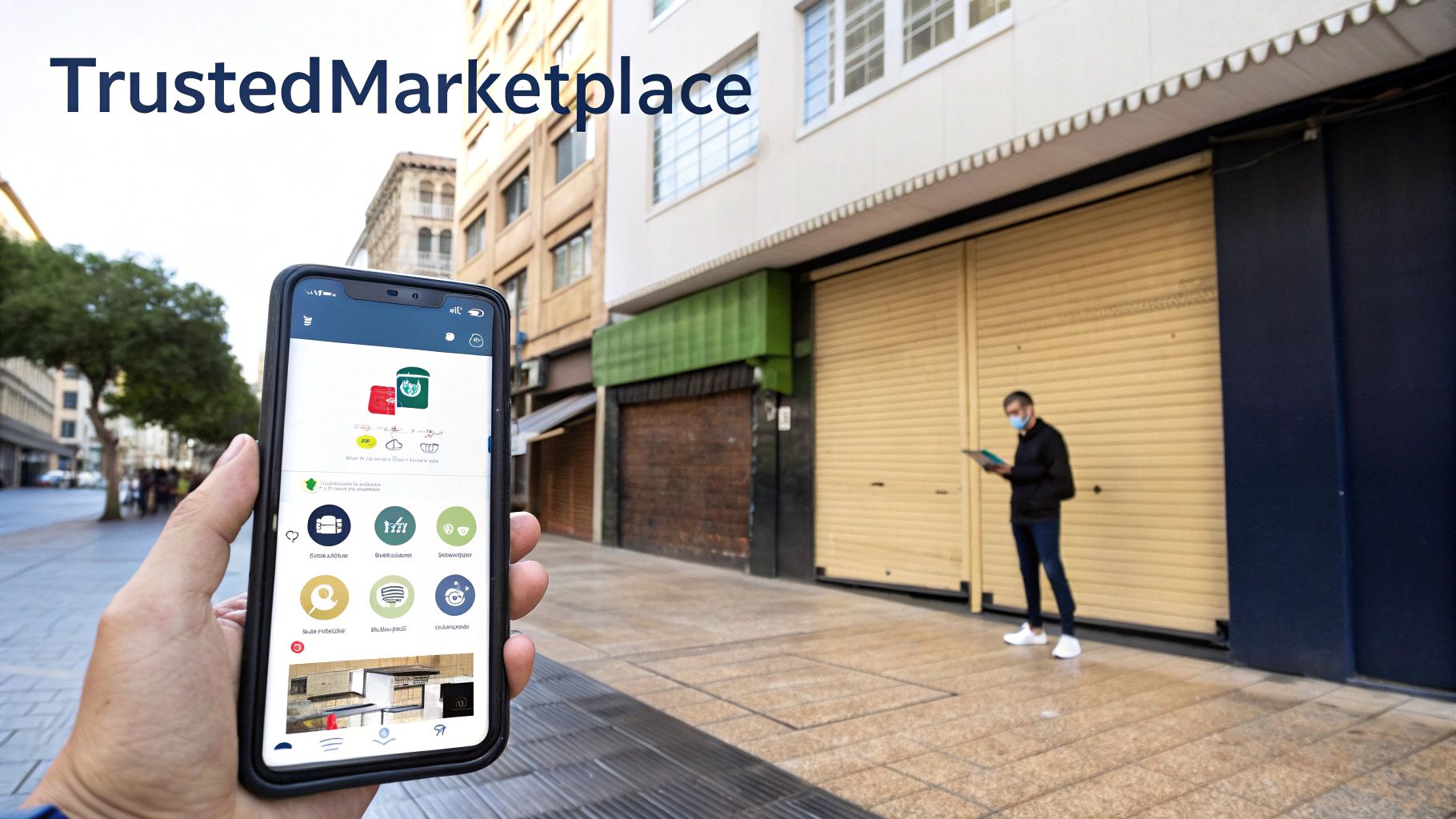
The single greatest challenge for a marketplace strategy is solving the "cold start problem": attracting one side of the market without the other being present. Successful platforms often subsidize one side initially (e.g., offering incentives to drivers or hosts) to build up a critical mass of supply, which then attracts the demand side. The long-term strategy is to shift from subsidizing growth to establishing trust and reducing friction for both parties.
This requires a relentless focus on mechanisms like reviews, identity verification, secure payment processing, and dispute resolution. The platform's take rate, or the percentage it keeps from each transaction, must be carefully balanced to remain profitable without alienating its vital supply-side partners.
Actionable Takeaways
- Solve the Chicken-and-Egg Problem: Focus on building one side of the marketplace first. Decide whether to concentrate on aggregating supply (e.g., DoorDash signing up restaurants) or demand (e.g., creating a community of buyers) and provide incentives to get that initial group on board.
- Build Trust Mechanisms from Day One: Implement robust rating and review systems, secure payment gateways, and clear user policies. AI can be used to flag fraudulent reviews, identify high-risk transactions, and personalize safety recommendations, reinforcing the platform's integrity.
- Provide Tools for Seller Success: Your success is tied to your sellers' success. Offer them dashboards, analytics, and marketing tools to help them grow their business on your platform. This increases their dependency on your ecosystem, making it one of the most effective product strategy examples for retention. For a deeper dive, explore these marketplace growth strategies on sigos.io.
7. Product Bundling Strategy: The Power of the Package Deal
Product bundling is a classic yet highly effective strategy that involves combining multiple products or services into a single package, offered at a discounted price. This approach increases the perceived value for the customer, simplifies the purchasing decision, and can significantly boost average revenue per user (ARPU). The core idea is to make the whole more attractive than the sum of its parts.
This strategy is a cornerstone for companies like Microsoft with its 365 suite and Adobe with its Creative Cloud. Instead of selling individual applications, they bundle their ecosystem of tools, creating a powerful moat against competitors and locking users into their platform. The Disney+ Bundle (Disney+, Hulu, ESPN+) is another prime example of combining complementary content services to capture a wider audience.
Strategic Analysis
The success of a bundling strategy hinges on the perceived synergy between the products. The items must be complementary, solving related problems for a similar user persona. By offering a discount, the company incentivizes customers to adopt more products than they might have individually, increasing product stickiness and creating higher switching costs.
This approach is one of the most versatile product strategy examples because it can be adapted from fast food value meals to complex B2B software suites, demonstrating its broad applicability.
Actionable Takeaways
- Identify Complementary Products: Analyze usage data to discover which products are frequently used together or by the same customer segments. This data-driven approach ensures the bundle addresses a genuine, combined user need.
- Price for Value, Not Just Cost: The bundle's price should represent a clear and compelling discount compared to buying items individually. The value proposition must be immediately obvious to drive adoption and overcome purchase inertia.
- Test and Iterate Bundle Combinations: Don't assume the first bundle is the best. Use A/B testing to experiment with different product combinations, pricing tiers, and even "build-your-own-bundle" options to find what resonates most with your target market.
8. Luxury/Premium Positioning Strategy
The Luxury/Premium Positioning strategy involves intentionally creating a product and brand perception of high quality, exclusivity, and superior value to justify a premium price point. This approach moves beyond functional benefits to sell an experience, status, and a promise of excellence. It relies on meticulous attention to detail, from product craftsmanship and design to customer service and marketing communications. The goal is to create a strong pull-based demand where customers aspire to own the product.
This strategy is effectively employed by brands that have established a reputation for uncompromising quality and heritage. Companies like Apple, Tesla, and Dyson have successfully applied luxury principles to the tech and appliance sectors, proving the model's versatility beyond traditional fashion or automotive markets. They command higher prices by delivering a superior user experience, innovative design, and a powerful brand narrative.
Strategic Analysis
The foundation of a premium strategy is a non-negotiable commitment to quality that validates the price. This isn't just about the physical product but the entire ecosystem, including packaging, customer support, and retail experience. The strategy deliberately limits accessibility through price and sometimes selective distribution, which in turn enhances its perceived value and desirability. It's a game of perception management as much as it is product development.
This approach creates a powerful defensive moat. A premium brand is less susceptible to price wars and can foster intense customer loyalty, turning users into brand evangelists who willingly pay more for the perceived quality and status.
Actionable Takeaways
- Engineer the Entire Experience: Invest heavily in every customer touchpoint. From the unboxing experience to the intuitive UI and the responsiveness of customer support, every detail must reinforce the message of premium quality and justify the price tag.
- Leverage AI for Predictive Quality Control: Use AI-driven computer vision and sensor data analysis on the manufacturing line to detect microscopic flaws in materials or assembly. This ensures a level of craftsmanship and consistency that human inspection cannot match, upholding the brand's quality promise.
- Create Aspirational Brand Storytelling: Don't just sell features; sell a vision, a lifestyle, or a status. Use sophisticated marketing to build a narrative around the brand's heritage, innovation, or design philosophy. Analyzing social sentiment with AI can help refine this messaging to resonate perfectly with the target aspirational audience, making this one of the most brand-critical product strategy examples.
9. Lean/MVP Strategy: Building to Learn, Not Just to Launch
The Lean or Minimum Viable Product (MVP) strategy is a risk-mitigation approach centered on launching a product with just enough features to satisfy early adopters and validate a product idea. Instead of building a full-featured product based on assumptions, the goal is to release a core, functional version quickly to gather invaluable user feedback and data. This allows teams to learn what users actually want, iterate rapidly, and avoid wasting resources on features that don't deliver value.

This methodology, popularized by Eric Ries, prioritizes speed and learning over initial perfection. Companies like Dropbox (which started with a simple demo video to gauge interest), Airbnb (initially a basic site for renting out air mattresses), and Instagram (launched as a simple photo-sharing app) used this strategy to test their core hypotheses in the real market before committing to significant investment.
Strategic Analysis
The essence of the MVP strategy is the "Build-Measure-Learn" feedback loop. The "product" itself is not the final vision; it's a scientific experiment designed to test critical assumptions about the market and user needs. The key is to isolate the single most important problem you are solving and build the most minimal solution that addresses it, allowing you to measure user engagement and learn from their behavior.
Strategic Insight: An MVP is not a cheaper version of your final product; it's an instrument for learning. Its primary goal is to validate or invalidate core business hypotheses with the least amount of effort and capital.
This strategy forces a ruthless prioritization of features. It shifts the focus from "Can we build this?" to "Should we build this?" and "What is the fastest way to find out?"
Actionable Takeaways
- Isolate the Core Value Proposition: Before writing a single line of code, clearly define the "job" your product does for the user. A robust Jobs-to-be-Done framework is essential for this. You can discover more by exploring this Jobs-to-be-Done template and applying its principles.
- Define Learning Objectives First: Set clear, measurable success metrics for your MVP. Are you testing for user engagement, willingness to pay, or viral potential? Knowing what you need to learn will dictate what you need to build and measure.
- Build Feedback Loops into the Product: Don't just rely on analytics. Integrate simple, direct channels for user feedback like surveys, in-app chat, or easy-to-access contact forms. This qualitative data is crucial for understanding the "why" behind user actions and is one of the most vital product strategy examples for early-stage validation.
10. Account-Based Marketing (ABM) for B2B Products
Account-Based Marketing (ABM) is a highly focused B2B product strategy that treats individual high-value accounts as unique markets. Instead of casting a wide net for lead generation, ABM concentrates marketing and sales resources on a defined set of target accounts, orchestrating personalized campaigns to resonate with specific business challenges and stakeholders. It’s a complete reversal of the traditional marketing funnel, starting with identifying and targeting key accounts first.
This strategy is the go-to for complex B2B sales cycles where multiple decision-makers are involved. Companies like Salesforce and HubSpot use ABM to penetrate enterprise and mid-market segments, while platforms like 6sense and Demandbase have built their entire businesses around enabling this precise, account-centric approach for others. It aligns sales and marketing into a single, cohesive revenue team.
Strategic Analysis
The power of ABM comes from its efficiency and relevance. By focusing exclusively on accounts that fit an Ideal Customer Profile (ICP), companies avoid wasting resources on low-quality leads. The strategy shifts the focus from lead volume to account engagement and progression, measuring success by the depth of penetration within a target organization rather than the quantity of MQLs generated.
Strategic Insight: ABM's core principle is that high-value B2B purchasing decisions are made by committees, not individuals. The product strategy must therefore be designed to engage multiple stakeholders across an organization with tailored value propositions that speak to their specific roles and pain points.
This makes ABM one of the most effective product strategy examples for companies with a high average contract value (ACV), where the investment in personalization delivers a significant return.
Actionable Takeaways
- Develop a Tiered Account Strategy: Not all target accounts are equal. Segment your list into tiers (e.g., Tier 1: strategic, high-touch; Tier 2: high-potential, medium-touch) and allocate resources accordingly. This ensures your most intensive personalization efforts are focused where they will have the greatest impact.
- Leverage AI for Account Intelligence: Use AI-powered platforms to identify in-market accounts showing purchase intent signals (e.g., researching your product category, visiting competitor websites). This data allows you to prioritize outreach when accounts are actively in a buying cycle, dramatically increasing engagement rates.
- Align Content with the Buyer's Journey: Create and map personalized content to specific stakeholders within each target account. A CFO needs to see an ROI case study, while an IT Director needs to understand technical integration and security. Coordinate this multi-threaded engagement across both marketing and sales channels for a unified experience.
Top 10 Product Strategies Compared
| Strategy | Implementation Complexity 🔄 | Resource Requirements ⚡ | Expected Outcomes 📊 | Ideal Use Cases 💡 | Key Advantages ⭐ |
|---|---|---|---|---|---|
| Freemium Model | Low–Medium — simple tiering and gating | Medium — product dev, support, marketing | Rapid user acquisition; slow-to-monetize conversion funnel | Consumer SaaS, network-effect apps, onboarding-focused products | Rapid growth; low CAC; easy product validation ⭐ |
| Platform / Ecosystem Strategy | High — architecture, APIs, partner ops | High — engineering, partner management, governance | Strong network effects; multi-revenue streams; high defensibility | Multi-product firms, marketplaces, OS/platform plays | Lock‑in; scalable value creation; partner-driven features ⭐ |
| Subscription Model | Medium — billing, churn systems, retention programs | Medium–High — billing infra, CS, analytics | Predictable recurring revenue; higher LTV; churn risk | SaaS, media, services, products with ongoing value | Revenue predictability; improved forecasting; customer loyalty ⭐ |
| Direct-to-Consumer (DTC) Strategy | Medium — e‑commerce, brand control, logistics | High — marketing, fulfillment, customer service | Higher margins; direct customer data and feedback | Branded consumer goods, niche products, DTC-first startups | Better margins; full customer relationship; brand control ⭐ |
| Value-Based Pricing | High — research, pricing experiments, sales enablement | Medium — market research, analytics, sales alignment | Higher margins if aligned; sensitive to perceived value | B2B SaaS, professional services, differentiated offerings | Maximizes profit; aligns price to customer ROI ⭐ |
| Marketplace / Platform Monetization | High — multi-sided matching, trust & ops | High — supply incentives, trust systems, ops teams | Scalable transaction revenue; strong network effects; initial cold start | Two-sided markets, on‑demand services, commerce platforms | Scalability; low inventory risk; multiple monetization levers ⭐ |
| Product Bundling Strategy | Medium — bundle design, pricing coordination | Medium — inventory/pricing systems, marketing | Increased AOV and cross-adoption; possible cannibalization | Software suites, telecom plans, retail value bundles | Boosts customer value and retention; simplifies choice ⭐ |
| Luxury / Premium Positioning | Medium — consistent brand experience, selective channels | High — product quality, premium marketing, service | High margins; strong brand equity; smaller market size | High-end consumer goods, prestige services, aspirational brands | Higher profit per customer; brand loyalty and status appeal ⭐ |
| Lean / MVP Strategy | Low — minimal features, rapid release cycles | Low — small teams, limited capital | Fast market validation and learning; early iteration | Early-stage startups, untested product ideas, pivoting teams | Fast time-to-market; low initial investment; reduced waste ⭐ |
| Account-Based Marketing (ABM) for B2B | High — personalized campaigns, sales alignment | High — CRM/martech, research, dedicated teams | Higher conversion and deal size; long sales cycles; targeted ROI | Enterprise B2B, high-value accounts, long procurement cycles | Higher ROI per account; better sales-marketing alignment ⭐ |
Turning Strategy into Action with AI-Powered Insights
The ten powerful product strategy examples we've explored, from Spotify's freemium model to HubSpot's B2B account-based marketing, reveal a fundamental truth: market leadership is not a matter of chance. It is the direct result of deliberate, well-executed strategy. Each success story, whether built on an ecosystem, a subscription service, or a lean MVP launch, hinges on a single, non-negotiable element: a profound and dynamic understanding of the customer.
These strategies are not static templates to be copied. They are frameworks for decision-making. The real challenge for modern product leaders isn't choosing a strategy, but continuously validating and refining it with real-world data. Historically, this meant painstaking manual analysis, surveys, and a heavy reliance on intuition. Today, the game has fundamentally changed.
The Common Thread: Customer-Centricity, Supercharged by AI
A clear pattern emerges across every effective strategy. Success is directly correlated with a company's ability to answer critical questions about its users: What friction points cause them to abandon a feature? Which 'aha' moments turn them into loyal advocates? What unmet needs represent the next multi-million dollar opportunity?
Answering these questions consistently and at scale is where AI-driven product intelligence becomes a competitive necessity. These platforms move beyond simple analytics dashboards to provide the crucial context, the "why" behind user behavior. They act as a force multiplier for your product team, automating the discovery of insights that were once buried in thousands of support tickets, user reviews, and session recordings.
Strategic Insight: The most resilient product strategies are not set in stone. They are living, breathing roadmaps that adapt to customer feedback and market signals in near real-time. AI is the engine that makes this level of agility possible.
From Examples to Execution: Your Actionable Next Steps
Observing successful product strategy examples is inspiring, but turning those observations into action is what drives growth. The common denominator in their execution is a relentless focus on data-driven prioritization. Here is how you can begin implementing these lessons today:
- Centralize Your Customer Voice: Your first step is to break down data silos. Pool all your customer feedback, from support chats and NPS surveys to App Store reviews and sales call notes, into a single, analyzable repository. This creates a unified view of the customer experience.
- Quantify the Impact: Move beyond anecdotal evidence. Use intelligent tools to connect qualitative feedback to quantitative metrics. For instance, instead of just knowing "users are confused by the new UI," you can state, "The recent UI update is causing a 15% drop-off in the onboarding funnel, impacting an estimated $50k in monthly recurring revenue."
- Prioritize with Precision: Connect every product decision directly to a business outcome. Use AI-powered analysis to identify which feature requests are most frequently tied to expansion revenue, which bugs are the biggest drivers of churn, and which user segments are most at risk. This transforms your roadmap from a wishlist into a strategic growth plan.
- Close the Feedback Loop: Strategy is not a one-way street. Once you ship a feature or fix a bug based on user feedback, make sure those users know. This builds immense customer loyalty and creates a powerful cycle of continuous improvement, reinforcing that you are listening and responding to their needs.
Mastering this data-driven approach is no longer just an advantage; it's essential for survival and growth. It's the bridge between having a great idea and building a great business. By embedding AI-powered intelligence at the core of your product development lifecycle, you equip your team to make faster, smarter, and more confident decisions that directly impact the bottom line. You stop guessing what customers want and start building exactly what they need to succeed.
Ready to move from theory to practice? SigOS helps you analyze millions of customer interactions to automatically uncover the revenue-driving insights and critical friction points hidden in your data. See how our AI-powered platform can help you build a winning product strategy grounded in real customer intelligence. Learn more at SigOS.
Keep Reading
More insights from our blog
Ready to find your hidden revenue leaks?
Start analyzing your customer feedback and discover insights that drive revenue.
Start Free Trial →