12 Best Customer Research Template Resources for 2025
Discover 12 powerful customer research template resources to streamline your workflow. Get copyable surveys, interview scripts, and analysis frameworks today.
Customer research is the bedrock of great products, but building scripts, surveys, and analysis frameworks from scratch for every study burns valuable time. The right customer research template not only accelerates your workflow but also instills best practices, ensuring you ask the right questions consistently and avoid common biases. This guide cuts through the noise, offering a curated collection of ready-to-use templates from 12 leading platforms like HubSpot, Miro, and Dovetail.
We move beyond simple lists. For each resource, you'll find direct links, screenshots, and a practical breakdown of its best applications. We'll show you which templates are ideal for qualitative user interviews, which excel at quantitative surveys, and which are built for synthesizing feedback into actionable product intelligence. You'll get specific guidance for SaaS product managers, customer success leaders, and data analysts looking to streamline their discovery process.
To truly leverage these templates and unlock faster insights, it's beneficial to understand the overarching process of how to conduct user research effectively. Our analysis will help you plug these templates directly into that workflow. We provide clear, concise implementation notes, including tips for integrating outputs with tools like Zendesk or Intercom, helping you move from raw data to a more robust, customer-centric product development cycle. Forget reinventing the wheel; find the exact template you need to start gathering high-quality insights today.
1. HubSpot: The All-in-One Starter Kit for Foundational Research
HubSpot provides a robust collection of free, downloadable kits that serve as an excellent starting point for teams formalizing their research processes. Unlike single-document templates, HubSpot offers comprehensive packages covering the entire research lifecycle, from user testing scripts to market research questionnaires and final presentation slides. This makes it a standout choice for foundational work, allowing you to establish a standardized process without initial tool investment.
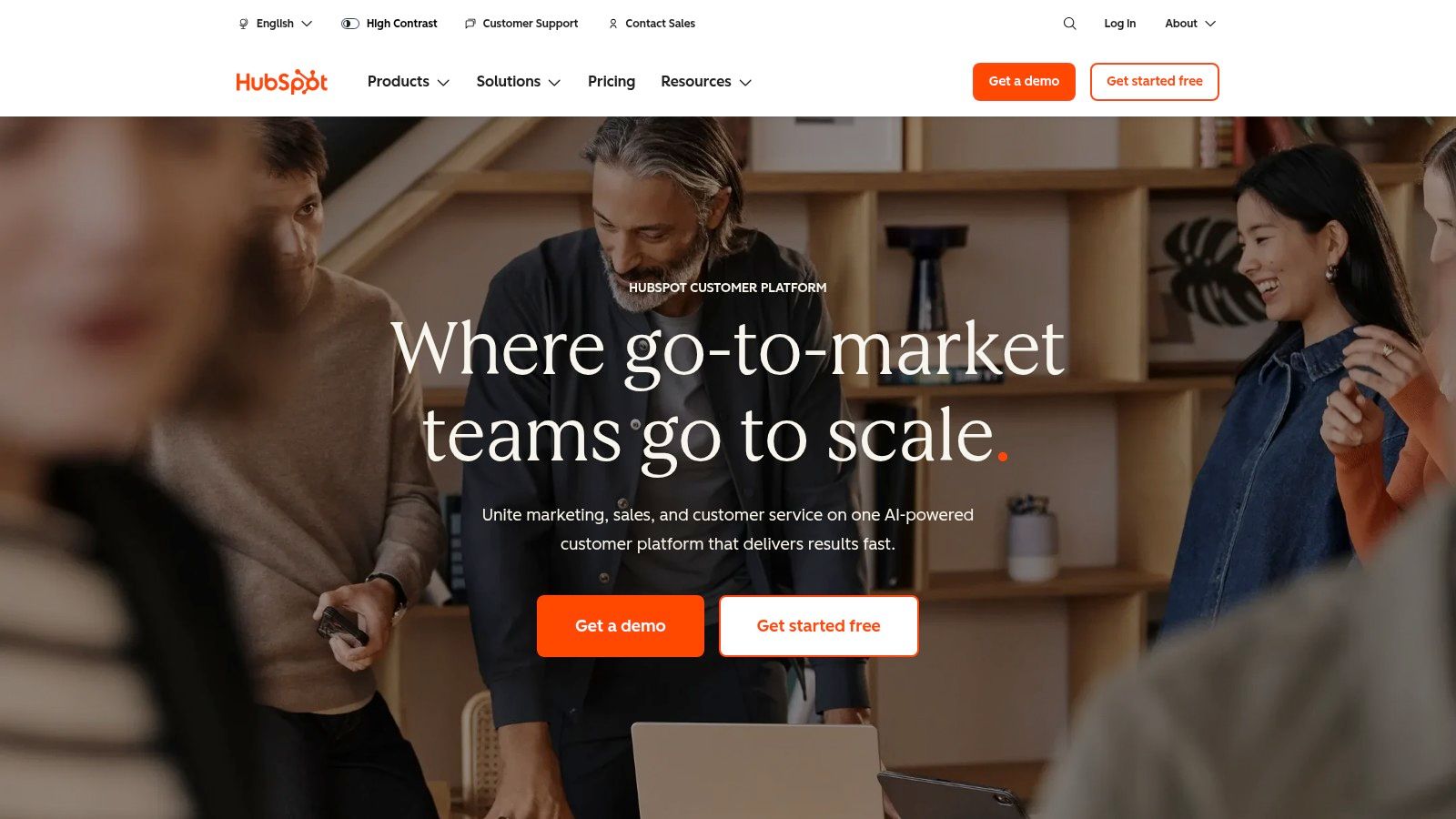
These resources are delivered as editable Google Docs, Sheets, and Slides, offering maximum flexibility. You can easily adapt them to your brand and specific project needs within your existing Google Workspace environment. This is a significant advantage for teams wanting to avoid platform lock-in. While not a dedicated repository, the included findings report and presentation templates provide a structured way to synthesize and share insights.
Access and Implementation
- Access Requirements: To download the kits, you must provide your contact information (name, email, company) via a form on their website.
- Best Use Case: Ideal for startups or teams building their first formal customer research template library. The pre-built structure for user testing and surveys like NPS and CSAT saves significant setup time.
- Limitations: Lacks the advanced, centralized repository features of dedicated research platforms. Analysis is a manual process, requiring you to synthesize data on your own within the provided spreadsheets.
Visit HubSpot's Resource Center
2. SurveyMonkey: The Gold Standard for Validated Survey Templates
SurveyMonkey is an industry leader renowned for its vast library of expert-built survey templates, making it an indispensable tool for teams that need to launch validated customer research quickly. With over 500 templates and a bank of 1,800+ pre-written questions, it eliminates the guesswork often associated with survey design. This allows product managers and customer success leaders to deploy professionally crafted questionnaires for everything from market fit analysis to feature prioritization without starting from scratch.
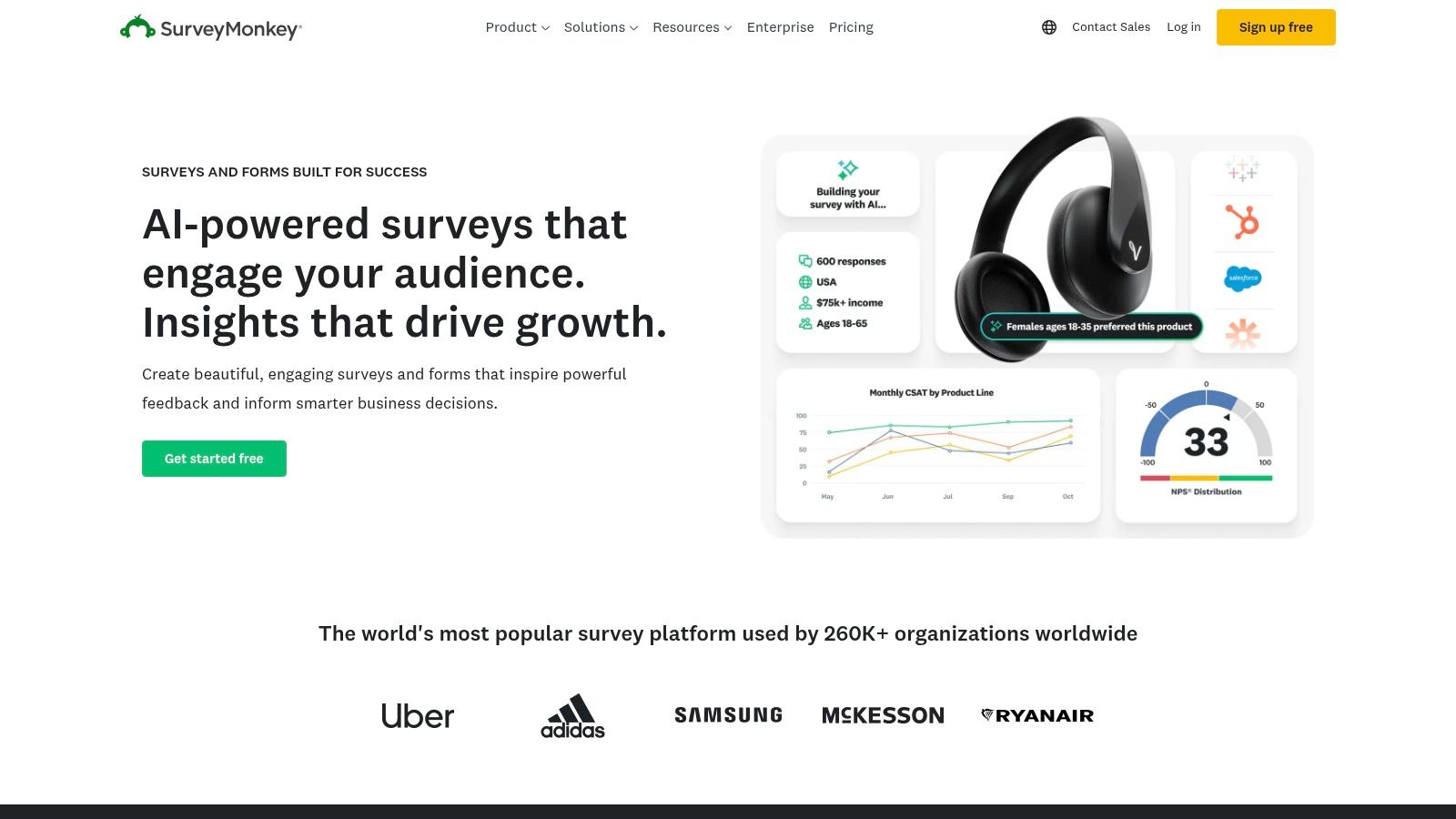
The platform’s strength lies in its speed and reliability. An AI-assisted survey builder and extensive question banks ensure you're asking the right questions in the right format, leading to higher quality data. Distribution is highly flexible, with options for web links, email campaigns, and social media, complemented by robust response management and basic analytics. For teams needing a reliable customer research template for quantitative feedback, SurveyMonkey provides a fast and efficient path from question to insight.
Access and Implementation
- Access Requirements: A free plan is available with basic features. Paid plans unlock advanced logic, unlimited questions, and greater response collection, which are necessary for most professional research.
- Best Use Case: Excellent for rapid deployment of validated surveys like Net Promoter Score (NPS), Customer Satisfaction (CSAT), or product-market fit assessments. Its multilingual support is a key advantage for global products.
- Limitations: The free and lower-tier plans have strict response limits, with overages incurring per-response fees that can become costly. Advanced data analysis and customization features are locked behind higher-priced enterprise plans.
3. Typeform: The Conversational Survey for Higher Engagement
Typeform excels at creating visually appealing, conversational forms that feel more like an interactive dialogue than a traditional survey. Its one-question-at-a-time interface is highly engaging and mobile-friendly, which often leads to higher completion rates. The platform provides a rich library of templates designed for specific research goals, including concept validation, onboarding feedback, and post-purchase satisfaction, making it a go-to for qualitative and quantitative data collection.
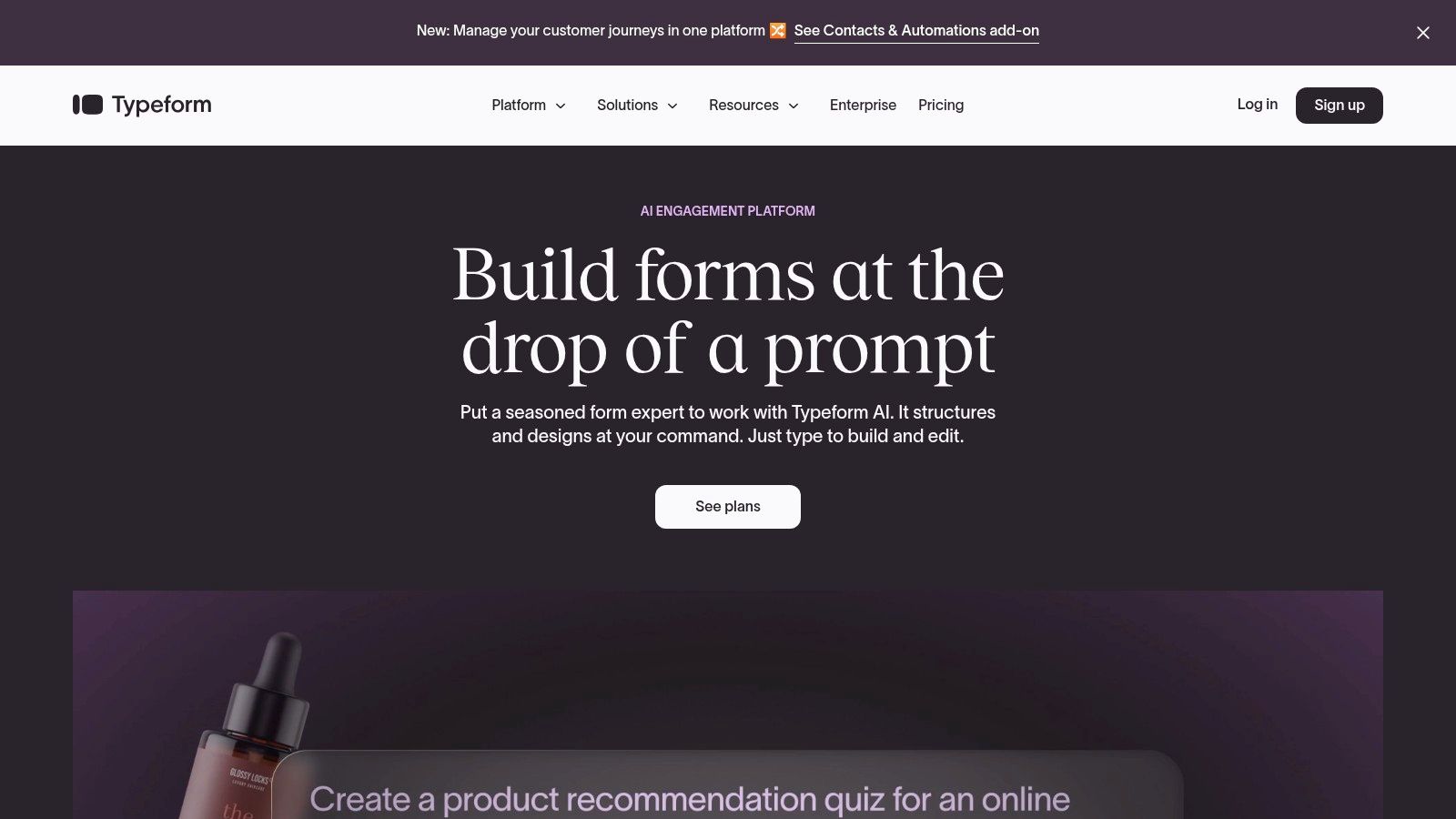
The platform's strength lies in its user experience and powerful features like conditional logic, which personalizes the survey path based on respondent answers. Integrations with tools like Slack, Google Sheets, and various CRMs allow for seamless data flow into existing workflows. Its AI-assisted form builder can even generate survey questions for you, speeding up the creation process and providing a solid customer research template foundation.
Access and Implementation
- Access Requirements: Typeform offers a free plan with limited responses and features. Paid plans are required for advanced logic, custom domains, and removing Typeform branding.
- Best Use Case: Excellent for in-product surveys, website pop-up feedback forms, and any scenario where respondent experience is a top priority to maximize completion rates.
- Limitations: The free and basic tiers have strict monthly response caps. Full branding control and advanced integrations are locked behind more expensive subscription plans, which might be a barrier for smaller teams.
Visit Typeform's Template Library
4. Notion Templates Marketplace: The Centralized Research Hub
Notion’s official and community-driven marketplace has become a goldmine for teams looking to build a fully integrated research repository. Instead of just individual documents, you can find complete "Research OS" systems, user interview dashboards, and synthesis templates designed to live within your existing Notion workspace. This makes it the ultimate choice for teams who want to centralize their research documentation, notes, and findings in one interconnected system.
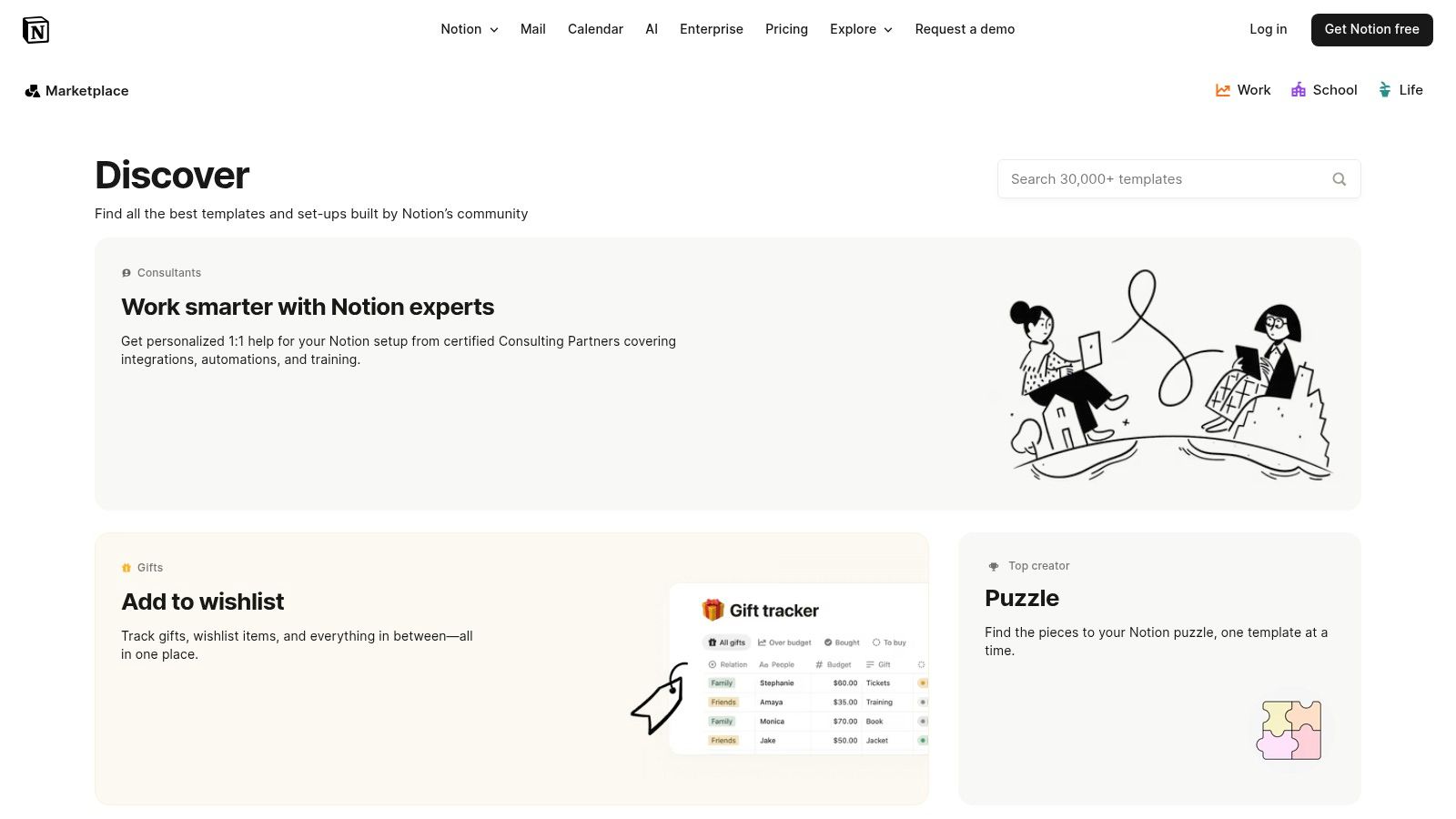
With over 30,000 templates, the variety is immense, ranging from simple interview scripts to complex databases for tracking customer personas and feedback. The one-click duplication feature allows for instant implementation, and the native flexibility of Notion means every template is fully customizable. You can link research insights directly to product roadmaps, project tasks, and customer profiles. For managing customer relationships and foundational data that informs your research, an ultimate Notion CRM template guide can be invaluable.
Access and Implementation
- Access Requirements: Templates can be duplicated directly from the marketplace into your Notion account. Many are free, while more complex systems are offered as paid, one-time purchases by creators.
- Best Use Case: Excellent for product teams already using Notion who want a single source of truth for all research activities. It’s perfect for creating a custom customer research template library that links directly to ongoing projects.
- Limitations: The quality and complexity of templates vary significantly between different community creators. Some users have reported occasional glitches when duplicating very large or complex templates.
Visit the Notion Templates Marketplace
5. Miro (Miroverse Template Library)
Miro excels as a visual collaboration hub, and its Miroverse template library is a goldmine for teams that conduct research collaboratively. Instead of static documents, Miro provides dynamic, infinite canvases perfect for synthesizing qualitative data. Templates for customer journey maps, affinity diagrams, empathy maps, and card sorting exercises allow teams to work together in real time, moving digital sticky notes and mapping insights visually. This makes it an indispensable tool for workshops and synthesis sessions.
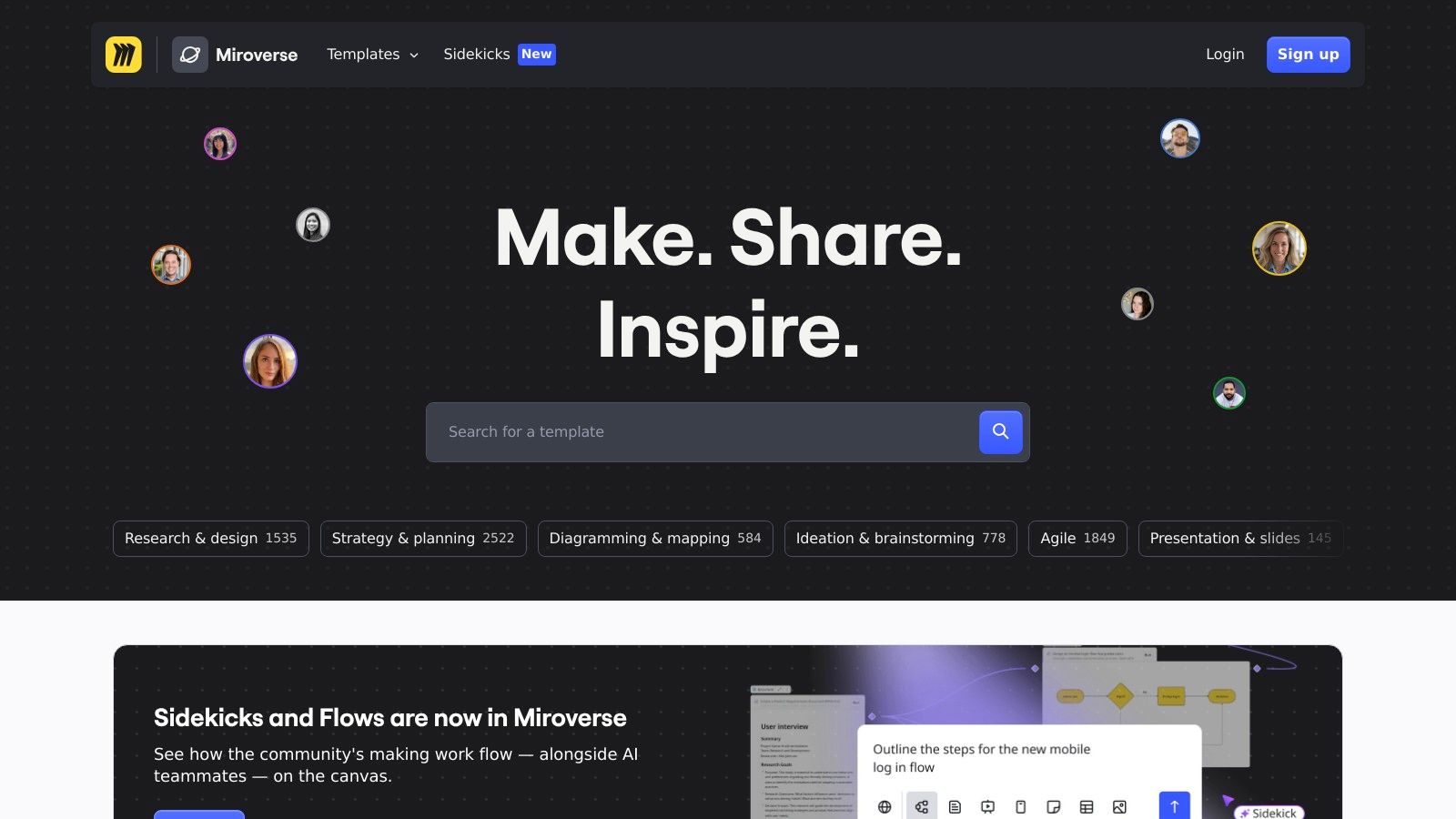
The strength of Miro lies in its community-driven Miroverse, where users contribute and share their own custom templates. This means you can find a highly specific customer research template for nearly any methodology, from a simple interview debrief board to a complex service blueprint. The platform’s real-time nature transforms research synthesis from a solo activity into an engaging team exercise, fostering shared understanding and faster alignment on key findings.
Access and Implementation
- Access Requirements: Anyone can access and use the Miroverse templates with a free Miro account. However, the free plan is limited to three active, editable boards.
- Best Use Case: Excellent for collaborative synthesis of qualitative research, such as analyzing interview notes, running remote workshops, or building detailed customer journey maps with cross-functional teams.
- Limitations: The free plan's board limit can be restrictive for ongoing research projects. While great for visualization, it is not a dedicated data repository or a tool for quantitative analysis; it complements other systems by providing the "why" behind the data.
Visit the Miroverse Template Library
6. Figma / FigJam Templates: For Visually Integrated Research
Figma and its whiteboarding tool, FigJam, offer a highly visual and collaborative environment to conduct and synthesize customer research directly alongside design work. Instead of static documents, you get access to a dynamic community marketplace of templates for user journey mapping, affinity diagramming, persona creation, and interview planning. This proximity of research artifacts to design files streamlines the entire product development lifecycle, ensuring insights are never far from the prototypes they inform.
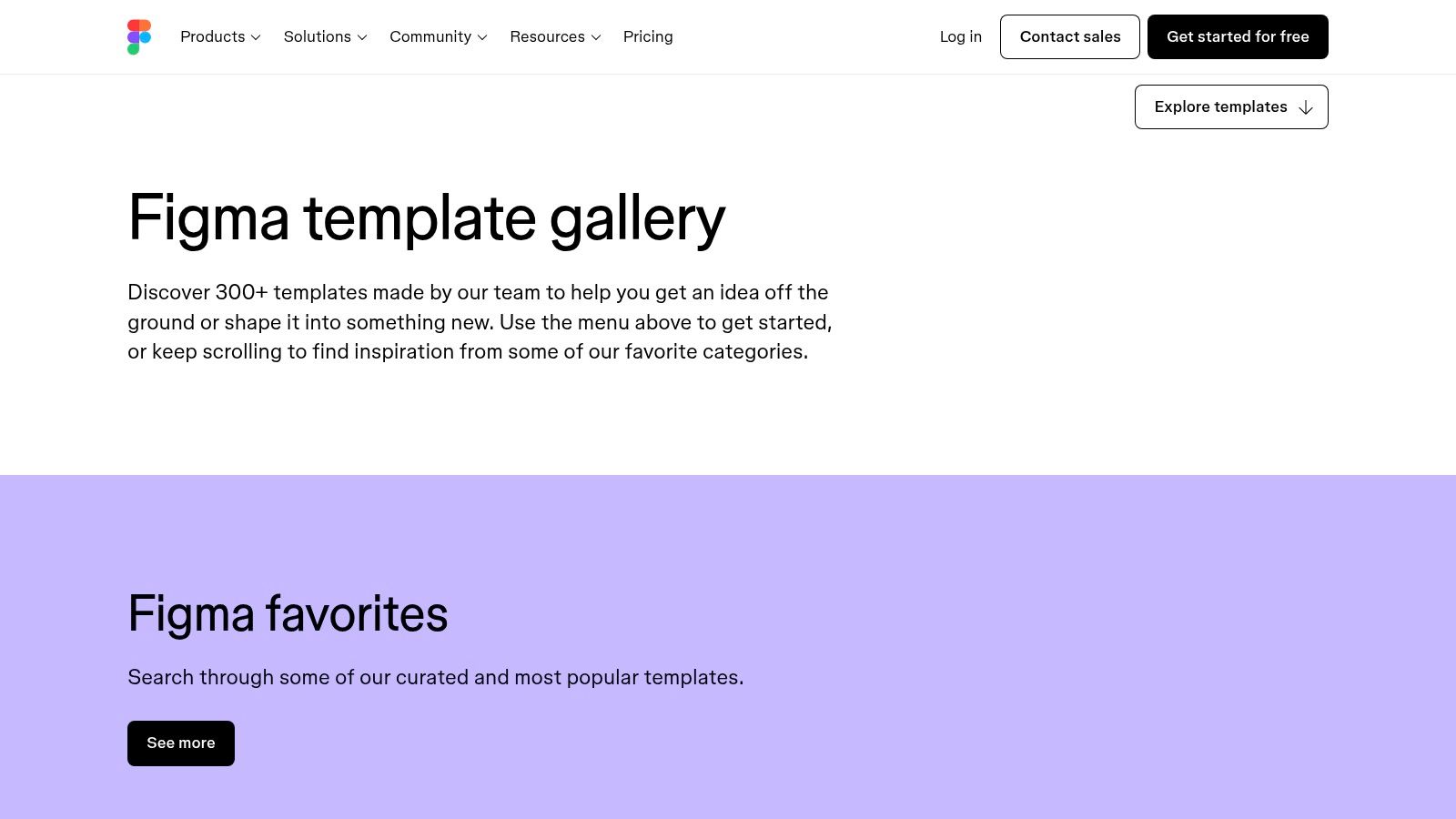
The platform excels at turning qualitative data into actionable visual insights through features like sticky notes, voting, and connectors. Because the templates are native to the design tool, teams can seamlessly link research findings to specific UI components or user flows. This direct connection makes it easier to justify design decisions and is a key advantage for teams wanting a unified workspace. For those looking to present complex findings, mastering the principles of data visualization can make these templates even more impactful. You can explore best practices for data visualization to enhance your reports.
Access and Implementation
- Access Requirements: A free Figma account provides access to community templates and a limited number of FigJam files. Paid plans are required for unlimited files and advanced team features.
- Best Use Case: Ideal for product and design teams that want to keep research activities tightly integrated with their design and prototyping workflows. It’s perfect for collaborative synthesis sessions like affinity mapping.
- Limitations: While excellent for qualitative synthesis, it isn't a dedicated data repository or survey tool. Quantitative analysis must be done elsewhere. The seat-based pricing model can become costly as teams scale.
Visit Figma's Template Community
7. Airtable Templates and Universe
Airtable elevates the concept of a template from a static document to a dynamic, relational database. Its official templates and community-driven "Universe" bases provide powerful frameworks for managing the entire research lifecycle, including participant panels, interview schedules, and insight synthesis. This approach transforms raw customer data into a structured, queryable research repository, making it ideal for teams looking to move beyond simple spreadsheets and build a scalable insights hub.
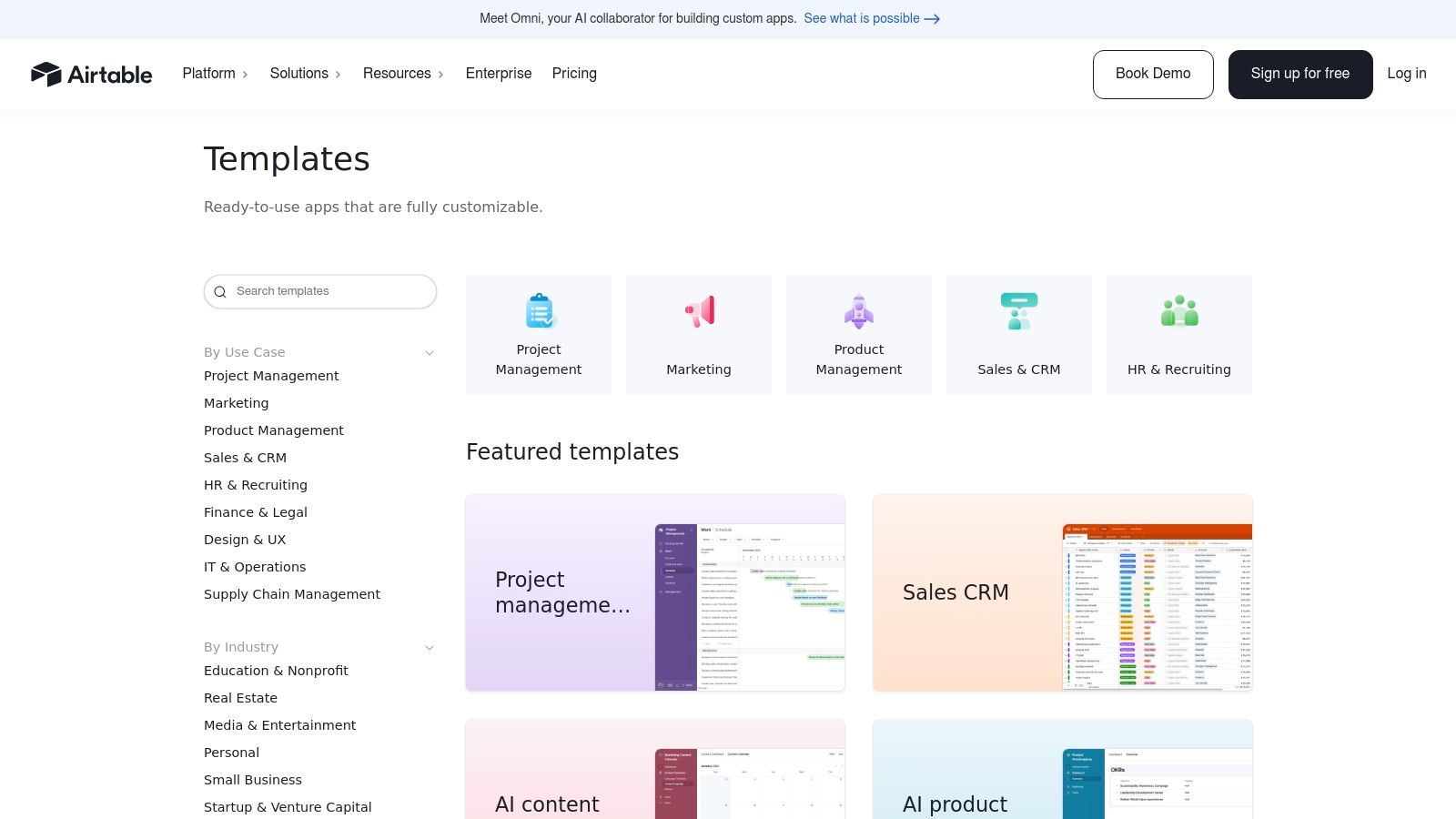
The key advantage of Airtable is its flexible schema. You can link research sessions to specific participants, tag insights with themes, and connect findings directly to product features or user stories. This creates a deeply interconnected web of data that reveals patterns over time. The ability to create different views-like Kanban boards, calendars, and galleries-allows teams to visualize the research process and its outputs in multiple, context-specific ways.
Access and Implementation
- Access Requirements: Templates are free to copy into your Airtable account. A free plan is available, but advanced features and higher record limits require a paid subscription.
- Best Use Case: Perfect for teams that have outgrown spreadsheets and need a centralized, relational system to manage and connect ongoing research activities. It excels at creating a persistent customer research template repository.
- Limitations: The platform has a steeper learning curve compared to standard document or spreadsheet tools. Unlocking its full potential for collaboration and automation often requires moving to a higher-priced tier.
8. Dovetail: The Purpose-Built Qualitative Research Repository
Dovetail is a purpose-built platform for storing, analyzing, and sharing qualitative customer research, moving beyond simple document storage. It functions as a centralized repository where teams can standardize their research process using project and insight templates, ensuring consistency across studies. Its strength lies in transforming unstructured data like interview transcripts and feedback notes into structured, searchable insights through powerful tagging, structured fields, and robust analytics.
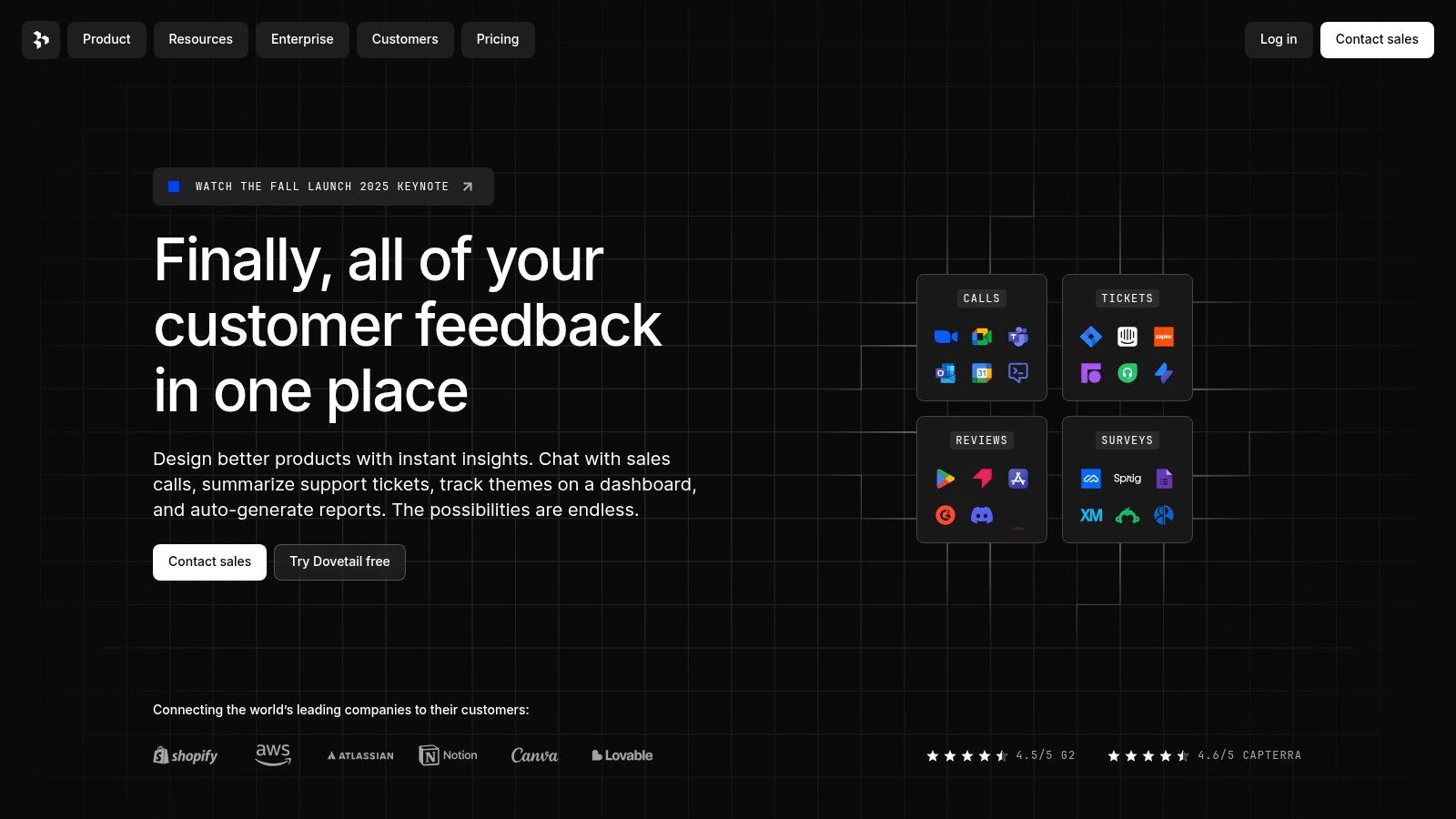
This structure is ideal for organizations looking to scale their research operations and build a lasting knowledge base. By centralizing data, Dovetail makes it easier for teams to discover patterns, validate hypotheses, and share findings with stakeholders. The platform’s design encourages a systematic approach, which is a crucial part of an effective sample research plan. It bridges the gap between raw data collection and actionable intelligence, making it an invaluable tool for dedicated research and product teams.
Access and Implementation
- Access Requirements: Dovetail offers a free plan with limitations. Full access to advanced features and templates requires a paid subscription, with pricing based on user seats.
- Best Use Case: Excellent for product teams and UX researchers who need a central hub to manage and analyze ongoing qualitative data from interviews, usability tests, and feedback channels.
- Limitations: The ability to create custom workspace templates to enforce organization-wide standards is restricted to enterprise plans. Additionally, enterprise invoicing is handled exclusively in USD, which could be a consideration for international teams.
9. Maze: The Go-To for Rapid Unmoderated Testing
Maze stands out with its extensive template library specifically designed for rapid, unmoderated product research. It allows teams to quickly launch tests like usability tasks, card sorting, and concept validation without the logistical overhead of scheduling moderated sessions. The platform’s key strength lies in its ability to turn a prototype or live site into an interactive test, generating automated, shareable reports with quantitative metrics and heatmaps.
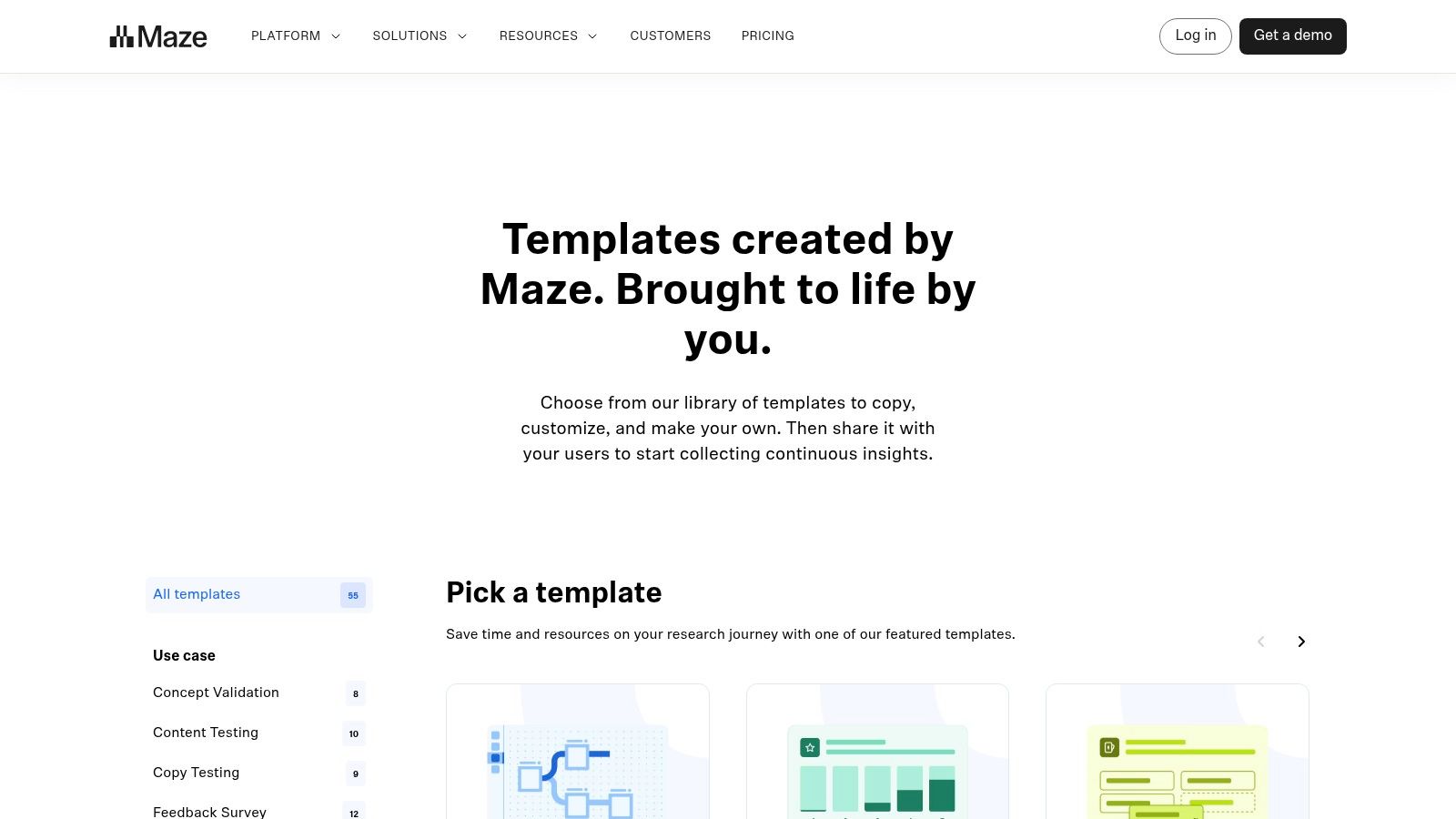
The template gallery is clearly organized, with over 50 options categorized by use case, such as usability, content testing, and surveys. Each template comes pre-configured with relevant questions and blocks, from System Usability Scale (SUS) to Net Promoter Score (NPS) deep dives. This makes it incredibly efficient to get feedback on a specific design or workflow. While many templates are free, advanced ones are designated as "PRO" and require a paid plan, offering a clear upgrade path.
Access and Implementation
- Access Requirements: A free account is required to access and use the basic templates. PRO templates and advanced features like custom branding are locked behind paid subscriptions.
- Best Use Case: Perfect for product teams needing to validate designs or user flows quickly and at scale. A great customer research template resource for gathering quantitative usability data to complement qualitative interviews.
- Limitations: The focus on unmoderated testing means it's less suited for deep, exploratory research where follow-up questions are crucial. Custom templates are restricted to the highest-tier plans.
10. Canva: The Visual Storytelling Toolkit for Research Insights
Canva excels at the final, crucial step of customer research: communication. While not a research tool itself, its vast template library is an indispensable resource for transforming raw data into polished, stakeholder-ready deliverables. It offers a wide array of templates for user personas, customer journey maps, and research presentation decks, allowing you to visualize findings in a compelling and easily digestible format. This focus on design makes it the ideal platform for teams that need to "sell" their insights internally and secure buy-in for product decisions.
The platform's drag-and-drop interface and extensive asset library (icons, photos, charts) enable anyone, regardless of design skill, to create professional-quality reports and infographics. You can easily apply your company's branding, collaborate with team members in real-time, and export your work in various formats. For teams needing to present a cohesive narrative from their findings, a well-designed customer research template from Canva can be the difference between data being ignored and insights being acted upon.
Access and Implementation
- Access Requirements: A free plan offers access to thousands of templates. Paid plans (Pro, Teams) unlock premium assets, brand kits, and advanced collaboration features.
- Best Use Case: Perfect for visualizing qualitative data, creating polished user personas, mapping customer journeys, and building compelling presentation decks to share research findings with executives and other teams.
- Limitations: This is a design-first tool, not a research repository or analysis platform. All data must be collected and synthesized elsewhere before being brought into Canva for visualization.
11. User Interviews: Streamlining Participant Recruitment and Operations
User Interviews is not a direct source for insight synthesis templates but is a crucial operational platform that offers essential templates for the recruitment phase of research. It provides customizable screener survey templates that help you define and find the exact participants you need from its massive B2C and B2B panel. This makes it an indispensable tool for teams that need to quickly source high-quality, specific participants for interviews, usability tests, or surveys, saving significant time on logistics.
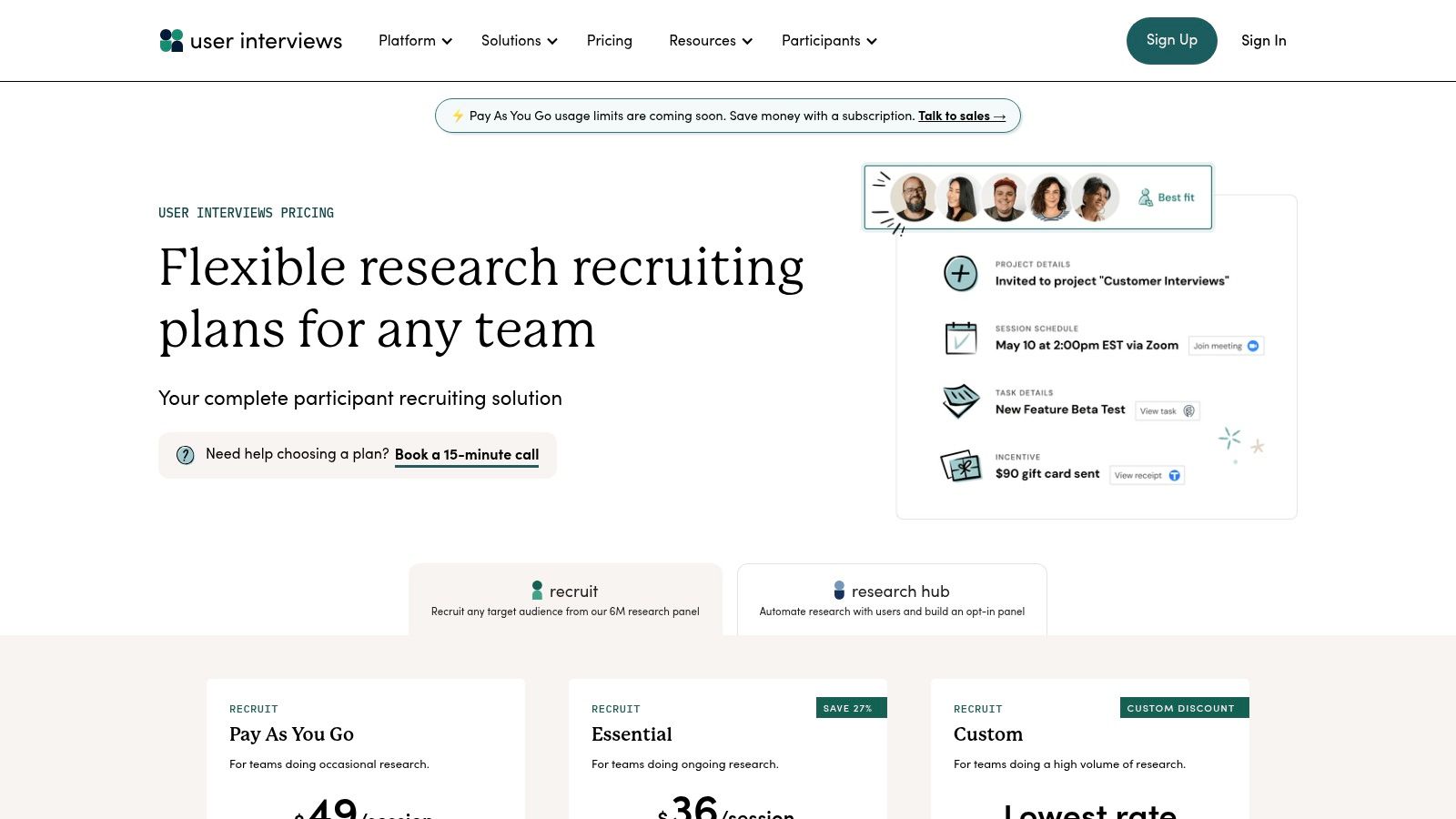
The platform automates the entire recruitment workflow, from screening and scheduling to managing incentive payments. By using its screener templates, you ensure your criteria are met before you ever speak to a participant, improving the quality of your data. This operational efficiency allows you to focus more on the research itself. You can learn more about framing effective interview questions with a Jobs-to-be-Done template, which pairs perfectly with targeted recruitment.
Access and Implementation
- Access Requirements: Signing up is free. Recruitment can be managed via a Pay-As-You-Go model or subscription plans. Note that participant incentives are a separate cost from the platform fee.
- Best Use Case: Ideal for teams needing rapid access to a diverse pool of research participants without the overhead of manual recruitment. The screener customer research template functionality is perfect for ensuring participant quality.
- Limitations: The platform focuses on recruitment and logistics, not analysis or reporting. The free "Hub" plan for managing your own user panel was discontinued in 2024, making it less accessible for teams on a zero budget.
12. Visme: For Polished Persona & Profile Presentation
Visme excels at the final, crucial step of customer research: communication. It offers a rich library of editable persona and customer profile templates designed to transform raw data into visually compelling, easy-to-digest deliverables for stakeholders. Unlike data collection tools, Visme's focus is squarely on the presentation layer, using a drag-and-drop editor that makes professional design accessible to anyone on the team.
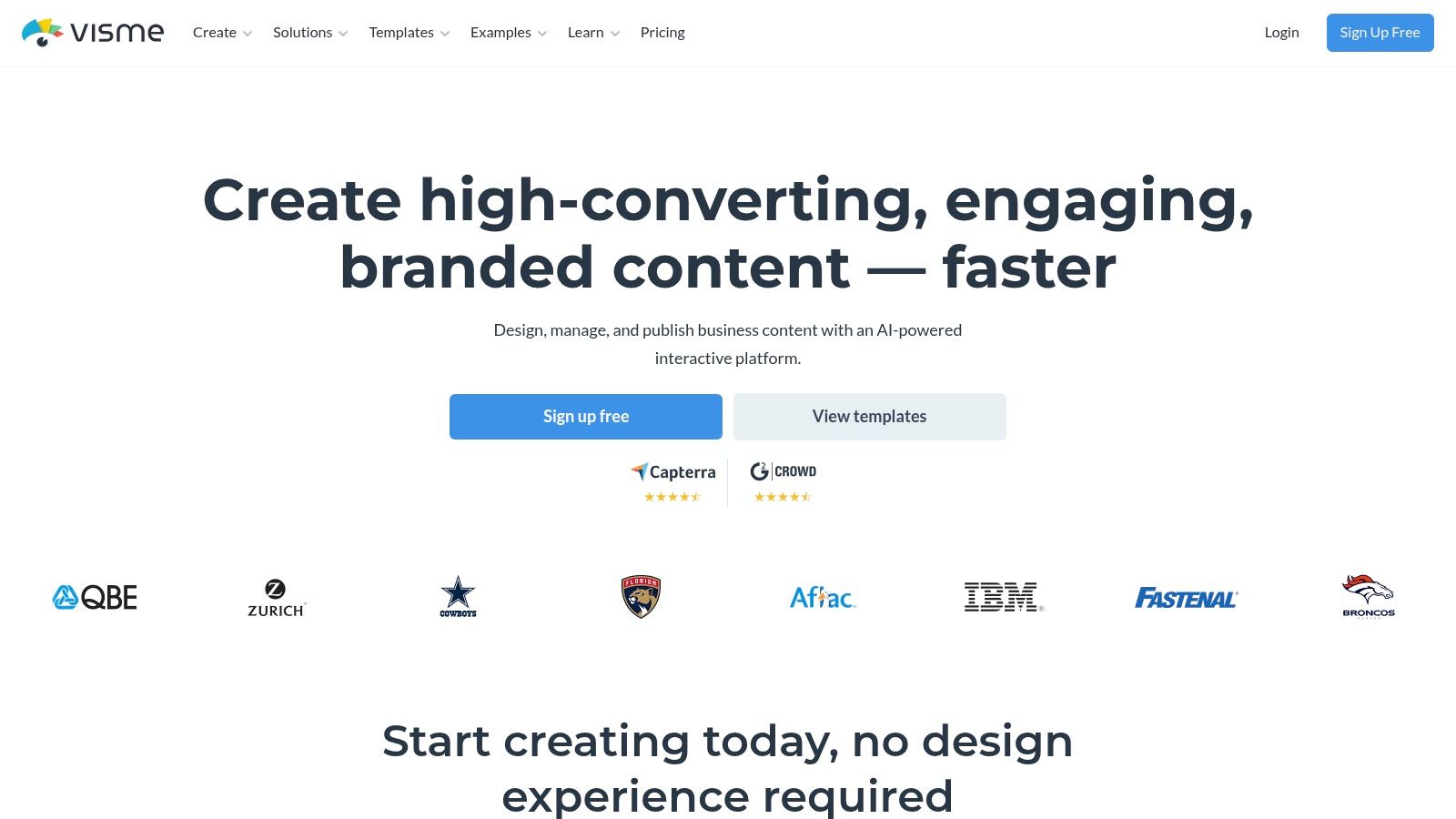
Its strength lies in turning qualitative insights and quantitative data points into a polished narrative. You can embed charts, add custom icons, and integrate multimedia to bring your customer stories to life. For teams needing to secure buy-in or share findings across departments, Visme provides a fast track to creating impactful assets that command attention, ensuring your research doesn't get lost in a spreadsheet or a lengthy document.
Access and Implementation
- Access Requirements: Free to sign up and use basic templates and features. Premium assets, templates, and export options (like HTML5) require a paid subscription.
- Best Use Case: Ideal for product managers and researchers who need to present their findings to leadership or cross-functional teams. Use it to create a standardized and visually appealing customer research template for personas that can be shared company-wide.
- Limitations: This is a design and presentation tool, not a data repository or analysis platform. It does not offer survey or interview capabilities; you must bring your own synthesized data into the platform.
Top 12 Customer Research Template Comparison
| Tool | Core capability | UX ★ | Value 💰 | Target 👥 | Unique selling point ✨/🏆 |
|---|---|---|---|---|---|
| HubSpot | Free downloadable research kits & editable templates | ★★★★ | 💰 Free / freemium (form required) | 👥 Beginners, SMBs, PMs | ✨ Ready-to-use kits; 🏆 broad coverage |
| SurveyMonkey | Large expert-built survey library + distribution | ★★★★ | 💰 Tiered; per-response fees above limits | 👥 Survey-heavy teams, enterprises | ✨500+ templates & question bank; 🏆 robust distribution |
| Typeform | Polished, high-completion forms with logic & branding | ★★★★★ | 💰 Tiered with response caps | 👥 Product & UX teams focused on response rates | ✨Engaging UX + integrations; 🏆 high completion |
| Notion Templates Marketplace | Centralized research pages, dashboards & OS templates | ★★★ | 💰 Mix of free & paid templates | 👥 Notion-centric teams & knowledge workers | ✨Huge variety; 🏆 one-click duplicate into workspace |
| Miro (Miroverse) | Collaborative boards for journey maps, affinity, workshops | ★★★★ | 💰 Free limited boards; paid for scale | 👥 Workshop facilitators & synthesis teams | ✨Real-time facilitation; 🏆 ideal for collaborative synthesis |
| Figma / FigJam | Research templates close to design & prototypes | ★★★★ | 💰 Strong free starter; paid seats for scaling | 👥 Designers & product teams | ✨Seamless design integration; 🏆 design–research loop |
| Airtable | Relational research bases & structured repositories | ★★★★ | 💰 Tiered; scales with usage | 👥 Ops-heavy research teams & analysts | ✨Custom schema & relational views; 🏆 structured repo |
| Dovetail | Purpose-built qualitative research repository + analytics | ★★★★★ | 💰 Paid / enterprise-focused | 👥 Enterprise research teams & PMs | ✨Tagging, fields & analytics; 🏆 research governance |
| Maze | Unmoderated tests, shareable studies & automated dashboards | ★★★★ | 💰 Free/basic vs PRO templates gated | 👥 UX researchers running remote tests | ✨Ready-to-run tests & dashboards; 🏆 fast launch |
| Canva | Persona, journey & presentation templates for stakeholders | ★★★★★ | 💰 Freemium; business plan for advanced features | 👥 Communicators & non-designers | ✨Design-first polished outputs; 🏆 massive asset library |
| User Interviews | Participant recruiting, screeners, scheduling & incentives | ★★★★ | 💰 Pay-as-you-go & subscriptions; incentives separate | 👥 Researchers needing panels & recruitment | ✨Large panel + ops support; 🏆 rapid recruitment |
| Visme | Drag-and-drop persona/profile templates & exports | ★★★★ | 💰 Freemium; paid assets/features | 👥 Non-designers producing stakeholder deliverables | ✨Easy polished visuals & exports; 🏆 multimedia embeds |
| Figma / FigJam (internal link) | Research templates + plugins (see SigOS blog link) | ★★★★ | 💰 See Figma tiers | 👥 Design-oriented research teams | ✨Plugins & template community; 🏆 close to prototypes |
From Template to Action: Connecting Research to Your Roadmap
Having a powerful customer research template is the starting point, not the finish line. Throughout this guide, we've explored a diverse toolkit, from SurveyMonkey's structured questionnaires and Miro's collaborative canvases to Dovetail's sophisticated analysis repositories. Each tool offers a unique gateway to understanding your users, but their individual power is multiplied when integrated into a cohesive strategy.
The true goal is to transform isolated data points into a continuous, actionable stream of customer intelligence. An insightful interview script or a high-completion-rate survey is only valuable if its findings escape the confines of a single report or spreadsheet. The ultimate measure of success is how effectively these insights influence your product roadmap, refine your go-to-market strategy, and ultimately, drive customer-centric growth.
Key Takeaways: From Selection to Synthesis
As you move forward, remember that the "best" template is the one that fits your immediate context and long-term goals. A startup validating an MVP has vastly different needs than an enterprise optimizing a mature product.
Your journey from template to impact involves three critical stages:
- Strategic Selection: Don't just grab the first template you find. Match the tool to the task. Use a quick survey from Typeform for rapid sentiment analysis, but deploy a structured usability test script from User Interviews for deep-dive feature validation.
- Thoughtful Customization: A generic customer research template is a framework, not a final product. Adapt the language to your brand's voice, tailor questions to your specific hypotheses, and remove anything that doesn’t directly contribute to your research goals.
- Systematic Integration: This is the most crucial step. How will you connect the "what" (the data) to the "so what" (the action)? Plan how findings from a Miro affinity map or an Airtable feedback tracker will be tagged, prioritized, and linked to feature backlogs or support tickets.
Choosing Your Starting Point
To select the right tool, consider your team's current capabilities and primary objectives.
- For quick feedback and validation: Start with SurveyMonkey, Typeform, or Maze. These tools are built for speed and can help you gather quantitative data or test design prototypes with minimal setup.
- For deep qualitative insights and collaboration: Miro, FigJam, and Dovetail are your best allies. They excel at helping you synthesize unstructured data from interviews and user sessions into organized themes and actionable insights.
- For building a centralized research hub: If you're ready to create a single source of truth, Notion and Airtable offer the flexibility to build a custom research repository that integrates with your existing project management workflows.
No matter which path you choose, the principle remains the same: treat customer research not as a standalone project but as an ongoing, integrated business function. The templates we've covered are your instruments for listening. The real work begins when you start translating that listening into a product your customers truly love.
Ready to close the gap between customer feedback and product strategy? The templates in this article generate the raw data, but SigOS helps you analyze, prioritize, and act on it at scale. Connect all your feedback channels into a single, AI-powered intelligence hub to automatically surface insights and link them directly to your roadmap. Learn how SigOS turns customer research into revenue.
Keep Reading
More insights from our blog


Ready to find your hidden revenue leaks?
Start analyzing your customer feedback and discover insights that drive revenue.
Start Free Trial →