The 12 Top Product Management Books to Read in 2026
Discover the top product management books for SaaS PMs. Our curated list includes key takeaways, use cases, and reading paths to accelerate your career.
In the world of SaaS, product managers constantly navigate a sea of customer feedback, market shifts, and internal priorities. While experience is the ultimate teacher, the right knowledge can act as a powerful compass. This isn't just another generic list of popular titles; it's a strategic guide to the top product management books that offer actionable frameworks for today's biggest challenges, from reducing churn to making revenue-backed decisions.
Each entry in our list is analyzed for its direct application to SaaS and product-intelligence workflows. We move beyond simple summaries to provide specific takeaways you can implement immediately. You will discover how to connect the timeless wisdom in these pages to the modern product stack, especially for teams using platforms like SigOS to turn customer conversations into quantifiable impact. To dive deeper into recommended literature and discover more essential reads, explore our guide on the best books for product managers.
Whether you are a new PM finding your footing or a seasoned leader refining your strategy, this curated library is designed to help you build products customers love and drive business outcomes that truly matter. Let's explore the books that will help you translate theory into tangible impact.
1. Product School
While not a book, Product School earns its top spot by being the definitive online hub for product management education and resources. It offers a certification-focused curriculum that acts as a practical, career-oriented alternative to traditional reading. Instead of just theory, the platform provides live, instructor-led courses, mentorship from industry leaders at companies like Google and Netflix, and a global community for networking. This makes it an indispensable resource for anyone looking to break into or advance in product management.
The platform stands out by centralizing everything a PM needs. Beyond its core certifications (Product Manager, Product Leader, etc.), it hosts a massive library of free resources. This includes daily webinars, podcasts with VPs of Product, and a blog filled with templates and guides. For those seeking the best top product management books, Product School often features authors as guest speakers, giving you direct access to the minds behind the texts.
Their model is built for working professionals, with flexible part-time schedules. While certifications are a significant investment (ranging from 4,000 to 6,000), the free content alone provides immense value, making it a go-to starting point for continuous learning.
Website: https://productschool.com/
2. EMPOWERED: Ordinary People, Extraordinary Products (Marty Cagan, Chris Jones)
A follow-up to the foundational INSPIRED, Marty Cagan and Chris Jones’s EMPOWERED serves as the essential leadership playbook for creating a strong product culture. It moves beyond the individual contributor’s role to focus on how to staff, coach, and lead empowered product teams capable of delivering extraordinary results. The book is structured as a direct guide for VPs, directors, and senior PMs aiming to transition their organizations from reactive feature factories to proactive, outcome-driven powerhouses.
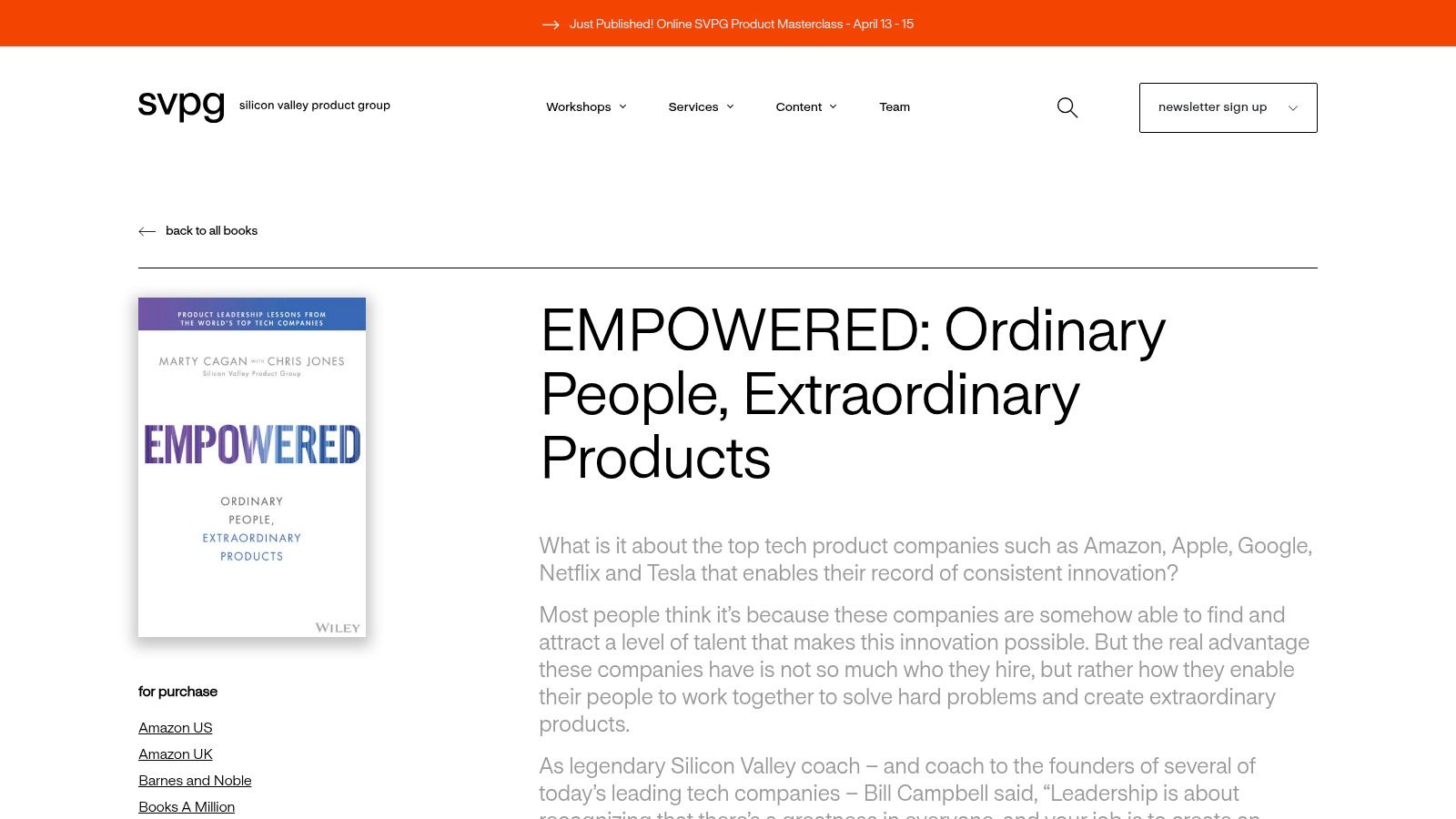
This text stands out by providing concrete frameworks for team topology, setting objectives, and managing stakeholders at scale. Cagan and Jones use real-world examples from successful product-led companies to illustrate how to build an environment of trust and autonomy. While it is one of the top product management books for leaders, individual contributors can also gain immense perspective on what a healthy product organization looks like.
The book is readily available in print, ebook, and audiobook formats. Its chapter structure is particularly useful for leadership book clubs or workshops, as each section tackles a specific challenge like coaching or strategy. While it’s less focused on day-to-day tactical execution, its strategic guidance is invaluable for anyone responsible for the performance and development of a product team.
Website: https://www.svpg.com/books/empowered-ordinary-people-extraordinary-products/
3. Continuous Discovery Habits (Teresa Torres)
Teresa Torres’s work, centered on her book Continuous Discovery Habits, is presented through her platform Product Talk, which functions as an essential resource hub. It moves beyond a one-time read by offering a complete system for implementing its core ideas. Instead of just theory, the site provides coaching, workshops, and a community dedicated to a practical, lightweight system for weekly customer touchpoints and evidence-based decision-making. This makes it a critical destination for teams wanting to build products based on real user needs.
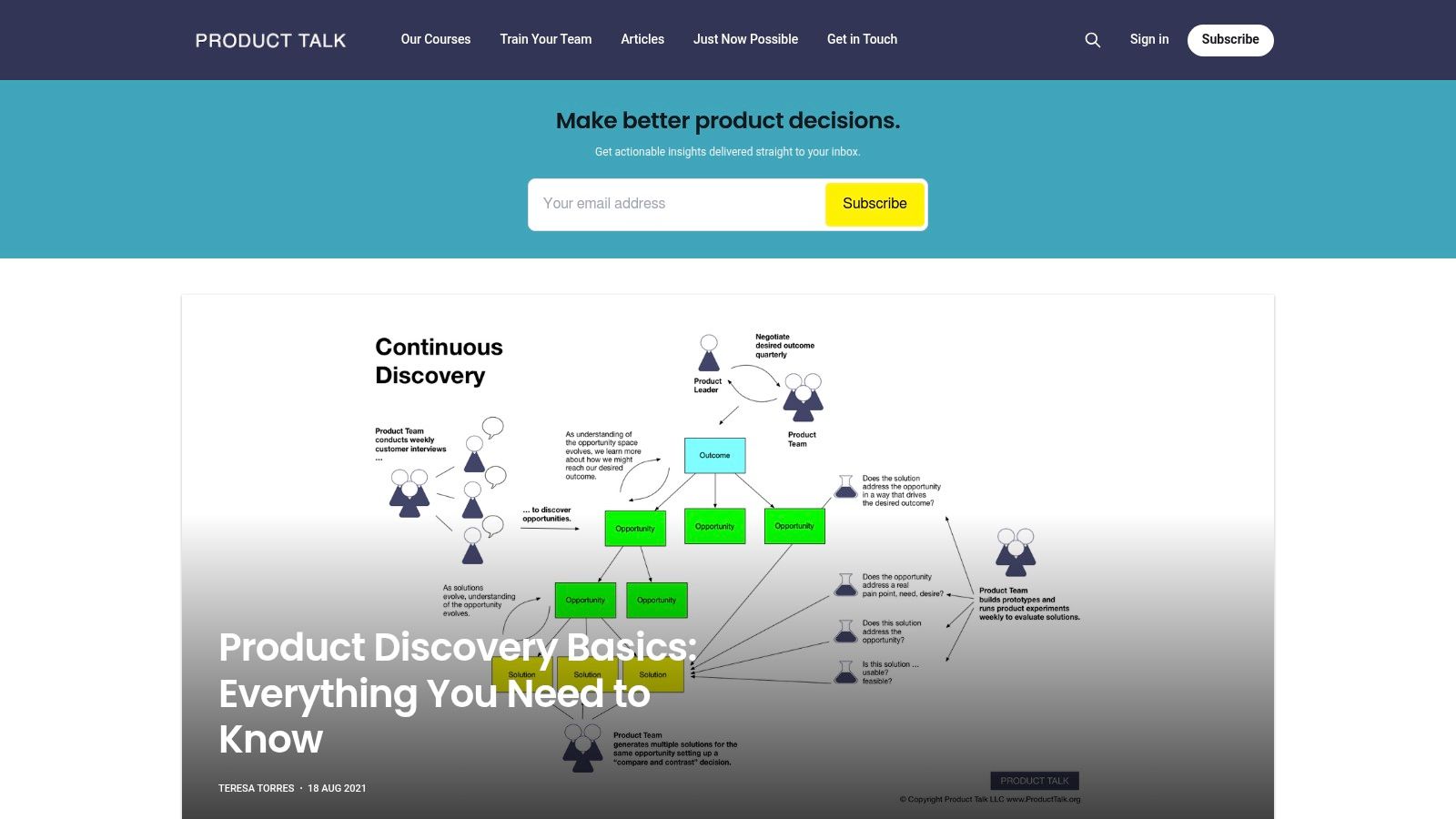
The platform’s strength lies in operationalizing discovery. It teaches the Opportunity-Solution Tree technique, continuous interviewing, and assumption testing, all designed for product trios (PM, designer, and tech lead). For product managers looking for the best top product management books that offer a clear-cut methodology, this is a standout because the website provides the tools to put the book’s principles directly into practice. Exploring how to perform a deep qualitative data analysis of interview notes is a perfect next step after adopting these habits.
The framework is exceptionally actionable for SaaS teams, as it works well with existing analytics and feedback streams. However, its main challenge is the discipline required; sustaining a weekly cadence of customer interviews needs significant organizational buy-in. Access to masterclasses and coaching is a paid service, but the blog and free resources offer substantial guidance for any team to begin their continuous discovery journey.
Website: https://www.producttalk.org/
4. Escaping the Build Trap (Melissa Perri)
Melissa Perri’s Escaping the Build Trap is a foundational text for any organization struggling with an obsession over output instead of outcomes. It provides a clear diagnosis for why companies get stuck shipping features that don't move the needle and offers a strategic framework to reorient toward value. The book is less a tactical guide for daily tasks and more of a blueprint for creating a truly product-led organization, making it essential reading for senior PMs, leaders, and executives.
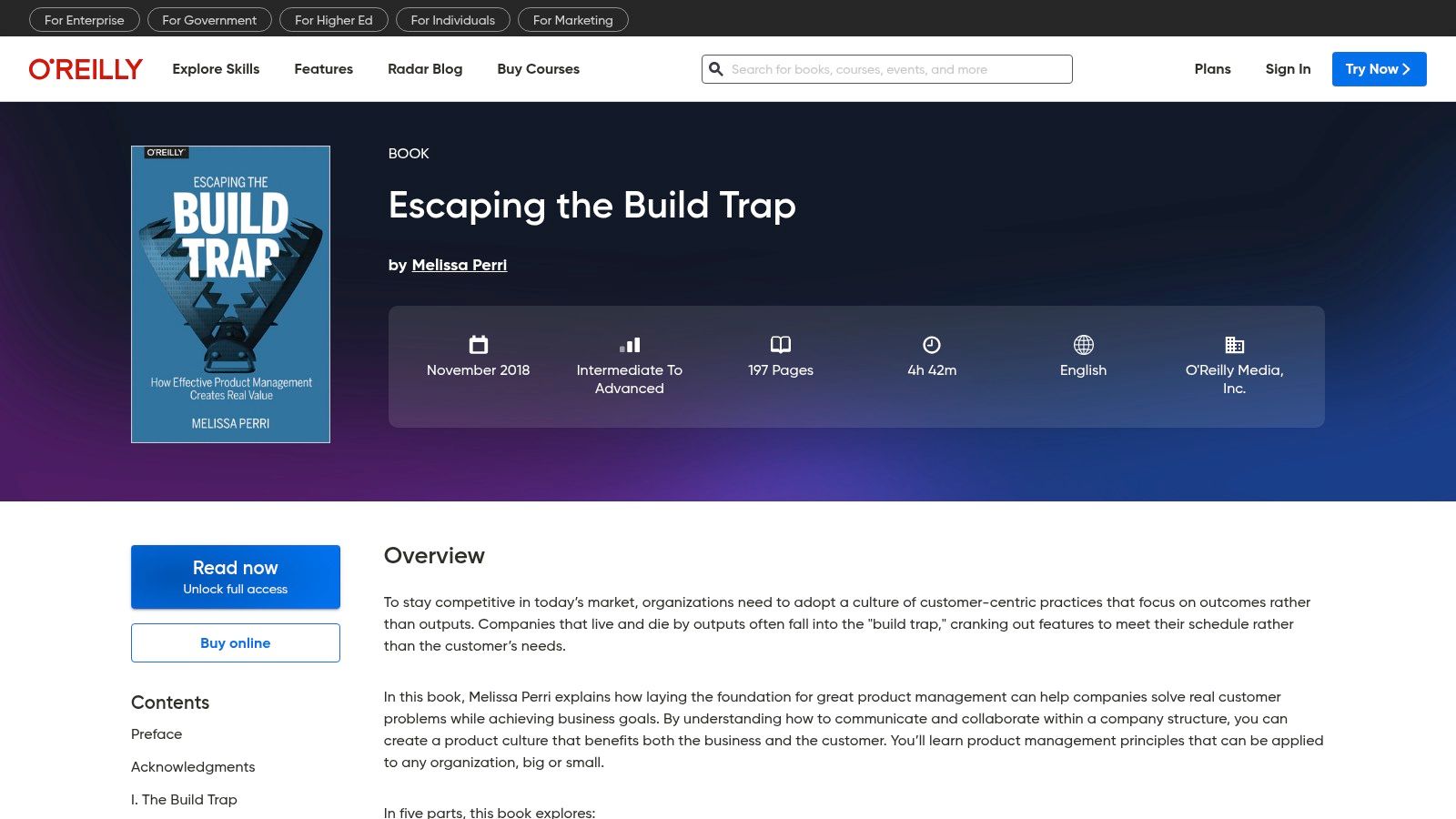
The book stands out by providing the vocabulary and mental models needed to advocate for change at a systemic level. Perri explains how to connect a high-level company strategy to the product decisions made every day, a common pain point for even experienced teams. It teaches you how to align stakeholders around a shared understanding of product management's role, moving the function from a "feature factory" service to a strategic driver of business growth.
While the book is rich in strategy, its focus is on the "why" and "how" at an organizational level, not on specific techniques for a junior PM’s day-to-day. It’s an ideal read for influencing up and across an organization. This focus on connecting strategy to execution makes it one of the top product management books for anyone tasked with improving a team’s maturity or setting up effective backlog prioritization techniques.
Website: https://www.oreilly.com/library/view/escaping-the-build/9781491973783/
5. The Lean Product Playbook (Dan Olsen)
While the title suggests a traditional book, The Lean Product Playbook website is an essential companion resource that brings Dan Olsen's methodology to life. It moves beyond static text to offer a step-by-step, metrics-minded system for achieving product-market fit. The site is a practical toolkit designed for product teams, especially PM, UX, and engineering triads, to apply lean principles directly to their workflow. It bridges the gap between customer discovery and shipping an MVP, making it a critical resource for growth-stage SaaS companies.
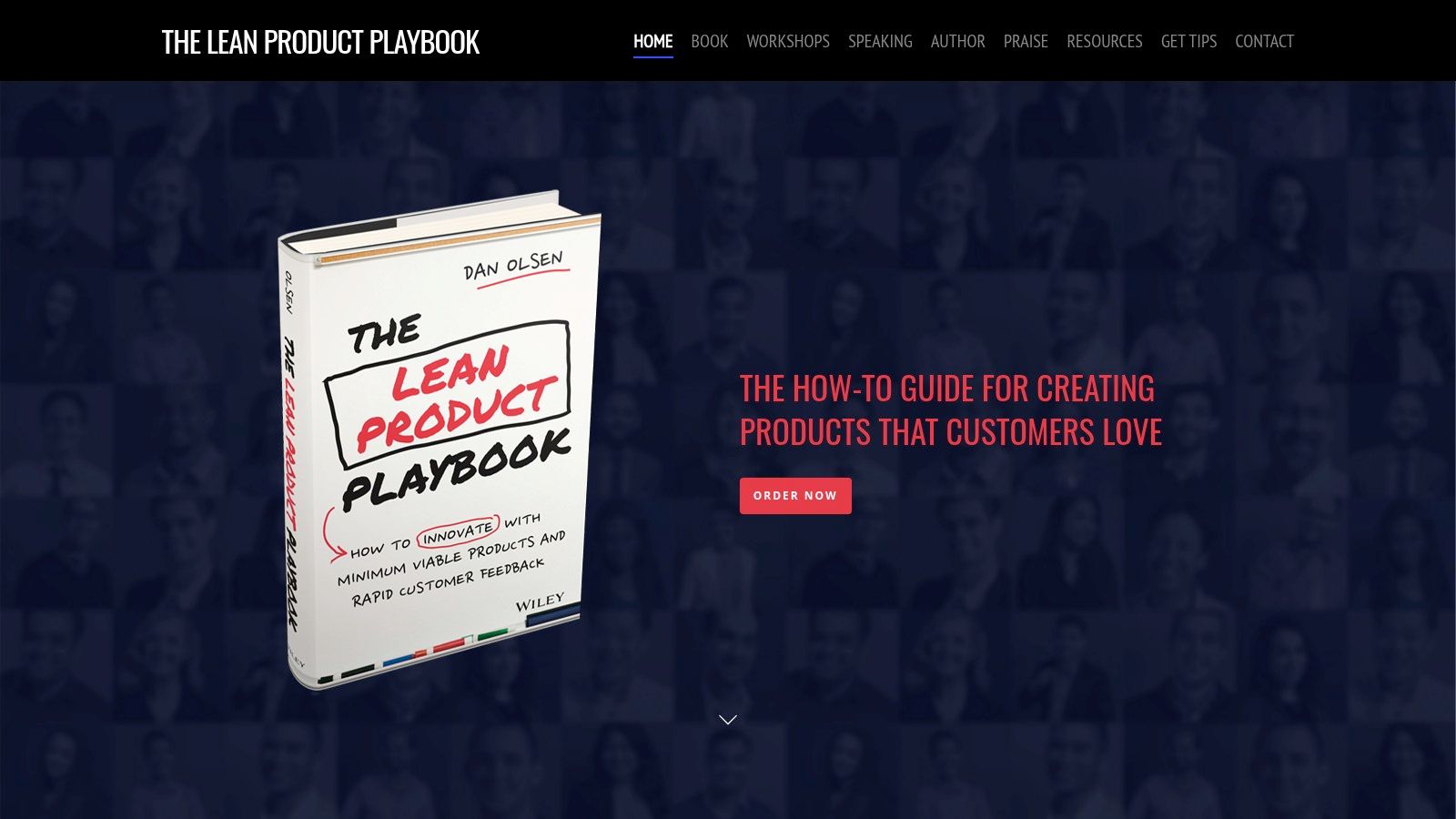
The platform’s strength lies in its actionable frameworks, like the Product-Market Fit Pyramid, and its focus on hypothesis-driven iteration. It provides downloadable templates and workshop-friendly exercises that teams can immediately put into practice. This makes the concepts tangible and less theoretical. For anyone searching for the top product management books, Olsen’s site provides the practical application layer often missing from reading alone, connecting qualitative discovery with quantitative validation.
Access to the website’s resources is free, serving as a powerful extension of the book (available for purchase separately, typically around $20-30). While some examples are oriented toward classic web and mobile applications, the core principles of MVP scoping and validation are universally applicable. The hands-on guidance ensures teams can adopt these methods from one sprint to the next.
Website: https://leanproductplaybook.com/
6. Lean Analytics (Alistair Croll, Ben Yoskovitz)
While many books discuss metrics, Lean Analytics provides a prescriptive framework for identifying the One Metric That Matters (OMTM) based on your business model and stage of growth. This text bridges the gap between product development and business intelligence, making it essential reading for data-driven teams. It moves beyond abstract theory to give product managers a concrete methodology for instrumenting their products and tying every decision back to tangible outcomes like revenue and retention. This is one of the top product management books for anyone overwhelmed by data.
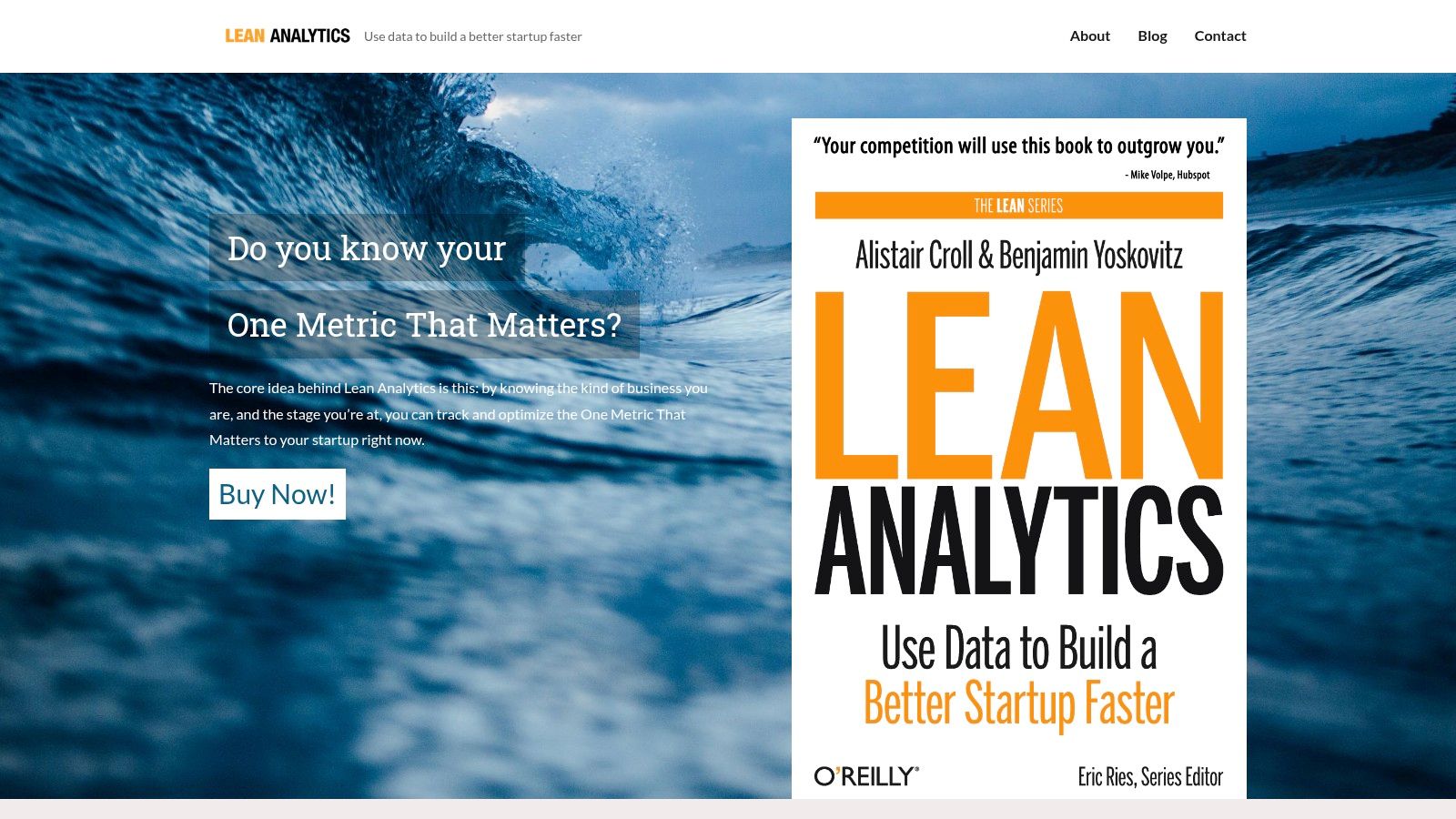
The book stands out by categorizing businesses into models (like SaaS, e-commerce, or media) and outlining specific metrics and targets for each. It distinguishes vanity metrics from actionable ones, teaching teams to run disciplined, falsifiable experiments. Its focus on cohorts, segmentation, and A/B testing provides a direct playbook for growth. The authors offer real-world case studies that, while sometimes feeling dated in the pre-AI era, still deliver foundational lessons on creating a data-first culture.
Lean Analytics is available in print, ebook, and audiobook formats wherever books are sold. The companion website offers additional resources, but the core value is within the book's pages. It provides a strong foundation for product, growth, and data teams to speak the same language, making it a powerful tool for aligning an entire organization around measurable success.
Website: https://leananalyticsbook.com/
7. Testing Business Ideas (David J. Bland, Alex Osterwalder)
This entry is less of a traditional book and more of a practical field guide for de-risking new ventures. Testing Business Ideas is an indispensable manual that provides a catalog of over 40 experiment types designed to validate or invalidate business assumptions before a single line of code is written. It acts as the perfect companion to discovery work, giving product managers a structured way to gather evidence and build confidence in their strategies.
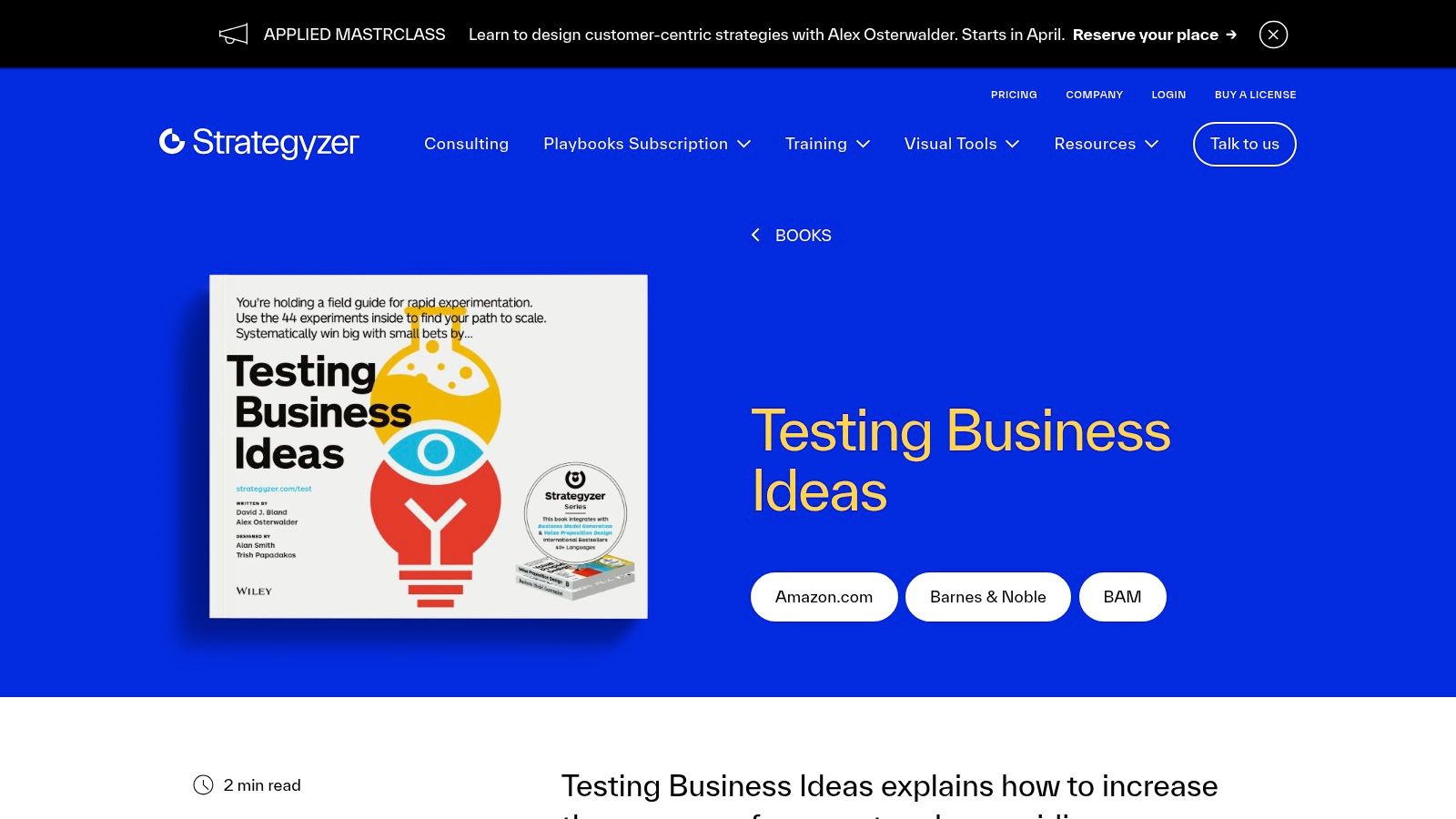
The book stands out with its highly visual, workshop-ready format, complete with worksheets and step-by-step guides. It integrates directly with the authors' other popular frameworks, the Business Model Canvas and Value Proposition Canvas, creating a cohesive system for innovation. Its core strength lies in its relentless focus on experimentation, teaching teams how to map assumptions, design low-cost tests, and measure the strength of evidence gathered. For those searching for top product management books that offer immediate, actionable techniques, this is a must-have.
While it is not a deep dive into the broader craft of product management, its specific focus is its power. By applying its methods, teams can directly reduce wasted engineering cycles and build a stronger, data-backed case for investment. The book is available in print and digital formats for around 25-40, making its high-impact lessons accessible to any PM.
Website: https://www.strategyzer.com/library/testing-business-ideas-book
8. Outcomes Over Output (Joshua Seiden)
Joshua Seiden's Outcomes Over Output is a concise, powerful guide that reorients product teams away from shipping features and toward delivering meaningful customer value. While technically a book, its direct, actionable framework earns it a spot as a foundational resource. It teaches PMs how to define success not by what they build (output) but by the measurable changes in customer behavior that drive business results (outcomes). This is one of the most important concepts in modern product management.
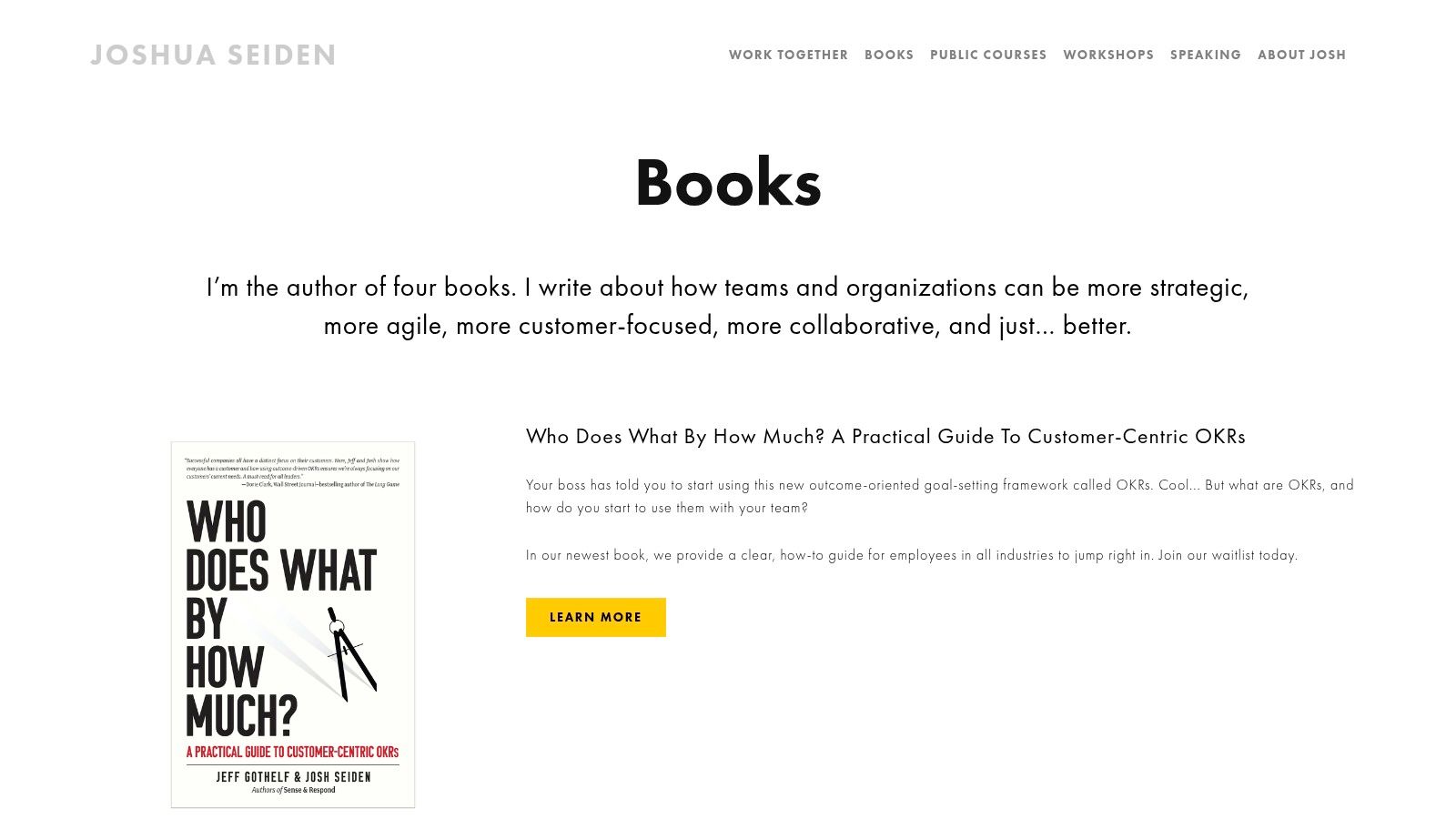
The book stands out for its brevity and clarity, making it an easy-to-digest tool for aligning entire organizations, from engineers to executives. It provides practical language and techniques for outcome-centric planning, acting as an essential companion to frameworks like Objectives and Key Results (OKRs). For product managers looking for the best top product management books, this one provides a critical mental model for connecting day-to-day work with strategic goals.
Its short format is both a strength and a weakness. It’s a fast read that gets the core message across effectively, but teams may need supplementary materials for deep implementation. The book is available in paperback, ebook, and audiobook formats, typically priced between 10 and 20, making it an accessible and high-impact addition to any PM's library.
Website: https://www.joshuaseiden.com/books
9. Obviously Awesome: How to Nail Product Positioning so Customers Get It, Buy It, Love It (April Dunford)
April Dunford's Obviously Awesome is an essential read that provides a repeatable, step-by-step process for product positioning. It demystifies a critical go-to-market activity that is often treated as an art, turning it into a science. Dunford’s framework helps product teams move from feature-focused descriptions to value-driven narratives that resonate deeply with a target market. The book is especially powerful for B2B and SaaS companies struggling to stand out in crowded categories.
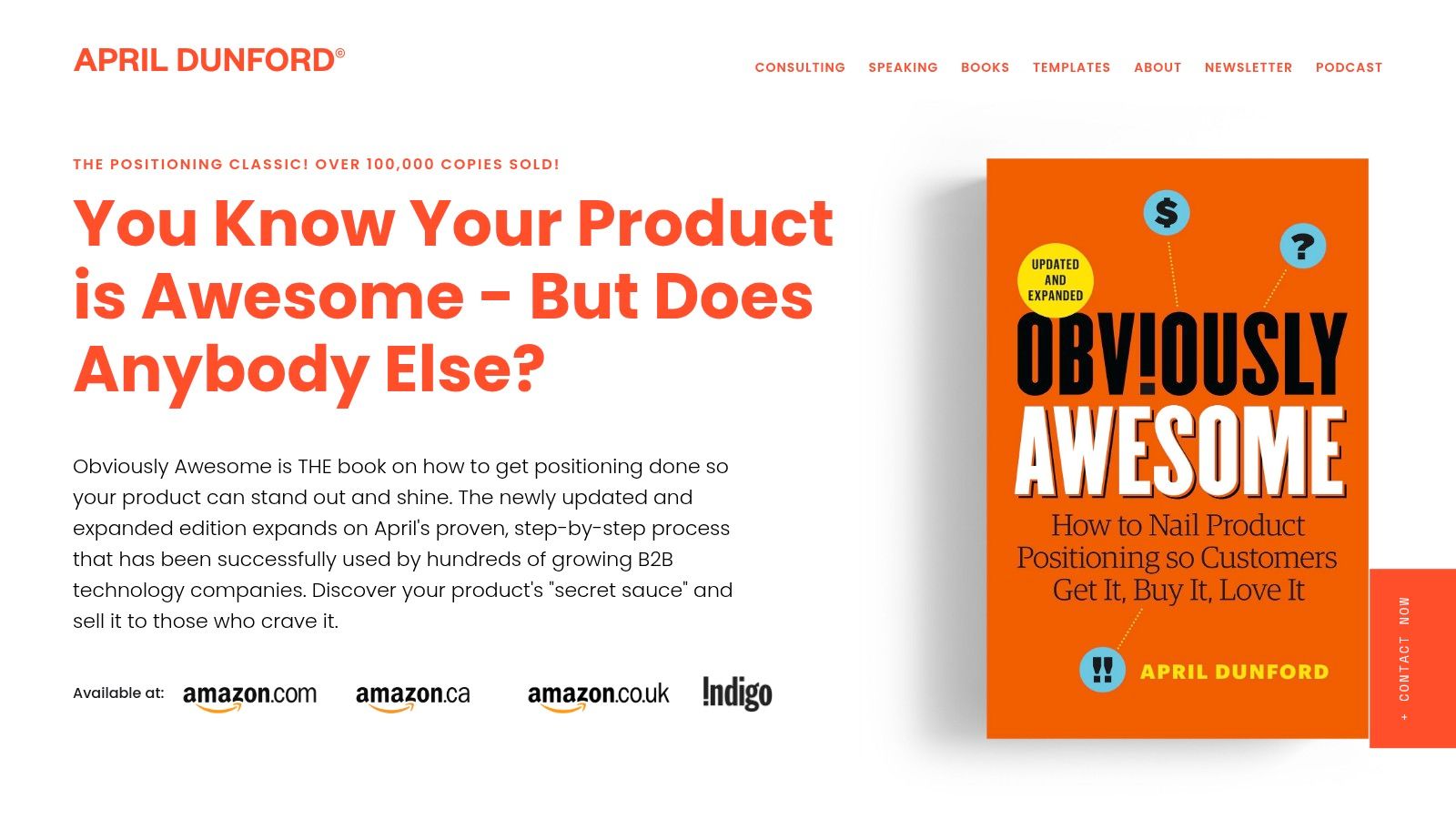
The core strength of this book is its actionable approach. Dunford outlines a ten-component positioning process that forces teams to define competitive alternatives, identify unique attributes, and articulate value for a specific market segment. This process is not just a theoretical exercise; it directly aligns product development with marketing and sales, ensuring the entire organization tells the same compelling story. Many readers consider this one of the top product management books for its immediate applicability, especially in product-led growth (PLG) environments.
While the book provides a clear blueprint, its effectiveness hinges on having genuine customer and market data. It is a tool for structuring insights, not a replacement for discovery work. The book is available in paperback, ebook, and audiobook formats, and Dunford’s website offers supplementary templates, including a helpful Positioning Canvas to guide workshops. This makes it an incredibly practical guide for any PM tasked with launching a new product or repositioning an existing one.
Website: https://www.aprildunford.com/books
10. Product Roadmaps Relaunched (Lombardo, McCarthy, Ryan, Clement)
This book modernizes the often-dreaded practice of roadmap creation, shifting the focus from rigid, date-driven feature lists to flexible, outcome-oriented strategic communication tools. It provides a practical framework for building roadmaps that align stakeholders, manage expectations, and connect daily work to company goals. By treating roadmaps as a communication-first document, the authors offer a method to reduce conflict and build consensus across executive, sales, and customer audiences.
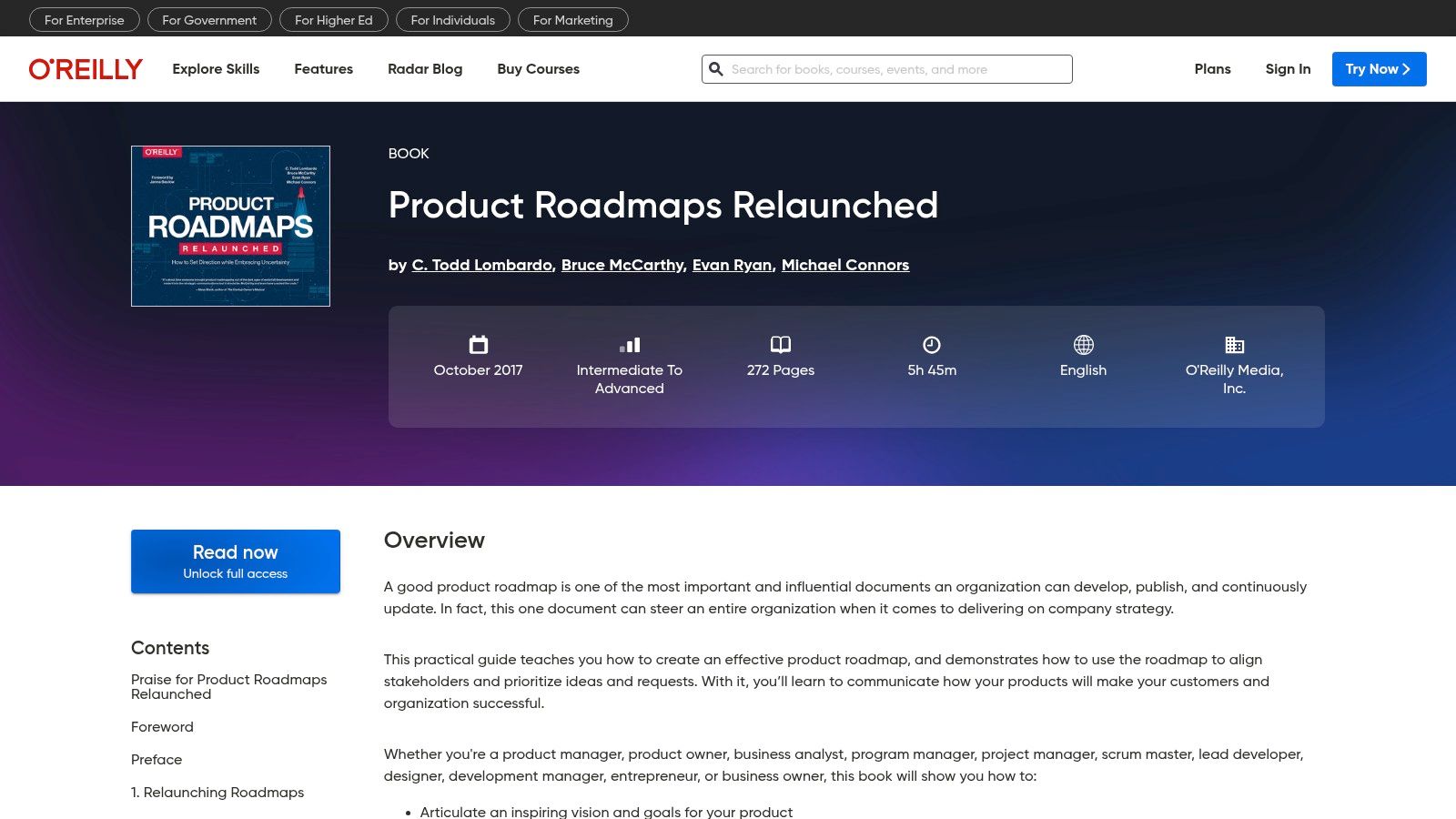
What makes this one of the top product management books is its direct, actionable guidance. The authors provide concrete examples of different roadmap formats tailored for specific audiences and detail how to incorporate themes, business objectives, and uncertainty. This is a powerful companion for teams adopting OKRs or continuous discovery, as it bridges the gap between high-level strategy and the product backlog. The book gives PMs the vocabulary and visual tools needed for better strategic conversations.
While its examples were written before the recent generative AI boom, the core principles on communication and outcome-based planning are timeless and more important than ever. The book is available in physical and digital formats from major retailers and directly through its publisher, O'Reilly, often as part of their subscription service.
Website: https://www.oreilly.com/library/view/product-roadmaps-relaunched/9781491971710/
11. Radical Focus (2nd ed.): Achieving Your Goals with OKRs (Christina Wodtke)
Christina Wodtke’s Radical Focus provides a clear, story-driven guide to implementing Objectives and Key Results (OKRs). Presented as a business fable, the book makes the often-abstract concept of OKRs accessible and demonstrates how to connect high-level strategy to the daily grind of product teams. This narrative approach is a key differentiator, showing the human side of goal-setting, including common pitfalls and the rhythms required for success. It's an essential read for any team struggling to maintain focus on outcomes over outputs.

The book goes beyond just setting goals by detailing the crucial rituals that make them stick. Wodtke introduces the concept of CFRs (Conversations, Feedback, Recognition) as the support system for OKRs, ensuring they become part of the team’s DNA. This makes it one of the top product management books for leaders aiming to build a culture of accountability and continuous improvement. The practical, step-by-step guidance for weekly check-ins and quarterly planning offers an actionable blueprint.
While Radical Focus excels at teaching one specific, powerful framework, it isn't a comprehensive guide to the entire product management craft. Its strength is its depth on a single topic. The book is available in paperback, ebook, and audiobook formats for around $20-30, making it an affordable and high-impact addition to any PM’s library. The author’s website also provides supplementary resources, including talks and articles.
Website: https://cwodtke.com/
12. Product-Led Growth: How to Build a Product That Sells Itself (Wes Bush)
Wes Bush’s Product-Led Growth is less a theoretical read and more an actionable playbook for building products that drive their own acquisition and retention. It codifies the strategy of using the product itself as the primary engine for customer growth, making it a critical text for SaaS teams moving toward freemium or trial-based models. The book provides a clear framework for aligning marketing, sales, and product development around a single goal: delivering value within the user's first session.
This book is distinguished by its focus on practical application, detailing how to optimize funnels for activation and reduce time-to-value. Bush outlines specific metrics and onboarding patterns essential for a successful product-led strategy. While many texts discuss growth, this is one of the few top product management books that offers a step-by-step guide to reorienting an entire company around the product experience. It’s an essential manual for PMs tasked with demonstrating ROI through user engagement and expansion.
The author also provides supplementary resources and digital versions through the associated website, adding value beyond the printed page. While the book lays out the "what" and "why," successfully executing its principles requires a strong foundation in UX design and analytics, as teams must be able to instrument and interpret user behavior effectively.
Website: https://productled.com/book
Top 12 Product Management Books Comparison
| Title | Core focus | Practicality ★ | Best for 👥 | Standout ✨/🏆 | Revenue impact 💰 |
|---|---|---|---|---|---|
| INSPIRED (Marty Cagan) | Product operating model: vision, discovery, delivery | ★★★★ | PMs & product leaders 👥 | 🏆 Common language for teams ✨ | Aligns orgs to outcomes; strategic ROI 💰 |
| EMPOWERED (Cagan & Jones) | Building empowered teams & leadership playbook | ★★★★ | VPs, directors, senior PMs 👥 | ✨ Coaching tools for leaders 🏆 | Scales team effectiveness & retention 💰 |
| Continuous Discovery Habits (Teresa Torres) | Weekly customer touchpoints & evidence-based discovery | ★★★★★ | SaaS PMs & product trios 👥 | ✨ Opportunity‑Solution Tree | Direct churn reduction & prioritized bets 💰 |
| Escaping the Build Trap (Melissa Perri) | Outcome orientation vs. output; org strategy | ★★★★ | Execs & senior stakeholders 👥 | 🏆 Diagnoses “build trap” behaviors ✨ | Reorients teams to revenue‑impact work 💰 |
| The Lean Product Playbook (Dan Olsen) | PMF, MVP scoping, hypothesis-driven iteration | ★★★★★ | Growth, PM & UX triads 👥 | ✨ PMF pyramid & practical templates | Faster PMF, fewer wasted builds 💰 |
| Lean Analytics (Croll & Yoskovitz) | Choosing metrics by stage; cohorts & experiments | ★★★★★ | Product, growth & data teams 👥 | 🏆 Stage‑by‑stage metrics playbook ✨ | Ties instrumentation to retention/expansion 💰 |
| Testing Business Ideas (Bland & Osterwalder) | Experiment library to de‑risk propositions | ★★★★ | Product & GTM teams 👥 | ✨ 40+ experiment templates | Reduces wasted builds; strengthens ROI cases 💰 |
| Outcomes Over Output (Joshua Seiden) | Shifting to outcome‑centric goals & measures | ★★★★ | Leaders & OKR sponsors 👥 | ✨ Clear outcomes vs outputs language | Aligns measurement to customer behavior 💰 |
| Obviously Awesome (April Dunford) | B2B/SaaS positioning & value messaging | ★★★★ | PMs, GTM & sales teams 👥 | 🏆 Positioning Canvas & workshop flow ✨ | Improves conversion, pricing & match to buyers 💰 |
| Product Roadmaps Relaunched (Lombardo et al.) | Outcome‑oriented roadmaps & communication | ★★★★ | PMs, portfolio leads & PMOs 👥 | ✨ Audience‑specific roadmap formats | Better prioritization; less roadmap conflict 💰 |
| Radical Focus (Christina Wodtke) | OKR adoption, cadence & CFRs | ★★★★ | Teams adopting OKRs & managers 👥 | ✨ Story + rituals for OKRs | Keeps teams focused on measurable outcomes 💰 |
| Product‑Led Growth (Wes Bush) | PLG funnel: acquisition → activation → expansion | ★★★★ | PLG teams, freemium/trial operators 👥 | ✨ Time‑to‑value & onboarding playbook | Boosts activation and expansion metrics 💰 |
Turn Reading into Revenue-Driving Reality
This curated collection of the top product management books offers a powerful curriculum for any product leader. Across these pages, from Marty Cagan's foundational principles in INSPIRED to Teresa Torres's methodical approach in Continuous Discovery Habits, a clear pattern emerges. The best product managers don't just build features; they solve specific customer problems in a way that creates measurable business value. They move beyond output-driven roadmaps, as detailed in Outcomes Over Output, and embrace a system of constant learning and validation.
The primary challenge, however, isn't understanding these concepts. It's applying them consistently amidst the daily flood of user feedback, support tickets, and sales requests. The theories in these books are your strategy, but your execution depends on your ability to process and act on real-world data. This is where modern tooling becomes essential.
An AI-powered product intelligence platform like SigOS acts as the practical engine for the frameworks you've just read about.
- For Continuous Discovery: Instead of manually sifting through conversations, SigOS automatically surfaces the most urgent problems, desired outcomes, and opportunity gaps directly from your customer communications. This feeds your discovery process with quantified, evidence-based insights.
- For Prioritization: When escaping the build trap, you need to connect your work to business impact. SigOS quantifies the revenue tied to specific feature requests or the churn risk associated with certain pain points, giving you the data needed to make defensible, high-impact decisions.
- For Roadmapping: As you build your roadmap based on themes and outcomes, SigOS provides the underlying evidence. You can validate your strategic direction with real customer voice data, ensuring your plans are grounded in reality, not just internal assumptions.
Translating these complex strategies and data points into clear, concise documentation for your team and stakeholders is another critical step. To effectively translate the insights from these books into actionable strategies and clear communication, leveraging an advanced AI writing assistant can streamline your workflow and enhance your output. It helps articulate your data-backed narratives with precision.
Ultimately, the journey from reading these top product management books to building a successful product is one of application. Start small. Pick one concept from one book, whether it's an opportunity solution tree or a value proposition statement, and apply it to a real problem. By connecting the timeless wisdom from these authors with the practical, data-driven power of modern tools, you create a repeatable system for turning customer insight into revenue-driving reality.
Ready to turn theory into action? SigOS analyzes your customer conversations to automatically identify and quantify the churn risks and revenue opportunities hidden in your feedback. See how it can power the frameworks from these books by connecting your product decisions to real business impact. Get a demo of SigOS today.
Keep Reading
More insights from our blog


Ready to find your hidden revenue leaks?
Start analyzing your customer feedback and discover insights that drive revenue.
Start Free Trial →