sales call analysis software: Boost Revenue with Insights
Boost ROI with sales call analysis software. Learn features, best practices, and how to maximize your team's performance.
For decades, sales conversations were a total black box. Managers had to rely on gut feelings and secondhand stories to figure out why some deals closed and others just fizzled out. Coaching was based on memory, not evidence, creating a huge performance gap. It was like trying to coach a football team after only hearing about the game later.
This is where modern sales call analysis software comes in. Think of it as game film for your sales team.
Instead of relying on fuzzy memories, you get a complete, searchable record of every single interaction. This tech gives you the equivalent of instant replays, expert commentary, and detailed stats for every conversation. It’s no longer just a nice tool to have; it’s a competitive necessity for any team that wants to understand not just what was said, but why certain conversations lead to a win.
Shifting from Reactive to Proactive Sales Strategy
The real magic here is the shift from a reactive to a proactive sales culture. Instead of waiting for a quarterly review to find out what went wrong, sales leaders can spot trends and coaching opportunities as they happen. Every call—win or lose—becomes a source of intelligence that refines your sales playbook and fuels growth. To really get it, you need to understand its foundational discipline, known as conversation intelligence.
This isn't just a niche trend. The market is exploding. The global conversation intelligence space was valued at 23.4 billion in 2024 and is expected to rocket to ****55.7 billion by 2035. That massive growth shows just how many companies are turning to AI to analyze calls for insights into deal progression and customer sentiment.
The Core Components of Analysis
This kind of software does a lot more than just hit "record." It dissects conversations to uncover hidden patterns and powerful insights. The core capabilities usually include:
- Transcription and Search: It turns every spoken word into searchable text. Suddenly, you can find every time a competitor was mentioned in seconds.
- Sentiment Tracking: The software analyzes the emotional tone of the customer throughout the call—were they excited, frustrated, or hesitant?
- Topic Identification: It automatically flags key topics like pricing objections, feature requests, or mentions of specific competitors.
These pieces work together to paint a full picture of every interaction. A huge part of this is getting a read on customer feelings, which you can dive deeper into in our guide on customer sentiment analysis tools. By turning unstructured chatter into structured data, this software gives your team a repeatable formula for closing more deals.
Under the Hood: The AI Engine Driving Modern Sales Analysis
To really get a feel for what today's sales call analysis software can do, you have to pop the hood and look at the engine. It's not just a collection of features; it's a sophisticated AI system where each part works together, turning a simple phone call into a goldmine of strategic insights. Every component builds on the one before it, giving you a complete, actionable picture of every single sales conversation.
It's all about shifting from guesswork to data-driven decisions.
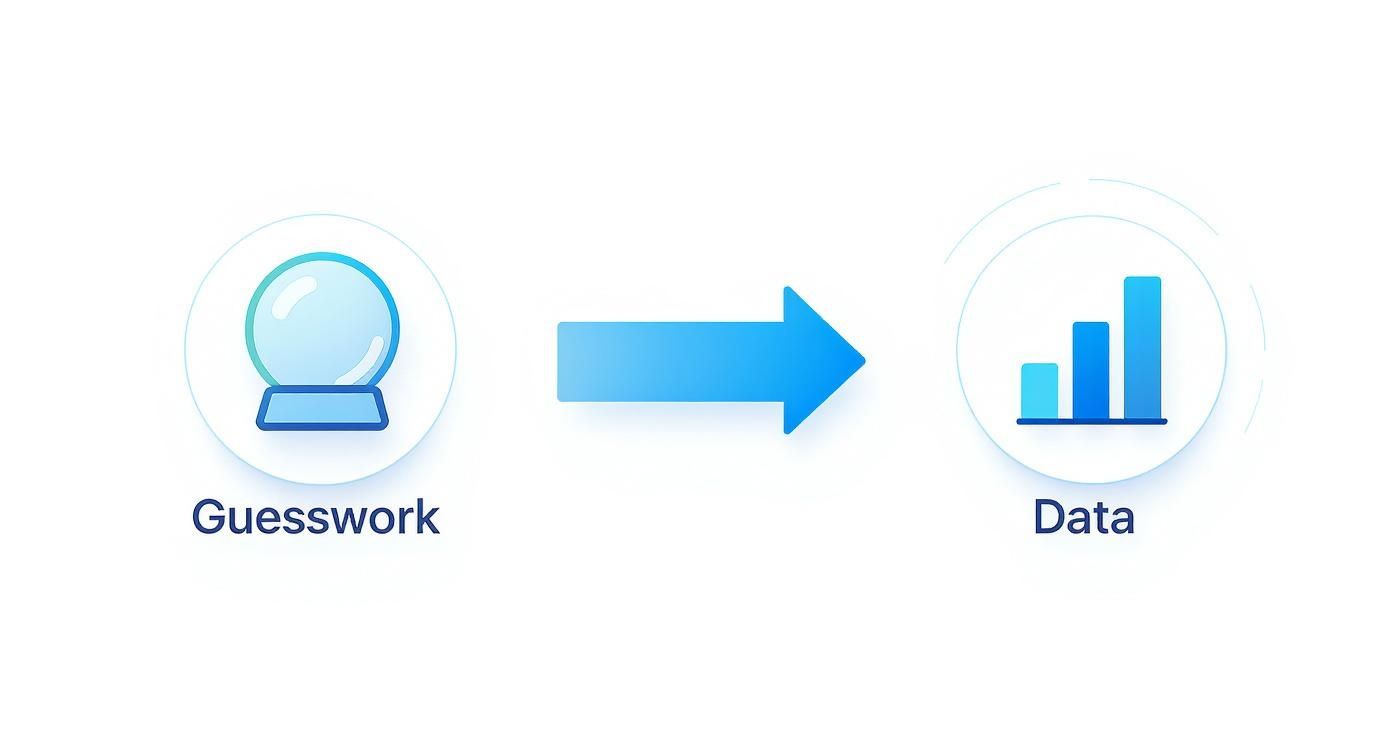
This is the core idea: moving your team away from relying on gut feelings and toward a strategy built on hard evidence from your actual customer conversations.
Speech-to-Text Transcription: The Digital Foundation
Everything starts here, by turning spoken words into text. This is the bedrock of all analysis. High-quality speech-to-text transcription creates a searchable, digital record of everything said on a call.
Think about it this way: an audio file is a black box. But once transcribed, it becomes a living document. Suddenly, you can search for every mention of a competitor, every question about pricing, or every feature request in seconds. Without this crucial first step, none of the deeper analysis would even be possible.
Sentiment and Emotion Analysis: Reading Between the Lines
Once the words are on the page, the AI can dig into how they were said. Sentiment and emotion analysis is like having a built-in empathy reader that picks up on the tiny shifts in tone and emotion that even a seasoned rep might miss.
Was the customer excited when you mentioned a new feature, but their voice tightened up when the budget came up? This technology actually quantifies those shifts, giving you a real-time gauge of their engagement and uncovering how the buyer truly feels at every stage of the call.
Topic and Keyword Extraction: The Smart Highlighter
With the "what" and "how" covered, the AI zeroes in on the most important moments. Topic and keyword extraction works like an intelligent highlighter, automatically flagging the key themes and specific terms that matter most to you.
You can set it up to listen for your unique business triggers.
- Buying Signals: It instantly tags phrases like "What are the next steps?" or "When can we get started?" so you know exactly when a deal is heating up.
- Competitor Mentions: Any time a rival's name comes up, it's flagged. This gives you a constant pulse on your competitive landscape.
- Budget Conversations: The system automatically pinpoints any discussion around pricing, discounts, and financial hurdles for easy review.
- Feature Requests: It captures every customer wish, creating a direct feedback loop from the frontline to your product development team.
This saves managers from having to listen to hours of calls. Instead, their attention is guided straight to the moments that need coaching or immediate follow-up. If you're curious, you can analyze your own calls with SigOS to see this in action.
Revenue-Impact Scoring: Connecting Conversation to Cash
This is the final piece of the puzzle, and it's a game-changer. Revenue-impact scoring directly links what's said on a call to actual business outcomes. It’s the ultimate accountability tool, showing you which behaviors, phrases, and topics consistently lead to won—or lost—deals.
It answers the one question every sales leader has: what do my top reps actually do to close deals? The system might find that reps who spend 15% more time discussing a certain value prop have a 30% higher close rate.
This isn't guesswork anymore. It's a data-backed playbook built from the proven habits of your best people. You can finally turn that anecdotal "sales magic" into a repeatable process that lifts the performance of your entire team, creating a predictable engine for growth.
Tying Call Analysis Directly to Your Bottom Line
It’s one thing to understand the bells and whistles of sales call analysis software, but it’s another thing entirely to see how it actually moves the needle on revenue. This is where the magic happens—where abstract ideas like sentiment analysis and topic extraction become real-world results. We're talking about fewer customers leaving, more existing customers buying, and deals closing faster.
Ultimately, this is about turning all those hours of conversation into a predictable engine for growth.
Let’s step away from the tech specs and dive into the practical, on-the-ground impact. These aren't just hypotheticals; they are direct consequences of using conversation insights to make smarter, faster decisions.
Get Ahead of Customer Churn
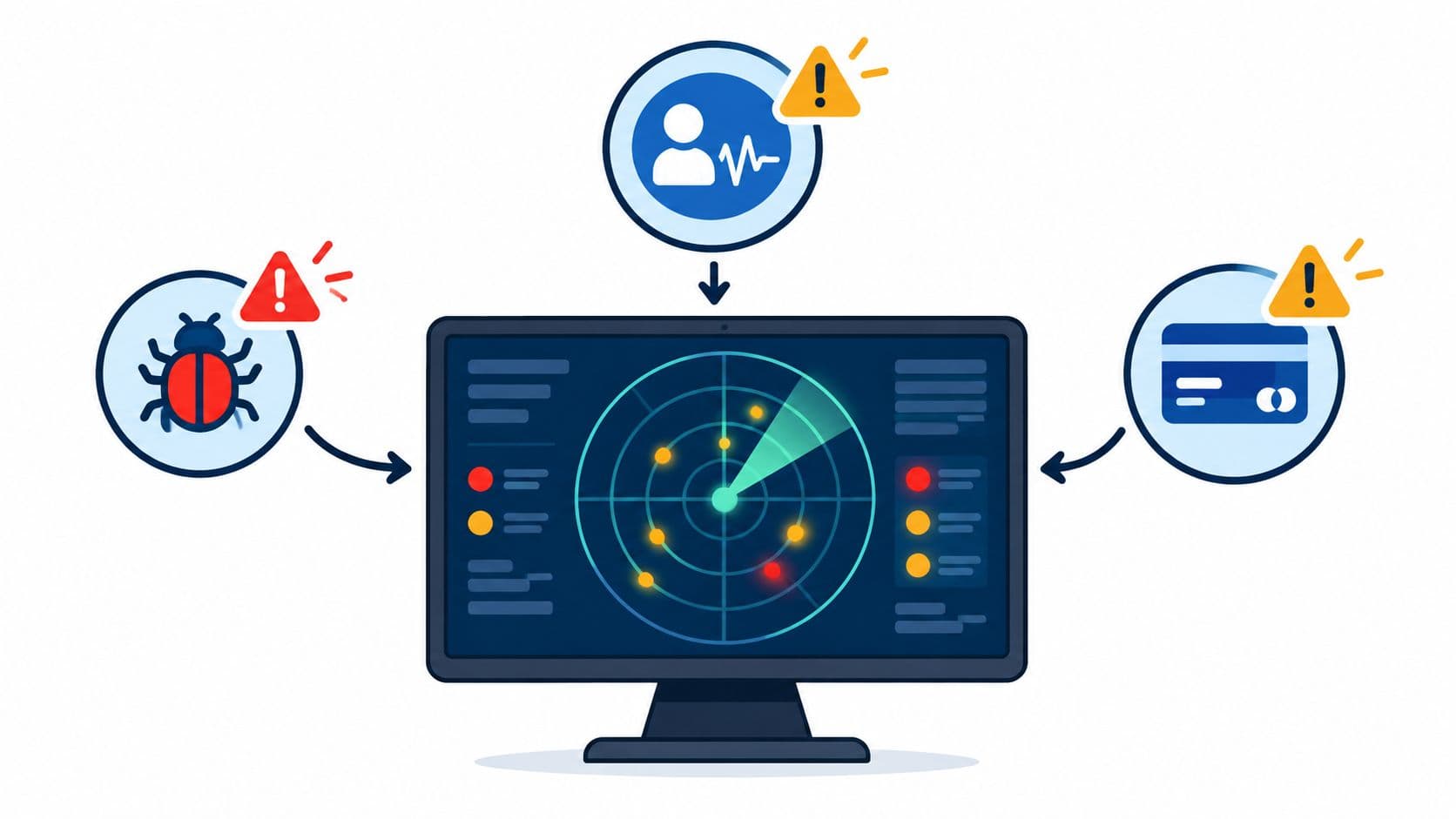
For most businesses, churn is a quiet but deadly threat to growth. Sales call analysis software gives you an early warning system, helping you spot the red flags with at-risk accounts long before they walk out the door.
The software is always listening, automatically flagging calls where negative sentiment is high or where customers use words like "frustrated," "disappointed," or "looking at other options." This lets your customer success team jump in and solve a problem, rather than just reacting to a cancellation email.
This shifts your customer-facing teams from reactive firefighters to proactive relationship builders. This kind of intelligence is the backbone of effective AI-powered decision making, helping you focus your energy where it counts the most.
Find and Accelerate Expansion Revenue
Your current customers are your best source of new revenue, but figuring out who is ready to upgrade often feels like a shot in the dark. Call analysis pinpoints these expansion opportunities by catching buying signals that even the best reps can miss.
The system can automatically surface conversations where customers:
- Talk about pain points that your premium features directly address.
- Ask about capabilities that are part of a higher-tier plan.
- Express frustration with the limitations of their current package.
Suddenly, your expansion team has a pre-qualified list of warm leads. Instead of a cold pitch, they can follow up with a perfect solution to a problem the customer just talked about, making the sale feel natural and helpful.
Shrink Your Sales Cycle
Want to boost revenue fast? Shorten the time it takes to get a deal signed. Call analysis software helps you do this by reverse-engineering what your top reps do and turning it into a playbook for everyone else.
By analyzing thousands of successful (and unsuccessful) calls, the system can pinpoint the exact talk tracks, objection-handling tactics, and value props that consistently win deals. Maybe it shows that deals close 20% faster when reps mention a specific case study. Now you know.
This "game film" approach gives you a clear, data-driven path to improvement:
- Spot Winning Habits: Isolate the precise phrases and strategies your A-players use.
- Build a Replicable Playbook: Turn those habits into a simple, structured guide for the entire team.
- Onboard New Hires Faster: Hand new reps a proven formula from day one, slashing their ramp-up time.
Instead of every rep guessing what works, you’re systematically cloning your best performers. Everyone on the team gets equipped with the most efficient path to "closed-won," which makes your whole sales engine more predictable and powerful.
Business Outcomes Enabled by Sales Call Analysis
The table below breaks down exactly how the software's core features translate into tangible business goals and metrics you can actually measure.
| Business Goal | Enabling Feature | Example Metric to Track |
|---|---|---|
| Reduce Customer Churn | Sentiment & Emotion Analysis | Percentage decrease in voluntary churn rate quarter-over-quarter |
| Accelerate Revenue Expansion | Topic Extraction & Keyword Spotting | Increase in average contract value (ACV) from existing customers |
| Shorten the Sales Cycle | Deal Intelligence & Scoring | Reduction in the average number of days from opportunity creation to close |
| Improve Sales Coaching | Talk-to-Listen Ratio Analysis | Increase in quota attainment across the sales team |
| Increase Win Rates | Competitor Mention Tracking | Higher win rate percentage against key competitors |
By focusing on these connections, you can see how call analysis isn't just a coaching tool—it's a strategic lever for driving significant, sustainable growth across the organization.
How to Choose the Right Analysis Platform
Picking a sales call analysis software is a major decision. The right tool can genuinely change how your team sells, but the wrong one quickly becomes another expensive, ignored dashboard. To get it right, you have to look past the flashy feature lists and dig into the criteria that actually make a difference.
The evaluation process needs to be a hands-on, real-world test, not just a series of slick demos. It’s like test-driving a car—you wouldn't buy one without seeing how it handles on your streets, with your driving style, and under real traffic conditions.
Demand Uncompromising Transcription Accuracy
The entire promise of a call analysis platform rests on a single pillar: the quality of its transcription. If the system can't accurately hear and write down what was said, every other feature—from sentiment tracking to topic extraction—is fundamentally broken. This is especially true if your team deals with a lot of industry jargon or speaks with customers who have diverse accents.
Don't just take a vendor's word for their accuracy rates. The only way to know for sure is to put them to the test yourself.
- Provide Your Own Recordings: Hand over a few of your team's real calls, not some sanitized demo file.
- Include Complex Scenarios: Make sure your test files have it all—heavy accents, people talking over each other, technical acronyms, and background noise.
- Evaluate Speed and Context: It’s not just about getting the words right. How fast is the transcript ready? Can it correctly tell who is speaking and when?
A platform that trips over your company’s unique terminology will never deliver the insights you're paying for. High accuracy isn’t just a nice-to-have; it's the absolute foundation.
Prioritize Seamless Integrations
Want to guarantee your new software fails? Make it create more work for your reps. If a platform doesn’t slot perfectly into the tools your team already uses every single day, adoption will grind to a halt. Your sales call analysis software has to feel like a natural part of their workflow, not a clunky detour.
A deep, two-way sync with your CRM is non-negotiable. Insights from a call should automatically pop up in contact records in Salesforce or HubSpot, and deal data from the CRM should flow back into the analysis platform. This is how you connect conversations to outcomes.
Also, look at how it connects with collaboration tools like Slack or Microsoft Teams. Getting an instant alert in a Slack channel when a competitor is mentioned or when a customer gives a strong buying signal can make all the difference in a fast-moving deal.
Scrutinize Security and Compliance
You're about to hand over some of your company's most sensitive data—your private customer conversations—to a third-party vendor. Protecting that information is everything. This is one area where you absolutely cannot afford to cut corners.
Ask potential vendors for proof that they meet the highest security and compliance standards. Here’s what you should be looking for:
- SOC 2 Compliance: This is a critical certification that proves a vendor has robust internal controls in place to protect your data.
- GDPR and CCPA: If you do business in Europe or California, the platform must be fully compliant with these major data privacy regulations.
- Data Encryption: You need to confirm that all of your data is encrypted, both when it's being transferred and when it's sitting on their servers.
Failing to properly vet a vendor’s security puts both your company and your customers at serious risk.
Insist on Clear Revenue Attribution
At the end of the day, the only thing that matters is whether this software helps you make more money. Don't get distracted by vanity metrics like talk-to-listen ratios. You need a platform that answers the million-dollar question: "How did this insight help us close more deals?" For a deeper dive into this, check out this guide on choosing sales call recording software that wins deals.
Challenge vendors to show you exactly how their system connects what's said on a call to closed-won revenue. Make them demonstrate how they identify the specific talking points or objection-handling tactics that are most common in your team's biggest wins. The goal isn’t to find interesting conversational tidbits; it's to uncover actionable, revenue-driving intelligence that delivers a clear return on your investment.
Implementing for Maximum Team Adoption and ROI
Just buying a piece of sales call analysis software is like getting a gym membership and never going. The real power isn't in the purchase; it's in weaving the tool into your team's daily rhythm and sales culture. True success comes when you embed it into your workflow, driving both genuine adoption and a return on investment you can actually measure.
A strategic rollout is everything. Don't just flip the switch for the entire organization at once—that’s a recipe for confusion and pushback. Instead, take a phased approach. Start small with a pilot group of your most engaged, tech-forward reps. You know the ones—they’re always looking for an edge and are eager to level up their game.
Think of this first group as your proving ground. They'll help you score some early wins, find any kinks in the process, and become your internal champions who can later show their peers the ropes. Their success stories are what will build real momentum and prove the tool’s value in a way no PowerPoint ever could.

Cultivate Coaching, Not Surveillance
The number one hurdle to getting your team on board is the "Big Brother" factor. If reps feel like they're being spied on, they'll fight you every step of the way. The trick is to frame the software as a personal development tool—their own personal "game film" they can review to learn from their best plays.
You have to build a culture of coaching, not micromanagement. Position the software as something that helps reps close bigger deals and, frankly, make more money. When they see it as a resource for winning, their whole mindset shifts from defensive to proactive.
This approach is becoming essential as these tools become more mainstream. The global sales software market was valued at 31.26 billion in 2025 and is on track to hit ****63.15 billion by 2030. AI-powered tools are a huge part of that explosion, signaling a massive shift toward data-backed coaching. You can get more details on the growth of the sales software market from Mordor Intelligence.
Build Actionable Training Libraries
Once you’re ready to roll out more broadly, it's time to systematize your coaching by building a library of your greatest hits. The killer techniques your top performers use shouldn't be a well-kept secret. Use the software to pinpoint and collect these moments of brilliance.
Create specific playlists for different situations:
- Objection Handling: A collection of calls where reps flawlessly navigated tough questions about pricing or features.
- Competitive Mentions: Real-world examples of how your best reps reposition your value when a competitor comes up.
- Closing Techniques: A highlight reel of the final minutes from won deals, showcasing the exact language that sealed the deal.
These "game film" libraries are gold for training new hires and for the ongoing development of your seasoned vets. Instead of just telling reps what to do, you can show them precisely what success sounds like.
A library of winning calls is the most powerful training tool you have. It replaces abstract theory with concrete, repeatable examples of what works, straight from your own team.
Define and Track Clear KPIs from Day One
Finally, if you want to prove this investment was worth it, you have to know what success looks like from the start. Go beyond fuzzy goals like "improve sales" and lock in on specific Key Performance Indicators (KPIs) that the software can directly impact.
Before you even start, benchmark your team's current performance on these metrics. Then, track the changes as you go.
Key Implementation KPIs to Track:
- Reduced New Hire Ramp Time: How long does it take a new rep to hit their first full quota? Measure the before and after.
- Increased Talk-to-Listen Ratio: Are your reps listening more and talking less? The data will tell you.
- Improved Objection Handling: What's your success rate for overcoming the most common objections? Track the improvement.
- Shorter Sales Cycles: How much faster are you moving deals from first contact to closed-won?
By setting these clear benchmarks, your sales call analysis software transforms from a simple coaching tool into a strategic powerhouse. You can walk into any leadership meeting and show exactly how this investment isn't just changing conversations—it's building a stronger, more efficient revenue engine.
Answering Your Key Questions About Call Analysis Software
Diving into sales call analysis software is a big step, and it’s natural to have questions. You're probably wondering about the real-world impact on your team, the return you can expect, and what hurdles might pop up along the way. That's smart. It means you're already thinking about how to make this a success.
Let's tackle the most common questions head-on. My goal here is to give you clear, straightforward answers that will help you move from initial curiosity to a confident, well-thought-out plan.
How Does This Software Handle Different Languages and Accents?
This is a make-or-break question for any company with a global customer base or a diverse sales team. The whole system falls apart if it can’t accurately understand what’s being said, no matter the language or dialect.
The best platforms are powered by sophisticated Natural Language Processing (NLP) models. Think of these AI engines as having gone to school on a massive, global scale, trained on thousands of hours of speech from all over the world. This is what allows them to transcribe conversations with high precision across different languages, regional dialects, and accents.
But don't just take a vendor's word for it. When you're evaluating options, ask for proof. The best way to do this is to give them a few of your team's actual call recordings. This is the ultimate real-world test and will show you very quickly how well their system handles your specific industry jargon and the unique accents of your reps and customers.
A high-quality system does more than just turn speech into text. It should be able to tell who is speaking (a feature called speaker diarization) and even learn your company’s unique vocabulary over time. Insist on a platform that can prove its accuracy with your data, not just some polished demo files. That way, you know the foundation of your analysis is rock-solid from day one.
Will My Sales Team Feel Like They Are Being Spied On?
This is probably the biggest cultural hurdle you'll face, and it’s a concern every sales leader needs to get in front of. If your reps think this is a "Big Brother" tool for micromanagement, they'll fight it, and you'll never see the ROI you're hoping for.
The secret is all in how you frame it. From the very first announcement, position the sales call analysis software as a coaching and self-improvement tool—something designed to help them close bigger deals and make more money.
Show them what’s in it for them directly:
- No More Frantic Note-Taking: It frees them up to be fully present in the conversation instead of scribbling notes.
- Their Own Personal Game Film: They can review their best calls to see exactly what worked, so they can do it again and again.
- Feedback That’s Actually Fair: It shifts coaching from subjective opinions to objective data, focusing on what actually happened on the call.
True adoption happens when your team sees the software as a tool that serves them, not just management. Foster a culture of transparency by using the data to celebrate wins and provide constructive feedback, never for punitive oversight. When reps see it as a path to a bigger commission check, they will embrace it.
What Is the Typical ROI and How Soon Can We See It?
Alright, let's get to the bottom-line question. What kind of return can you actually expect, and how long does it take? The return on investment (ROI) from sales call analysis software shows up in a few different ways, so it's important to know what to look for.
The ROI isn't just a single number. You’ll see it in improvements across several key metrics: higher win rates, shorter sales cycles, larger average deal sizes, and faster ramp times for new hires. You're essentially turning the "art" of sales into a repeatable, data-driven science.
While every company is different, you can expect to see some early signs of success within the first 90 days. These are your leading indicators—things like better talk-to-listen ratios or reps bringing up key value propositions more often. It shows the coaching is starting to stick.
The more substantial, bottom-line ROI—like a 5-10% lift in overall team quota attainment or a 15% reduction in sales cycle length—typically becomes clear within six to twelve months. It just takes time for new habits and better coaching to become fully ingrained in the team's workflow and start making a real impact on closed-won revenue.
How Much Technical Skill Is Needed to Manage This Software?
This is a common and totally fair question, especially for sales teams that don't have dedicated IT support on speed dial. The good news? Modern sales call analysis platforms are built as user-friendly Software-as-a-Service (SaaS) solutions. They’re designed for business users, not IT experts.
Getting started is usually pretty simple. The initial setup often involves secure, one-click integrations with the tools you're already using. Through a process like OAuth, you can safely connect the platform to your CRM (like Salesforce or HubSpot), your calendar (Google Calendar or Outlook), and your video conferencing tools (Zoom or Microsoft Teams) in just a few minutes.
A sales manager or someone in sales ops will likely handle the initial configuration—setting up user permissions, creating keyword trackers for competitors, and building out coaching scorecards. But the day-to-day use of the platform is incredibly intuitive.
The interface is built for sales leaders and enablement teams to easily find calls, create training playlists, and review analytics without needing to write a line of code or submit a support ticket. The whole point of these platforms is to empower your revenue teams to own the tool themselves, so they can get the insights they need without any technical bottlenecks.
At SigOS, we transform your customer conversations into your most valuable asset. Our AI-driven platform ingests every support ticket, chat, and sales call to reveal the revenue-driving insights hidden in your customer feedback. Prioritize your product roadmap with SigOS and build what customers will pay for.
Ready to find your hidden revenue leaks?
Start analyzing your customer feedback and discover insights that drive revenue.
Start Free Trial →