Your Guide to a Powerful Technology Roadmap Template
Build a winning SaaS strategy with this practical technology roadmap template. Learn how to align your team, prioritize goals, and execute with clarity.
In the fast-paced world of SaaS, a simple to-do list or a sprawling product backlog just doesn't cut it. To really compete, you need a technology roadmap template. Think of it as the strategic blueprint that connects your team's day-to-day work with your company's biggest goals, making sure every single development cycle pushes the product forward. It’s the essential link between a grand vision and the tangible work that brings it to life.
Beyond the Backlog: Why Your SaaS Needs a Real Roadmap
Too many SaaS teams I've seen run their entire development process straight from the backlog. They treat it as the ultimate source of truth. While a backlog is absolutely critical for managing tasks and organizing sprints, it's missing the one thing that matters most for long-term growth: strategic perspective. A backlog tells you what you’re building next, but it completely ignores the far more important question: Why are we building it?

Without a proper roadmap, teams inevitably stumble into some common, painful traps.
- Wasted Engineering Cycles: Developers pour hours into features that seem important at the moment but don't actually move the needle on company objectives. This leads to bloated code that adds complexity without delivering real customer value.
- Mounting Technical Debt: The constant pressure to ship the next feature means foundational improvements and crucial architectural work get pushed off indefinitely, which grinds future development to a halt.
- Reactive Decision-Making: The team gets pulled in a dozen different directions by the "loudest voice in the room," chasing the latest sales demand or a one-off customer request without any framework to evaluate if it's the right move.
A solid technology roadmap shifts the entire conversation. It moves you from focusing on outputs (shipping features) to celebrating outcomes (creating business impact). It’s a communication powerhouse that gives everyone—from engineering and product to the C-suite—the context they need to see the bigger picture and pull in the same direction.
The Strategic Gap a Roadmap Fills
Here’s a simple way to think about it: a product backlog is your grocery list, but a technology roadmap is the cookbook that plans out the entire week's meals. One is tactical and focused on the immediate, while the other is strategic, ensuring everything comes together into a coherent, satisfying plan.
Let’s look at a real-world scenario. Imagine a competitor suddenly launches a game-changing integration. A team without a roadmap might hit the panic button, dropping everything to build a copycat feature and derailing their current sprint. But a team guided by a clear roadmap can calmly assess this new threat against their established strategic themes—like "Improve User Onboarding" or "Enhance Platform Scalability"—and make a deliberate, informed decision about how, or if, to respond.
A roadmap isn't a list of features with deadlines. It's a statement of intent and direction. It’s a communication tool that creates alignment and provides the context needed for teams to make smart decisions autonomously.
This visual approach is key. A good roadmap connects those high-level themes to the specific features and initiatives that will bring them to life over time. It provides instant clarity for every stakeholder, from the newest engineer to the CEO.
If you’re looking for a more hands-on approach to structuring your first roadmap, this practical product manager roadmap template guide is a great resource.
Roadmap vs. Backlog: What's the Difference?
It's easy to get these two confused, but they serve fundamentally different purposes. The roadmap is your "why," and the backlog is your "how" and "what." Here's a quick breakdown.
| Attribute | Technology Roadmap | Product Backlog |
|---|---|---|
| Purpose | Communicates strategic direction and goals | Lists and prioritizes detailed tasks and items |
| Audience | Executives, stakeholders, entire company | Development team, product owners |
| Timeframe | Long-term (quarters, year+) | Short-term (sprints, immediate future) |
| Detail Level | High-level themes and initiatives | Granular user stories, bugs, and tasks |
| Focus | Outcomes and business impact ("Why") | Outputs and feature delivery ("What") |
Understanding this distinction is the first step toward building a more strategic, outcome-focused product organization. The roadmap sets the destination, and the backlog provides the turn-by-turn directions to get there.
Planning for Growth in a Dynamic Market
In today's ever-shifting technology landscape, a structured plan isn't a "nice-to-have"—it's a necessity. With global IT spending projected to jump by a massive 9.3% in 2025, led by the software sector, the stakes have never been higher. This explosive growth makes it absolutely critical for SaaS companies to have a roadmap that ensures they're investing their resources wisely and seizing the right market opportunities.
How to Pick the Right Roadmap for Your Team
Choosing a roadmap template isn't just about picking a layout you like; it’s a strategic choice that dictates how you communicate priorities and define success. A roadmap that gets your board excited might completely fall flat with your engineering team. The real trick is matching the format to your audience, your company's stage, and what you’re trying to achieve right now.
Forget about finding a single, perfect template. A good roadmap is a living document, and its main job is to tell a clear, compelling story about where you're headed. Let's walk through three powerful formats that real SaaS teams use every day to find the one that fits your world.
The Now-Next-Later Roadmap
This is probably the most popular format out there, especially for teams working in an agile way. The Now-Next-Later roadmap neatly sidesteps the biggest trap in planning: setting rigid, far-off deadlines that you’ll inevitably miss. We've all been there, and it's a surefire way to lose trust with stakeholders.
This format organizes work into three simple buckets:
- Now: This is what your team is working on at this very moment or will be picking up in the next couple of weeks. These items are fully fleshed out, scoped, and everyone's on board.
- Next: These are the initiatives queued up for the near future, maybe the next quarter. The strategic "why" is solid, but the nitty-gritty details might still be getting worked out.
- Later: Think of this as your idea parking lot for the bigger, hairier strategic bets—things six months or more down the line. They're more about a direction than a commitment, giving you room to breathe and adapt.
When should you use it? This format is a lifesaver for early-stage startups or any team in a rapidly changing market. It’s built for flexibility. When you get a critical piece of feedback from a customer on Intercom or a sales call uncovers a game-changing opportunity, you can pivot without blowing up a complicated Gantt chart. If you're still chasing product-market fit, this is your go-to.
The Theme-Based Roadmap
A Theme-Based roadmap elevates the conversation. Instead of getting bogged down in a laundry list of features, you focus on high-level strategic goals. So, instead of "Add SSO integration," a theme might be "Bulletproof Our Enterprise Security" or "Dramatically Improve Platform Performance." It’s a subtle but powerful shift from outputs to outcomes.
Each theme becomes a container for related projects. For instance, a theme like "Nail the First-Time User Experience" could hold initiatives like an interactive product tour, a redesigned welcome email sequence, and an in-app setup checklist. This gives everyone crucial context, connecting the dots between small tasks and a major business goal.
When you commit to solving problems instead of just shipping features, you give your team the freedom to find the best possible solution. A theme-based roadmap is the perfect framework for building that kind of outcome-driven culture.
When should you use it? This approach works wonders for more established SaaS companies. It’s fantastic for aligning different departments around the big picture and for communicating your strategic direction to the leadership team. When you need to rally the entire company to tackle a major initiative, like paying down technical debt or breaking into a new market, this format is incredibly powerful.
The Goal-Oriented Roadmap
You might also hear this called an Outcome-Driven Roadmap. It’s the most direct way to show how the work your team is doing actually moves the needle for the business. Every single initiative is explicitly tied to a measurable goal or Key Performance Indicator (KPI).
The entire structure is built around your objectives. The features are just the proof of how you plan to get there.
Let's say a top-level company goal is to "Reduce Customer Churn by 15% in Q3." Your roadmap would then map directly to that.
| Objective | Initiative | Key Metrics |
|---|---|---|
| Reduce Churn by 15% | Build a Proactive Churn Predictor | Reduction in voluntary churn rate |
| Reduce Churn by 15% | Overhaul In-App Support Flow | Faster ticket resolution time |
| Increase Expansion Revenue | Launch 'Teams' Feature Set | Growth in multi-seat licenses |
This format forces you to be disciplined and data-driven. If you can't connect an idea to a specific, measurable goal, it becomes incredibly difficult to justify its place on the roadmap. It’s an honest, powerful way to hold product teams accountable for delivering real business impact, not just shipping code.
From High-Level Goals to Actionable Initiatives
Every great roadmap starts with a story, not a feature list. It needs to connect the work your team is doing directly to the company's core strategic goals. Without that clear line of sight, you end up with a team that's just busy, not a team that's actually moving the needle.
The first step is to get specific. A goal like "Become the market leader" is way too fluffy. You need to translate those big ambitions into something measurable. Think more along the lines of "Reduce customer churn by 15% in the next fiscal year" or "Increase enterprise customer acquisition by 25%." Suddenly, you have a destination.
Connecting Business Goals to Roadmap Themes
With your goals locked in, it's time to break them down into themes. A theme isn't a feature; it's a high-level area of focus that groups related work together to solve a specific customer problem or hit a business outcome. This is where your roadmap starts to feel less like a wish list and more like a real plan.
Let’s walk through a common SaaS scenario. Say your big objective is to slash customer churn. You dig into the data and discover a painful truth: a huge chunk of your churn happens in the first 30 days. That insight is gold—it points you directly to a powerful roadmap theme.
Business Goal: Reduce customer churn by 15%.
Derived Theme: Enhance the New User Onboarding Experience.
See what happened there? We didn't jump to solutions like "build a new tutorial." We defined the problem space first. This theme gives your team the "why" behind their work, empowering them to find the best solutions. To really get inside the user's head, you can map out where they get stuck using a structured method like a Jobs to be Done template.
A powerful roadmap tells a coherent story. Each theme is a chapter, clearly showing how your team's work drives the company's main plot forward.
Now, from that single theme, you can start brainstorming concrete initiatives:
- Initiative 1: Develop an in-app interactive product tour to guide users through key features.
- Initiative 2: Redesign the initial project setup flow to reduce friction and get users to their "aha!" moment faster.
- Initiative 3: Implement a welcome email sequence with targeted tutorials and best practices.
These initiatives are tangible enough for your team to start scoping and prioritizing, and every single one traces back to that original goal of reducing churn.
This is where different roadmap formats can help you visualize the plan.
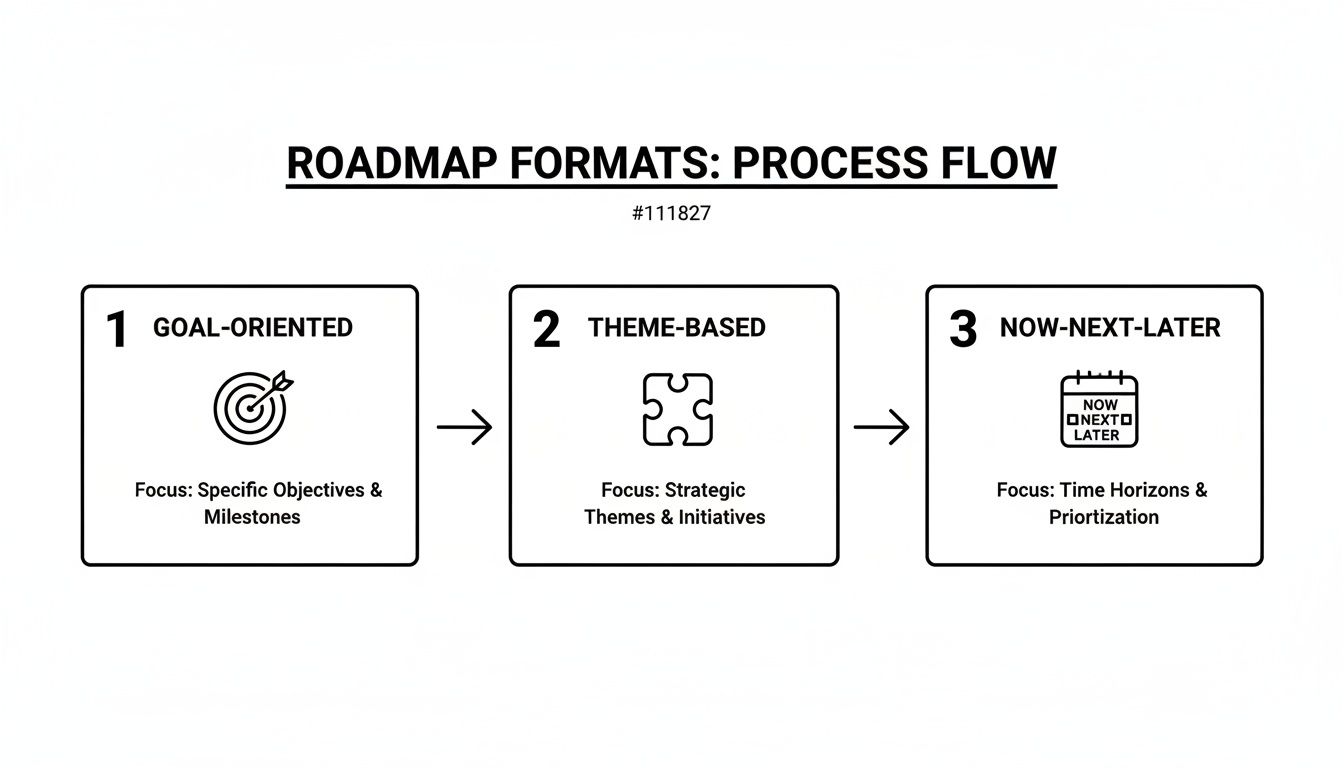
Whether you choose a Goal-Oriented, Theme-Based, or Now-Next-Later format, the principle is the same: connect all work back to a higher purpose.
Grounding Your Plan in Technical Reality
Of course, a roadmap that ignores the technical foundation it’s built on is just a fantasy. Before you commit to anything, you have to do a reality check on your current tech stack. This is the step that makes your roadmap ambitious but actually achievable.
Start by asking some tough but necessary questions:
- Dependencies: What existing systems will this new work touch? Can they handle the new load?
- Constraints: Do we have the right skills on the team, or do we need to hire or train someone?
- Technical Debt: What messes do we need to clean up first before we can build on top of this?
Let's go back to our "Enhance User Onboarding" theme. Maybe building that interactive tour requires a new microservice to manage user state. Your tech audit might reveal your deployment pipeline is slow and clunky, making it a huge bottleneck. Suddenly, you realize you need to add a foundational initiative to your roadmap, like "Modernize CI/CD Pipeline," before you can even think about the customer-facing work.
This reality check is absolutely crucial. It keeps timelines realistic, helps manage stakeholder expectations, and forces you to balance shiny new features with the unglamorous but essential work of keeping the platform healthy.
How to Prioritize with Data, Not Opinions
A tech roadmap without a solid, data-backed way to prioritize is little more than a wish list. It quickly devolves into a battle where the loudest voice in the room—maybe a passionate exec or a determined salesperson—gets their way, instead of the customer. To build a plan that actually creates value, you have to move from opinions to evidence.
This is all about making tough, defensible calls on what gets built next. The real goal here is to create a system that cuts through the noise and subjectivity, focusing your team on the initiatives that will genuinely move the needle for your customers and your business. Frameworks are what give you the structure to have these conversations without them turning into arguments.
Applying a Prioritization Framework
For SaaS teams, one of the most practical and effective frameworks out there is RICE. It stands for Reach, Impact, Confidence, and Effort, and its power lies in forcing you to quantify your assumptions rather than just running on gut feelings.
Here’s how it breaks down:
- Reach: How many customers will this feature actually touch in a given timeframe? (e.g., 500 users per month).
- Impact: How much will this really move a key metric? (Use a simple scale: 3 for massive impact, 2 for high, 1 for medium, 0.5 for low).
- Confidence: How certain are you about your Reach and Impact numbers? (Think in percentages: 100% for high confidence, 80% for medium, 50% for low).
- Effort: What’s the total time investment from product, design, and engineering? (A good unit is "person-months").
The formula itself is straightforward: (Reach x Impact x Confidence) / Effort = RICE Score.
This simple calculation spits out a single, comparable score for every idea on your list, making it dramatically easier to stack rank what’s important. A messy debate transforms into a structured, data-informed discussion.
As you can see, an idea that seems huge on impact but requires a massive effort might actually score lower than a smaller, quicker win that still gets in front of a good chunk of your users.
Sourcing Data from Customer Signals
A framework like RICE is only as strong as the data you feed it. This is where the magic happens—connecting your prioritization process to the real world by tapping into the tools your teams already use every single day. Stop guessing your Reach and Impact scores; go out and prove them.
Start by digging into your customer communication channels. You're likely sitting on a goldmine of data.
- Zendesk/Intercom: Start tagging support tickets and chat logs with keywords for feature requests or common pain points. How many unique customers have mentioned a specific integration in the last 90 days? That’s a fantastic, real-world number to plug into your "Reach" score.
- Sales Calls: If you're using call recording software, analyze those conversations. When a sales rep notes that "five enterprise prospects walked away because we don't have X," that's a direct signal of revenue impact. It’s exactly the kind of evidence you need to assign a meaningful "Impact" score.
By systematically tracking and quantifying what customers are telling you, you build a defensible case for your roadmap priorities. It’s no longer your opinion versus a stakeholder’s; it’s customer data versus an anecdote.
For a deeper look at how AI can automatically surface these crucial insights from your customer conversations, check out our guide on AI-powered decision-making. It breaks down how to move beyond manual tagging to find the patterns that can predict churn and highlight new expansion opportunities.
Balancing New Features with Technical Health
Prioritization isn't just about the shiny new features. A huge—and often overlooked—part of the equation is balancing that innovation with the stability and health of your platform. This means getting real about technical debt.
If you only chase customer-facing features, your underlying platform will eventually start to creak and groan, slowing down all future development. For more on this, it's worth exploring different strategies for managing technical debt.
A practical approach is to dedicate a set percentage of your team's capacity—say, 20% each quarter—to architectural improvements, refactoring, and paying down that debt. These projects might not have a clear "Reach" score in the RICE model, but their "Impact" on your team's long-term velocity and product stability is immense.
This kind of discipline ensures your technology roadmap template accounts for the health of your platform, not just the allure of the next big feature. This clarity is what prevents teams from chasing short-term wins at the expense of long-term success.
Connecting Your Roadmap to Your Daily Workflow
Let's be honest: a beautifully crafted roadmap is completely useless if it just gathers dust in a forgotten slide deck. The best roadmaps I've ever seen aren't static artifacts; they're living, breathing documents woven directly into the team's daily grind. The whole point is to close the gap between your big-picture strategy and the actual code your engineers are shipping.

When your roadmap template is cut off from your development tools, it’s a recipe for disaster. It gets stale almost instantly. The secret is creating a seamless, two-way sync that makes sure your strategic plan reflects what's really happening in your sprints, and vice-versa. This is what turns a simple plan into a powerful alignment tool.
This connection also gives developers the "why" behind their work, which is a huge motivator. Instead of just grabbing another isolated ticket, they see how their task contributes to a larger initiative like "Improve Platform Scalability." Suddenly, everyone is pulling in the same direction.
Integrating with Your Development Tools
Most product teams today live and breathe in tools like Jira, Linear, or GitHub. Integrating your roadmap directly into these platforms isn't just a nice-to-have; it's non-negotiable for creating a single source of truth. The idea is to link the high-level themes on your roadmap directly to the epics, stories, and tasks that make up the day-to-day work.
Think of it as a family tree. A roadmap theme like "Enhance User Onboarding Experience" is the parent. The children are all the specific epics and user stories in Jira that bring it to life.
- Jira: You can use plugins or native features to link your strategic initiatives to Jira epics. This setup allows you to track progress automatically as individual tickets are completed, rolling up status updates without anyone having to manually poke for them.
- Linear: Connect your big-rock roadmap items to Linear projects or cycles. This keeps your high-level plan perfectly in sync with the shorter-term development cycles your team already operates in.
- GitHub: For teams that manage their workflow right in their code repository, linking roadmap initiatives to specific project boards or milestones in GitHub is a perfect fit.
This clear hierarchy means anyone—from an exec to a junior dev—can click on a roadmap theme and drill all the way down to see the exact work being done to achieve it.
A roadmap that doesn't sync with your development tools is just a document. A roadmap that does is a command center, providing real-time visibility and ensuring strategy guides every line of code.
Automating Progress and Maintaining Momentum
One of the biggest wins from this integration is pulling progress data back into your roadmap automatically. When an engineer moves a ticket from "In Progress" to "Done" in Jira, that status change should immediately update the progress bar on the corresponding initiative in your roadmap. No more chasing down product managers for manual status updates.
This automated feedback loop keeps your roadmap honest and tethered to reality. If a project starts to fall behind, you'll see it at the strategic level right away, giving you time to jump in and help.
For any SaaS team looking to tighten up their planning, truly understanding the full scope of a modern product development roadmap helps frame how these daily tasks fit into the bigger picture. It connects the what with the why.
Ultimately, connecting your tools transforms your roadmap from something you create once a quarter into a dynamic guide that informs decisions every single day. It builds transparency, keeps developers motivated, and ensures your strategic vision is an active force behind everything your team builds.
Common Questions About Technology Roadmaps
Even with the best template in hand, questions are inevitable. It's just part of the process when you start turning a strategic document into a real-world plan. Let's dig into some of the most common hurdles SaaS teams hit when they put their new roadmap into action.
These aren't just academic questions. They're the practical, in-the-trenches stuff that determines whether your roadmap becomes a north star or just another forgotten document. Getting clear on these points from the start builds the confidence your team needs to actually trust the plan.
How Often Should We Update Our Technology Roadmap?
There's no magic number here, but a solid rule of thumb for most SaaS companies is to review and adjust the roadmap quarterly. This rhythm is frequent enough to let you react to market shifts, new customer feedback, and cool tech opportunities without giving your dev team whiplash from constantly changing priorities.
But that doesn't mean the whole roadmap gets the same level of attention every time.
- The 'Now' column on a Now-Next-Later roadmap probably needs a look more often, maybe monthly or bi-monthly, to keep it aligned with sprint planning.
- The 'Later' column, on the other hand, should stay fuzzy and high-level. Think of it as a direction, not a locked-in commitment.
The trick is to treat the roadmap as a living document, not something carved in stone. Of course, big events—like a competitor's surprise launch or a major shift in customer behavior—can and should trigger an ad-hoc review outside of the normal quarterly cycle.
What's the Biggest Mistake Teams Make When Creating a Roadmap?
Hands down, the most common and damaging mistake is treating the roadmap like a simple list of features with hard delivery dates. When you do that, you're not making a strategic guide; you're just creating a brittle project plan that's almost guaranteed to break. It sets wild expectations with stakeholders and puts insane pressure on the team to hit arbitrary deadlines.
A great roadmap is all about outcomes and problems to solve, not a checklist of outputs. It’s a communication tool for sharing strategic direction, which gives you the flexibility you need to actually hit your goals.
By committing to solving problems instead of just shipping specific features, you give your team the room to innovate and find the best solution. A feature list with deadlines just kills creativity and sets everyone up for disappointment when dates inevitably slip.
Making that mental shift from "what we're building" to "why we're building it" is everything.
How Do I Get Stakeholder Buy-In for My Roadmap?
Real buy-in comes down to two things: communication and inclusion. You can’t just build a roadmap in a silo and then spring it on everyone as a done deal. That's a surefire recipe for getting pushback. You have to bring them along for the ride.
Start by pulling in key people from sales, marketing, customer success, and leadership early on. Ask them about the big company goals and what problems they're hearing about from customers. When they have a hand in shaping the strategy, they feel like co-owners of the plan.
When it's time to present the roadmap, frame everything around the 'why.' Show a clear line connecting each initiative back to a business objective or a real customer need. Use the data from your prioritization frameworks, like RICE scores or SigOS revenue-impact insights, to back up your decisions. That transparency proves the roadmap isn't just someone's pet project—it's a strategic, data-informed plan. That makes it a whole lot easier for everyone to get behind.
Should Our Technology Roadmap Be Public?
This is a big strategic call, and the right answer really depends on your company culture, your market, and how cutthroat your competition is. There’s no single right answer, but a few common approaches have pretty clear trade-offs.
Making your roadmap public, like Buffer and GitHub have done, can be incredibly powerful. It builds trust with your users, gets them excited for what's next, and can be a great way to collect direct feedback.
But it's not without its risks. A public roadmap tips off your competitors about your plans, giving them a chance to react. It also creates a ton of external pressure to ship what you’ve announced, even if your priorities change based on new data. Suddenly, the agile tool you created has made you less agile.
A popular middle ground is to create a "customer-facing" roadmap. This version shares high-level themes and what problems you're focusing on, but without committing to specific features or timelines. It gives you that transparency boost while keeping the flexibility your team needs. Internally, you'll still need a more detailed version with tentative timelines to actually plan your work.
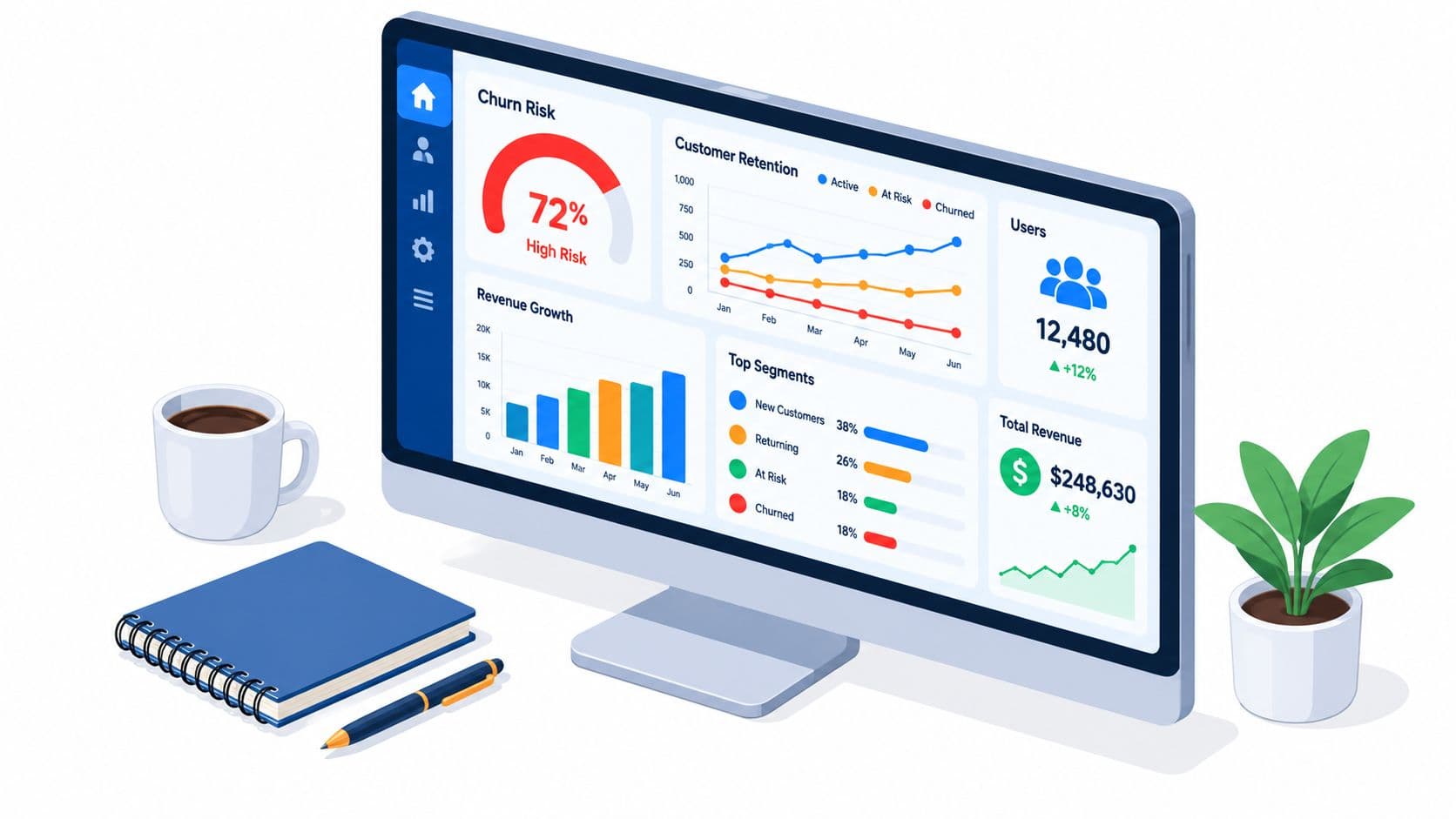
By transforming qualitative feedback into actionable, revenue-driving insights, SigOS empowers product teams to reduce churn, accelerate expansion, and build a technology roadmap template based on what customers actually need. Learn how SigOS can quantify the dollar value of your roadmap initiatives.

Ready to find your hidden revenue leaks?
Start analyzing your customer feedback and discover insights that drive revenue.
Start Free Trial →