What Is Behavioural Segmentation in Marketing?
What is behavioural segmentation in marketing? Learn how grouping customers by their actions, not just demographics, leads to better engagement and growth.

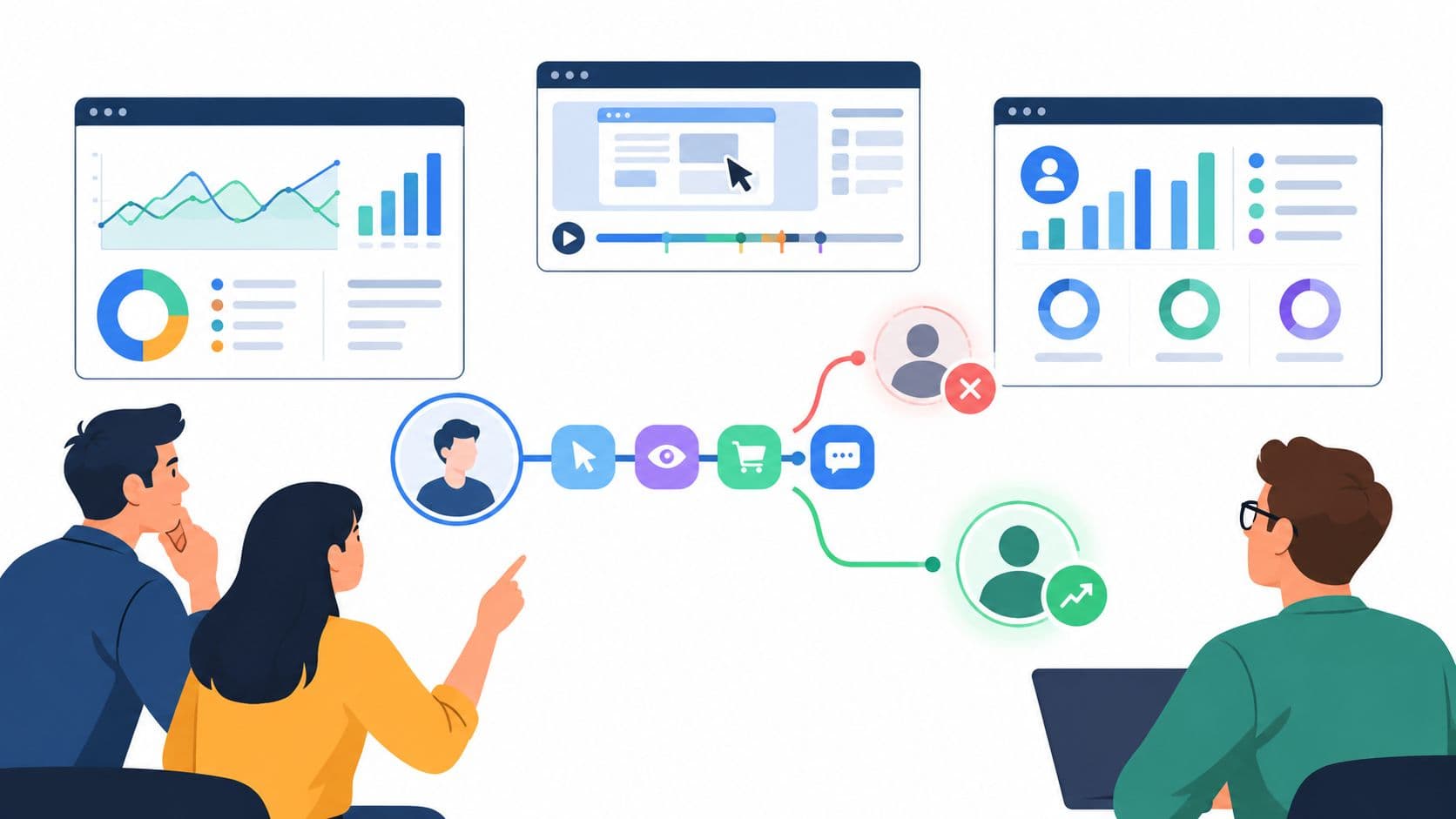
Behavioural segmentation is all about grouping your customers based on what they do, not just who they are. Think about things like their purchase history, how often they use a specific feature, or their overall engagement with your product. Instead of looking at static details like age or location, this approach focuses entirely on their actions and interactions.
This shift in focus allows you to create marketing and product experiences that are incredibly relevant because they're triggered by real-time user behaviour.
Understanding Behavioural Segmentation
It’s like the difference between your regular coffee shop, where the barista knows your usual order, and a new place where they just ask for your name. One understands your habits and can even recommend a new pastry you might like. The other only knows a single, static fact about you. In the digital world, behavioural segmentation is that expert barista.
This strategy is so effective because it lets you deliver deeply personal experiences at scale. When you analyze patterns in how people use your product, you can start to anticipate their needs, get ahead of potential problems, and communicate in a way that builds real loyalty. For any SaaS company, this is gold. Knowing how customers interact with your platform is the key to a smoother onboarding process, better feature adoption, and, ultimately, less churn.
Why Actions Speak Louder Than Demographics
Traditional methods like demographic or psychographic segmentation have their place, but they only tell part of the story. Knowing you have a 35-year-old project manager from Chicago is one thing. But that information doesn't tell you if she’s a power user who depends on your software daily or someone who hasn't logged in for 90 days.
Behavioural data fills in those critical gaps.
To really see the difference, it helps to compare these approaches side-by-side.
Behavioural vs Traditional Segmentation Models
| Segmentation Type | Basis of Grouping | Example Metric | Key Business Question Answered |
|---|---|---|---|
| Behavioural | User actions, interactions, and engagement with the product/brand. | Last login date, features used, purchase frequency, time spent in-app. | How are my customers using my product? Who is at risk of churning? |
| Demographic | Static, objective characteristics of a person or company. | Age, gender, location, income, company size, industry. | Who are my customers? Where are they located? |
| Psychographic | Internal attributes like beliefs, values, and lifestyle. | Personality traits, interests, opinions, values. | Why do my customers make certain choices? What motivates them? |
As you can see, each model answers a different, important question. But for driving product growth and retention, understanding how users behave is often the most direct path to making an impact.
This focus on activity is why behavioural segmentation has become so common. A 2023 report found that over 72% of marketers now use it as a core part of their targeting strategy. More telling, companies that put it to work have seen conversion rates jump by an average of 35% compared to those stuck on demographic data alone.
This is the raw material that powers everything from personalized email campaigns to smart in-app messages that guide users toward valuable features. The data you gather from these actions is the foundation of behavioral analytics—the science of turning digital footprints into actionable insights. To dive deeper, check out our complete guide on what is behavioral analytics and how to put it to use.
The Four Core Types of Behavioural Segmentation
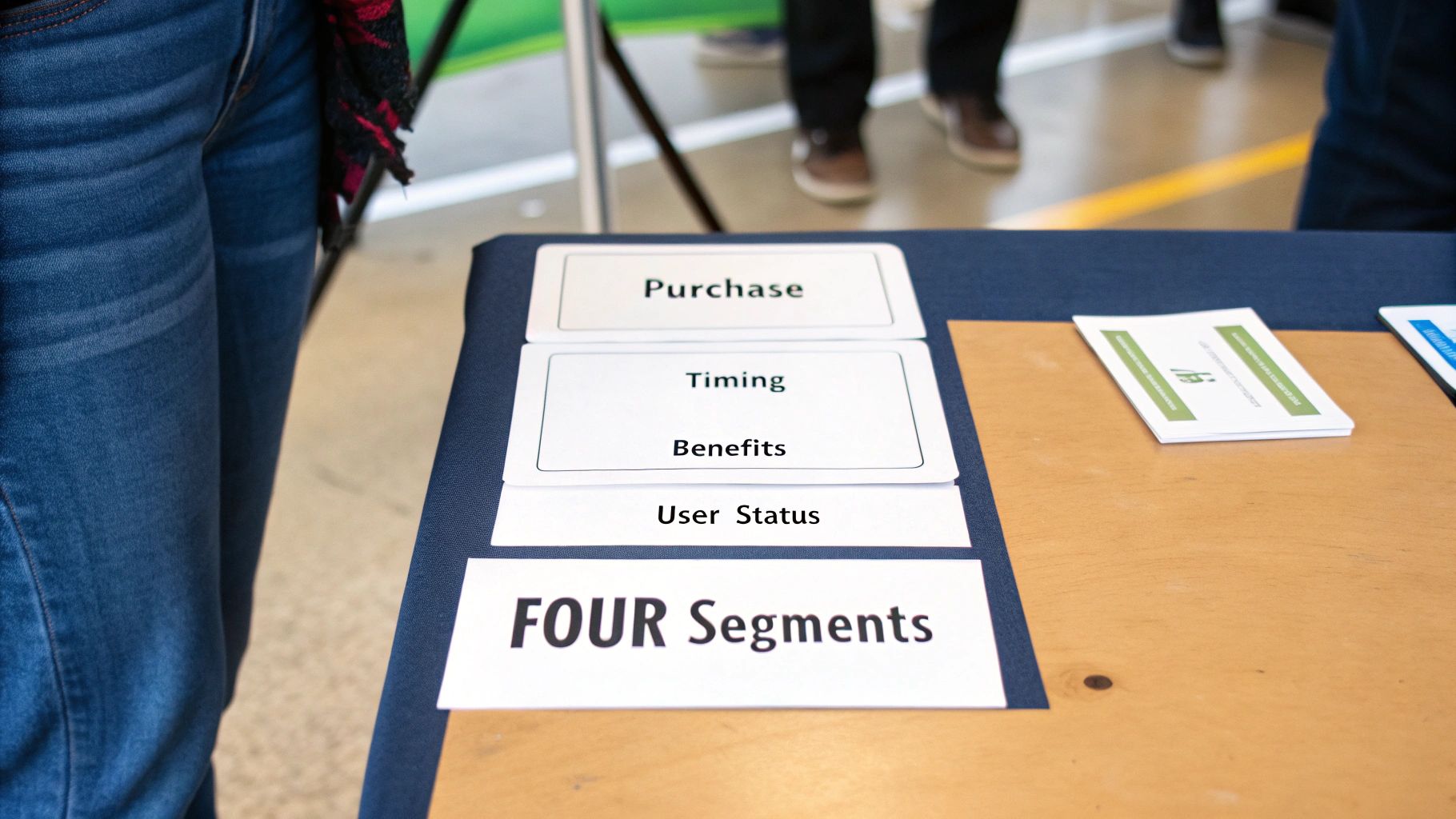
When you peel back the layers, behavioural segmentation becomes much easier to grasp. While you can technically group users based on countless actions, most behaviours boil down to four fundamental types.
Think of these categories as the primary lenses you can use to view your user data. Each one helps you answer a different, crucial question about your customer's relationship with your product, turning a mountain of raw data into groups you can actually do something with.
1. Purchase Behaviour
This is the one most people think of first. It’s all about grouping customers based on their buying patterns and how they move through the checkout process. But it's much deeper than just tracking who bought what; it’s about uncovering the rhythms and habits that drive your revenue.
By digging into purchase behaviour, you can spot the difference between a bargain hunter and a premium buyer, then tailor your approach for each.
Here are a few key variables to look at:
- Purchase Frequency: How often do they buy? Daily, weekly, once a year? This tells you when to reach out.
- Average Order Value (AOV): Are they making big, one-off purchases or small, frequent ones? This is your cue for upselling and cross-selling.
- Product Categories: Do they always buy the same thing, or do they explore your whole catalogue? This reveals openings to introduce them to new products.
Someone who makes a single, high-value purchase every winter needs a completely different conversation than someone who buys a low-cost item every month.
2. Occasion and Timing
This is all about the when. It groups customers based on the specific occasion or time they decide to buy or engage with your product. You start to realise that the context of an action is often just as revealing as the action itself.
These occasions can be universal holidays, recurring personal moments, or even rare, one-off events. For example, a project management tool will almost certainly see a spike in sign-ups at the start of a new quarter. That's a predictable, recurring occasion you can build a campaign around.
This approach involves looking for patterns around:
- Universal Occasions: Think big events like Black Friday, Christmas, or back-to-school season that impact a huge chunk of your audience.
- Recurring-Personal Occasions: These are predictable milestones in a customer’s own life, like birthdays, anniversaries, or even subscription renewal dates.
- Rare-Personal Occasions: These are unique, life-changing events like a wedding, a promotion, or a move that creates new and specific needs.
3. Benefits Sought
This one gets to the heart of customer motivation: Why are they really using your product? It groups users based on the specific outcome or value they hope to get. It’s a powerful reminder that two people can buy the exact same thing for completely different reasons.
The classic example is toothpaste. One person is buying for whiter teeth (a cosmetic benefit). Another is focused on cavity protection (a health benefit). A third just wants fresh breath (a social benefit). Same product, three different motivations, three totally different marketing messages.
In SaaS, one user might love your tool for its time-saving automation, while another gets all the value from its deep reporting features. When you know what benefit a user is chasing, you can align your messaging directly with their core desire, making your value prop impossible to ignore.
4. User Status and Loyalty
Finally, this type of segmentation looks at where a user is in their journey with your brand. Their relationship and loyalty level tell you everything about what they need to hear from you. You wouldn't talk to a brand new user the same way you talk to a loyal advocate who's been with you for five years.
This is absolutely critical for keeping customers and growing their value over time.
Common user status segments include:
- Prospects: People who know about you but haven't yet made the leap.
- First-Time Buyers: Newbies who need a fantastic onboarding experience to stick around.
- Regular Users: Your steady, consistent customers who keep the lights on.
- At-Risk Users: Customers whose engagement is dropping off—a major red flag for churn. Diving into a cohort retention analysis can help you spot these users early.
- Loyal Champions: These are your biggest fans. They not only buy a lot but also tell their friends about you.
Each of these groups requires a specific strategy to nudge them along, whether it’s converting a prospect or winning back an at-risk user.
What Data Do You Actually Need for Behavioural Segmentation?
To pull off behavioural segmentation, you need the right raw materials. This isn’t about hoovering up every data point you can find; it’s about strategically tracking the specific signals that reveal what your users are really doing and what they want.
Think of yourself as a detective. A single clue rarely solves the case. But when you piece together a pattern—the footprints, the time of day, a specific action—a clear story emerges. Your data points are these clues. Together, they tell you exactly how users find value in your product, and more importantly, where they’re getting stuck.
Key Engagement and Usage Metrics
First things first, you have to understand how actively and deeply people are interacting with your product. These metrics are the vital signs of your user base, telling you who’s healthy and engaged versus who might be about to leave.
Start with these core signals:
- Session Frequency and Recency: How often do people log in? Was it yesterday or three months ago? This is your most basic signal for separating active users from those who are at risk of churning.
- Time Spent In-App: Someone spending 30 minutes a day in your tool has a fundamentally different relationship with it than a user who pops in for 30 seconds. This simple metric helps you tell the power users from the casual browsers.
- Feature Adoption Rate: What features are people actually using? Tracking this helps you identify your power users—the ones digging into advanced functionality—versus new folks who are still just scratching the surface.
These aren't just abstract numbers; they're direct reflections of how happy and successful your customers are.
Transactional and Journey-Based Data
Beyond general engagement, you need to map out the specific paths users take and the commercial actions they perform. This is where you connect user behaviour directly to revenue, making it crystal clear where to focus your efforts.
To get this right, your data setup needs to be solid. If you're looking to unify different data sources, our guide on customer data integration best practices is a great place to start.
Be sure to monitor these data points:
- Purchase History: Track everything from how often customers buy and their average spend to the specific subscription tiers they’re on.
- User Journey Drop-off Points: Where are people getting lost or giving up? Finding friction points, like a confusing onboarding step or a high cart abandonment rate, points you directly to things that need fixing.
- Support Ticket History: A user who keeps contacting support about the same problem is sending a massive behavioural signal. They’re frustrated, and that frustration often comes right before they churn.
Advanced Behavioural Signals
Once you've mastered the basics, you can start layering in more advanced data that hints at future intent. While usage data tells you what a user has done, these signals help predict what they’re likely to do next. For example, using intent data can help you spot prospects who are actively looking for a solution like yours.
This is where you can truly get ahead of the curve. By combining these forward-looking signals with your foundational metrics, you can create segments that are not just descriptive, but predictive.
A Practical Roadmap to Implementation
Knowing the theory is one thing, but actually putting behavioural segmentation to work is where the magic happens. It's how you get real business results. Moving from concepts on a whiteboard to a concrete action plan can feel like a huge leap, but it's more straightforward than you might think. And it doesn't start with data—it starts with purpose.
This roadmap is a step-by-step guide to bringing behavioural segmentation to life in your organization. Think of it as a way to connect your data directly to meaningful outcomes, making sure you're not just collecting information but actually using it to build better customer experiences and drive growth.
Start With Your Business Goals
Before you even peek at a single data point, you have to know what you’re trying to accomplish. Without a clear goal, segmentation is just an interesting academic exercise. Are you trying to reduce churn? Increase feature adoption? Drive more upsells? Each of these goals requires looking at user behaviour through a completely different lens.
For instance, if your goal is to cut churn by 10%, you’ll be hunting for signs of disengagement—things like a drop in login frequency or users abandoning key workflows halfway through. On the flip side, a goal to increase expansion revenue would send you looking for your power users, the ones who have adopted advanced features and are bumping up against the limits of their current plan.
A great way to start is by asking this simple question: "If we could change one specific customer behaviour in the next quarter, what would make the biggest impact?" Your answer is your starting point.
Bring Your Customer Data Together
Chances are, your customer data is scattered all over the place. Your CRM has the account info, your product analytics platform is tracking what people do inside the app, and your marketing automation tool knows all about email opens and clicks. To build meaningful behavioural segments, you have to get these different systems talking to each other.
This is where a Customer Data Platform (CDP) like Segment or a similar data tool becomes essential. It acts as a central hub, pulling data from every touchpoint and stitching it all together into a single, unified profile for each customer. This gives you a true 360-degree view of their entire journey.
Without that unified view, you're flying blind. You might see a user hasn't logged in recently and assume they're losing interest, but completely miss the fact that they just had a great conversation with your support team. Those are two very different stories.
Create and Analyze Your First Segments
Okay, your goals are set and your data is unified. Now for the fun part: building your first segments. The key here is to start small. Don't try to segment your entire user base right off the bat. Pick one simple, high-impact group and go from there.
Here’s a quick process to get you started:
- Pick a Key Behaviour: Based on your main goal, choose one or two critical actions. For a SaaS company focused on getting new users up to speed, this might be "users who invited a teammate within their first week."
- Define the Rules: Set clear, measurable criteria for the segment. For example, a segment of "At-Risk Users" could be defined as "customers on a paid plan who haven't logged in for 30 days and have used fewer than two core features."
- Dig into the 'Why': Once you have your segment, analyze it. What do these users have in common? How is their behaviour different from your most active, successful users? This is where you'll find the insights you need to take action.
This simple flow—Track, Segment, and Act—is the core cycle of behavioural segmentation.
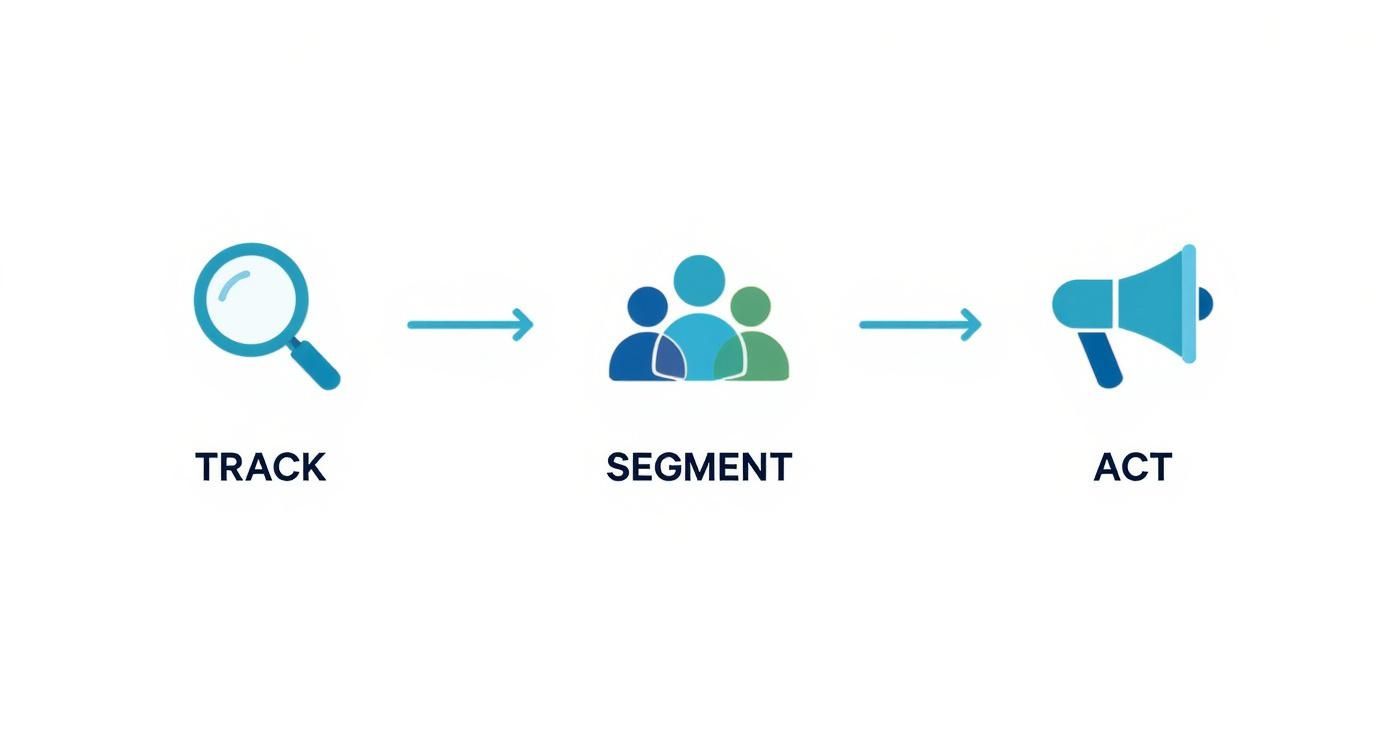
It’s not a one-and-done project. It’s a continuous loop of observing what your users do, grouping them based on those actions, and then doing something about it.
Activate Your Segments
This is the final and most crucial step. All the data and analysis in the world won't help you if you don't do something with it. Activation is where your insights become action.
Depending on the segment and your goal, activation can look very different:
- Targeted Marketing: Send a re-engagement email campaign to your "At-Risk Users" segment, offering tips on how to get more value out of the product.
- In-App Nudges: For a segment of "New Users" who haven't tried a key feature, trigger a helpful in-app tour or tooltip to guide them in the right direction.
- Smarter Ad Spending: Create lookalike audiences from your "Power Users" segment to find more high-value prospects on platforms like LinkedIn or Facebook.
This is the moment of truth. It's where your understanding of what is behavioural segmentation in marketing goes from a concept to a real engine for business growth. By following this roadmap, you can systematically build a powerful segmentation strategy that delivers results.
Putting Segmentation to Work in Marketing and Product

Alright, this is where the theory gets real. It's one thing to understand what behavioural segmentation is, but it's another to see how it actually drives growth. The magic happens when you shift your focus from who your customers are to what they’re doing inside your product.
Let's walk through a few practical examples that turn user actions into lower churn, better onboarding, and more revenue. These aren't just abstract ideas; they're concrete strategies for SaaS teams.
Proactively Reduce Customer Churn
One of the best ways to use behavioural segmentation is to spot customers who are quietly drifting away—long before they hit the "cancel subscription" button. Instead of reacting to churn, you can see the warning signs in their activity (or lack thereof) and step in.
Start by creating a segment you might call "Disengaged Users". The criteria for this group could be a mix of signals, like:
- A noticeable drop in how often they've logged in over the last 30 days.
- They’ve stopped using key features that were once part of their regular workflow.
- The average time they spend in the app per session has suddenly nosedived.
Once you’ve identified this group, you can trigger an automated re-engagement campaign. Maybe it’s an email showing off a new feature you know they’d love based on their past usage. Or, it could be a simple in-app message offering a quick chat with a customer success manager. The goal is simple: remind them why they signed up in the first place and help clear any hurdles they've run into.
Create a Frictionless Onboarding Experience
Let’s be honest: a user's first few moments in your product are critical. A generic, one-size-fits-all product tour often falls flat because it has no idea what that specific person is trying to achieve. Behavioural segmentation lets you customize that all-important first impression based on what a new user actually does.
For instance, you could group new users into a few initial segments:
- "Quick Starters": The ones who immediately invite their team and set up an integration.
- "Feature Explorers": They’re clicking around all the menus but haven’t completed a core task yet.
- "Stuck Users": Those who started a key workflow but bailed halfway through.
Each of these groups needs a different kind of help. Your "Quick Starters" might get an email with a few advanced tips to take them to the next level. Meanwhile, your "Stuck Users" could get a helpful in-app tooltip pointing them in the right direction. This tailored approach makes it so much easier for users to find that "aha!" moment and stick around for good.
Drive Expansion and Upsell Revenue
Behavioural data is also a goldmine for finding growth opportunities within your existing customer base. Your most active, successful customers are usually the first ones who are ready to upgrade or buy an add-on. Their actions are the signal.
By identifying users who are pushing the limits of their current plan, you can proactively start upsell conversations that feel helpful, not salesy. You're simply offering a solution to a need they've already demonstrated.
Look for behaviours that show a user is outgrowing their plan. You could build a "Power Users" segment for customers who are constantly hitting their usage limits, trying out premium features, or clicking on locked functionality. This is the perfect time for your sales team to reach out with an offer that solves the exact problem they’re having.
This isn’t just a hunch, either. Research on the effects of behavioral segmentation shows that companies using these tactics see a 20-30% increase in customer retention. You're not just selling; you're helping them succeed.
Turning Behavioural Insights into Business Growth
Knowing what behavioural segmentation is marks the starting line, not the finish. The real magic happens when you transform those insights into an engine for steady, sustainable growth. This isn't about running a one-off report that gets filed away; it's about weaving a new operational rhythm into the DNA of your product and marketing teams.
Success comes from treating behavioural analysis as a continuous, strategic loop. When you consistently learn from what your users do and then act on those findings, you create a powerful feedback cycle. This doesn't just tune up a single campaign—it refines your entire approach to the customer journey, from the first hello to fostering long-term loyalty.
From Data to Daily Operations
Operationalizing your insights means pulling them off a dashboard and putting them directly into your team's daily workflows. It’s about drawing a straight line from a user’s action to something your team can do right now—whether that’s launching a new marketing campaign, prioritizing a product improvement, or triggering a sales outreach.
This is the shift that separates the high-flyers from everyone else. In fact, by 2023, over 60% of Fortune 500 companies had already adopted platforms for real-time behavioural segmentation. One case study even showed a retailer boosting email open rates by 50% with this approach, proving the direct link between behaviour and engagement. You can find more examples of how top companies leverage behavioural data on triggerbee.com.
This means making behavioural data easy for everyone to access and understand. Your product manager needs to see which features are keeping users around, while your marketing team should know which actions signal the perfect moment for an upsell.
Creating a Durable Competitive Advantage
At the end of the day, a deep understanding of customer behaviour is a powerful moat. Competitors can copy your features or undercut your pricing, but they can't replicate the unique relationship you build by responding to what your customers actually need, as it happens.
By consistently aligning your product roadmap and marketing efforts with actual user behaviour, you build a company that is fundamentally more customer-centric. This creates a moat around your business that is difficult for others to cross.
For businesses focused on maximizing ROI, advanced techniques can take this even further. For instance, using AI-powered predictive lead scoring strategies can turn raw behavioural data into a perfectly prioritized list of your best leads, making sure your sales team spends their time on opportunities that are ready to close.
The key is to start small. Don't try to boil the ocean. Pick one high-impact segment—like users showing signs of churn or new signups who haven't adopted a sticky feature—and launch a targeted initiative. Get a clear win on the board, prove the value, and then build from there. That's how you turn behavioural segmentation from a marketing concept into your company’s greatest growth driver.
Frequently Asked Questions
Even with a solid plan, a few questions always come up when you’re diving into something new. To help clear things up, here are some straight answers to the most common things we hear from teams just getting started with behavioural segmentation.
What’s the Difference Between Behavioural and Psychographic Segmentation?
This is a great question, and it’s easy to see why people mix them up. The easiest way to think about it is this: **behavioural segmentation is about what customers do, while psychographic segmentation is about who they **are.
- Behavioural data is all about actions. It's the hard, observable evidence of how someone interacts with your product or company. Did they log in? Click that button? Watch a demo video? It's objective and you can measure it directly.
- Psychographic data, on the other hand, gets into the "why" behind those actions. It deals with a person's values, attitudes, interests, and lifestyle.
Here’s a simple analogy: Behavioural data tells you a user just bought a premium subscription. Psychographic data might tell you why they bought it—because they value efficiency and see premium tools as an investment in their career. One is the action, the other is the motivation.
How Much Data Do I Need to Get Started?
You really don't need a mountain of data to make this work. In fact, trying to boil the ocean from day one is a classic mistake. The smart move is to start small.
Pick one or two key behaviours that tie directly to a business goal you care about, like reducing churn or increasing upgrades. You could start with something as simple as login frequency or whether a user has adopted a specific high-value feature. The goal is to get a quick win and prove the concept. Meaningful insights are always more valuable than a massive, messy dataset.
What Are the Best Tools for Behavioural Segmentation?
There's no single "best" tool for everyone, because the right tech stack really depends on what you're trying to accomplish. That said, most companies end up using a combination of a few key platforms.
Generally, they fall into three buckets:
- Product Analytics Platforms: Think tools like Amplitude or Mixpanel. These are fantastic for digging into what users are actually doing inside your app.
- Marketing Automation Software: This is how you act on your insights. Platforms like HubSpot or ActiveCampaign let you send targeted messages and create custom experiences for each segment.
- Customer Data Platforms (CDPs): A CDP is like the central nervous system for your customer data. It pulls information from all your other tools into one place, giving you a complete, unified view of each customer.
For most SaaS companies, a good product analytics tool is the perfect place to start. It gives you the raw material you need to build everything else.
At SigOS, we help you go one step further. We don't just help you track behaviour—we show you what it actually means for your bottom line. Our AI platform digs through support tickets, sales calls, and product usage data to find the exact actions that predict churn and signal expansion opportunities. We turn raw behavioural data into a product roadmap that’s prioritized around your best customers.
Find out how we can help you build what matters at https://sigos.io.
Keep Reading
More insights from our blog
Ready to find your hidden revenue leaks?
Start analyzing your customer feedback and discover insights that drive revenue.
Start Free Trial →