A Practical New Product Development Roadmap for SaaS Teams
Build a new product development roadmap that drives revenue. Our guide offers practical frameworks and real-world strategies for SaaS product teams.
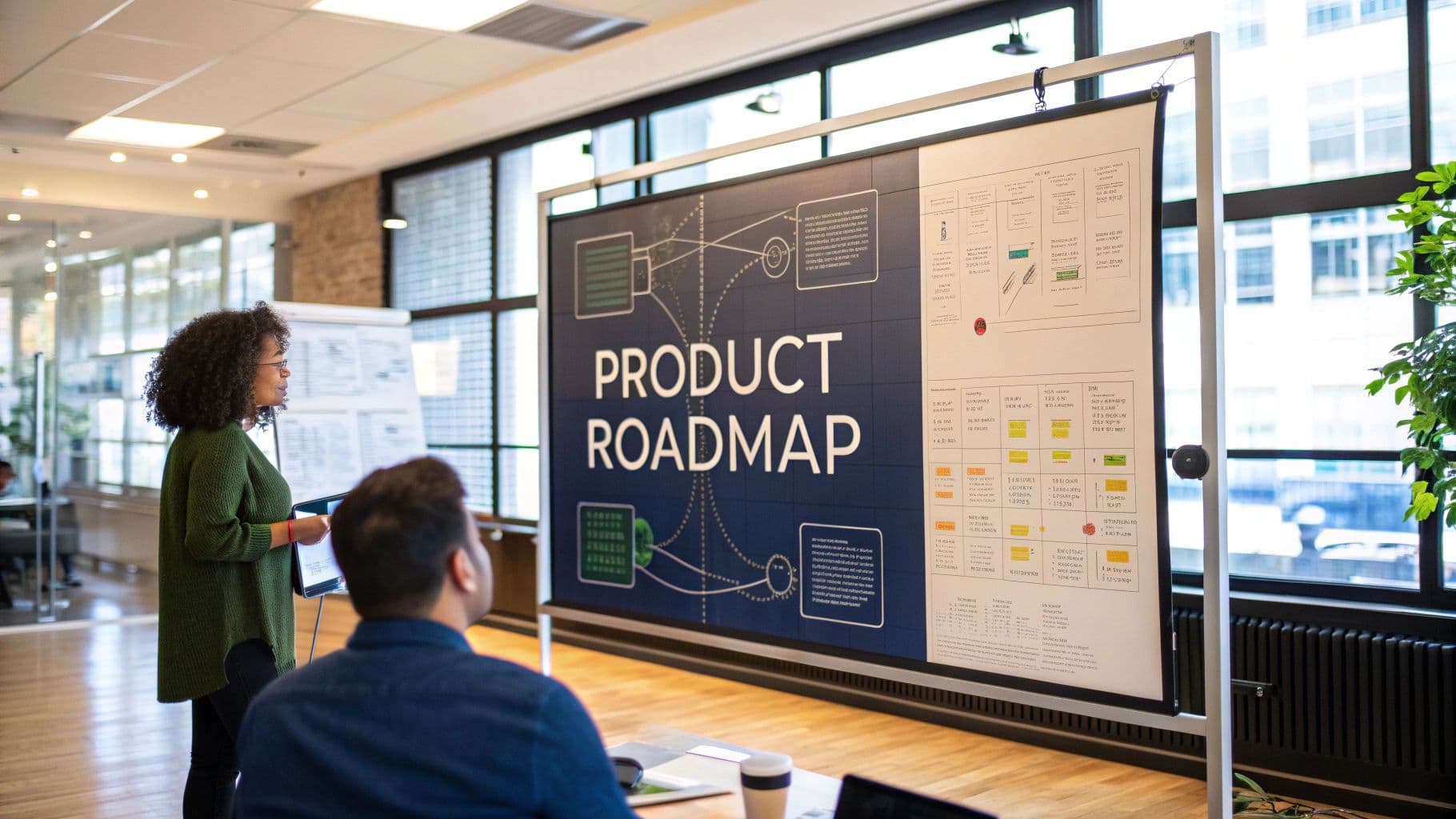
A new product development roadmap is your high-level game plan. It’s a visual summary that lays out the vision and direction for your product, answering the crucial what and why behind your development efforts. More than just a timeline, it’s the strategic document that gets your entire organization marching in the same direction.
Why Your Roadmap Is More Than Just a Document

Let's be real for a second. Most product roadmaps are artifacts, not active tools. They’re created during a frantic quarterly planning session, presented with a flourish, and then left to collect digital dust in a forgotten Confluence space. This turns a powerful strategic tool into little more than a wishful to-do list with dates attached.
When a roadmap is treated as a static document, it’s already failed. It quickly becomes disconnected from the day-to-day reality of customer feedback, engineering hurdles, and sudden market shifts. This approach breeds a "feature factory" culture, where the team celebrates output ("Did we ship it?") instead of outcomes ("Did it actually solve the customer's problem and move the needle on revenue?").
The Alarming Reality of Product Failure
The stakes here are incredibly high. With nearly 30,000 new products hitting the market each year, a staggering 95% of them fail. That’s a stat from the late, great Clayton Christensen at Harvard Business School. These aren't just minor missteps from small startups; this figure includes massive flops from giants like Google and Colgate. It's proof that no company is too big to suffer from a misguided product strategy.
This is exactly where a living, breathing new product development roadmap becomes your most valuable asset. It’s not a rigid plan set in stone; it's your navigational chart for sailing through a sea of uncertainty.
From To-Do List to Strategic Compass
A truly effective roadmap isn't a checklist; it's a strategic compass for your entire SaaS business. Its real job isn't to list features but to clearly communicate the strategy behind those features.
An outcome-driven roadmap doesn't just show what you're building; it explains why it matters. It connects every development sprint to a specific business objective—whether that's cutting churn, boosting user activation, or driving expansion revenue.
This mindset shift is critical. It pulls your team away from making subjective, gut-feel decisions and pushes them toward an objective, data-informed process. When your roadmap is a living guide, it achieves a few key things:
- Creates True Alignment: It gives sales, marketing, support, and engineering a shared understanding of where the company is headed and why.
- Manages Expectations: It provides stakeholders with clear visibility into priorities without locking you into rigid, often unrealistic deadlines.
- Empowers Your Teams: It gives developers and designers the "why" they need to make smarter, more autonomous decisions every day. For a great starting point, check out this comprehensive guide on creating a product roadmap.
Ultimately, your roadmap is the bridge connecting your company's big-picture vision to the tactical, hands-on work your team executes. For a closer look at the engineering side of this, our guide on the https://www.sigos.io/blog/technical-roadmap-template is a great resource. It’s time to stop treating your roadmap like a document and start wielding it as the powerful strategic tool it was always meant to be.
Building Your Discovery and Ideation Engine
A great new product development roadmap isn’t born in a brainstorming session. It’s the result of a deliberate, systematic engine that’s constantly pulling in high-quality feedback. Everyone says to "listen to your customers," but that advice is so vague it's almost useless. What you really need is a system to capture, analyze, and surface genuine insights from the front lines.
This is not a passive activity. You have to actively build pipelines that funnel raw data from every customer touchpoint straight into your product strategy. Your support desk, sales team, and customer success managers are your best source of intel—they're on the ground, hearing the real story every single day.
Turning Raw Data into Strategic Insights
Your company is already sitting on a goldmine of qualitative data. The trick is knowing how to structure it. One-off feature requests are just noise. But when you start seeing the same underlying problem pop up in Zendesk tickets, Intercom chats, and sales call notes, you've found a real signal.
This is where you graduate from basic feedback collection. The goal is to connect those qualitative data points with your quantitative usage metrics. For example, if you see a bunch of support tickets complaining about a confusing UI element, dive into your product analytics. Are users who hit that friction point churning more often? Now that's an insight you can build a business case around.
Here’s the hard truth about innovation: for every seven product ideas you have, only about 1.5 will even make it to launch. And of those, only one will actually find market success. That sobering reality from McKinsey shows just how tough this is. By building a data-driven discovery engine, you can dramatically improve your odds, moving from a 51% average success rate closer to the 76% achieved by the best innovators.
Setting Up Your Ideation Channels
To get this engine running smoothly, you need to formalize how you collect ideas. Ditch the random Slack messages and hallway chats. They get lost. Instead, set up clear, dedicated channels for different kinds of feedback.
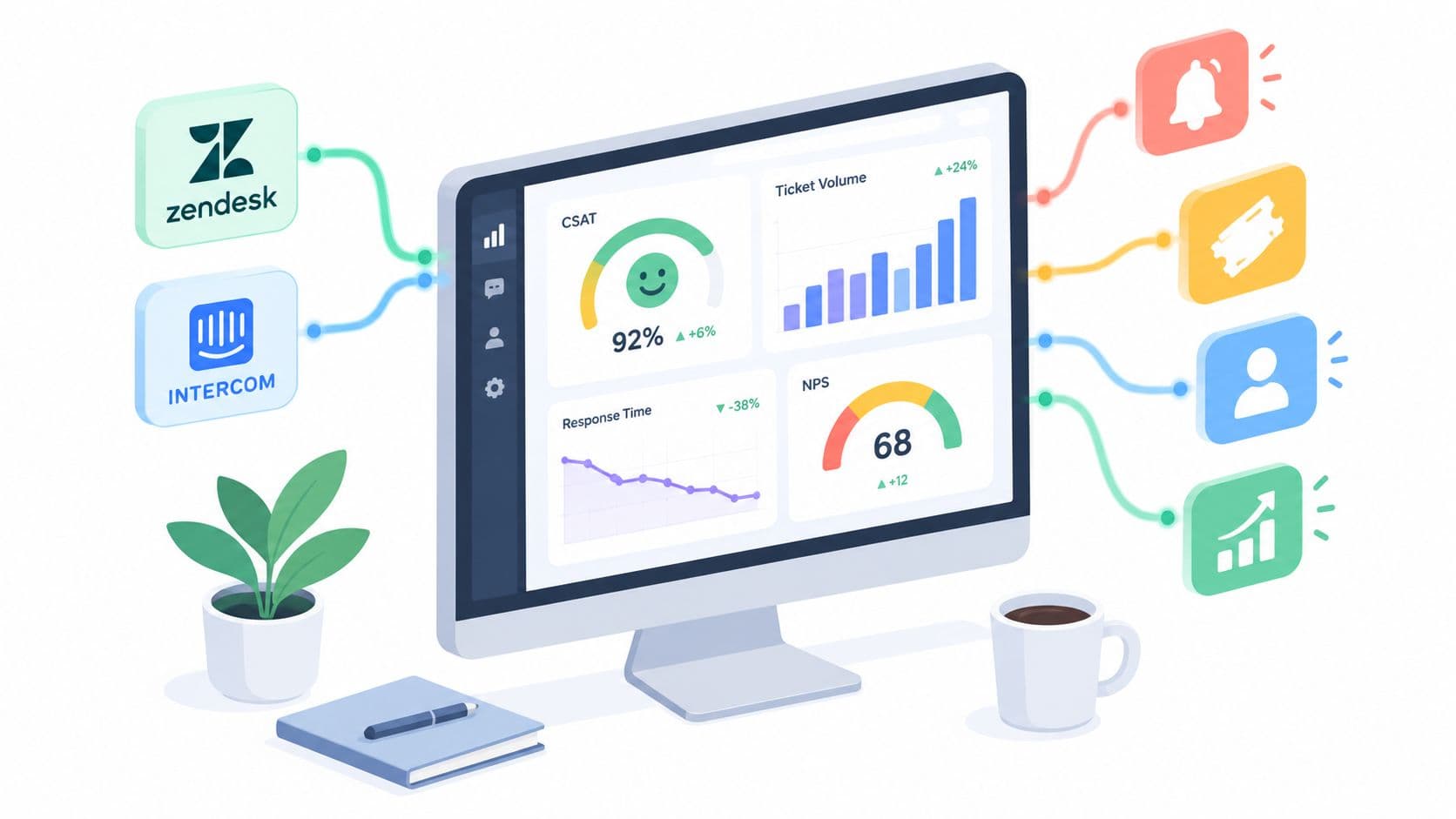
- Customer Support Tickets: Integrate your helpdesk tools like Zendesk or Intercom with your product management software. Use simple tags (e.g., #UI-frustration, #billing-issue) to categorize feedback on the fly, making it much easier to spot patterns later.
- Sales & CS Conversations: Your revenue teams hear the most valuable feedback—the stuff that’s blocking deals or putting renewals at risk. Give them a dead-simple process in Salesforce or Gong to log product gaps.
- Direct User Feedback: Be proactive. Run surveys and, more importantly, get on the phone for user interviews, especially when you're exploring a totally new problem space. Focus on the "job" the customer is trying to get done, not just the feature they think they want. Our guide on using a Jobs to be Done template is a great place to start.
- Usage Data: Tools like Amplitude or Mixpanel tell you what users are doing. When you pair that with the qualitative feedback, you finally understand why.
The most powerful insights live at the intersection of what users say and what they do. A complaint about a missing feature is interesting; data showing that users who need that feature are churning at a 30% higher rate is a priority.
Separating Signal from Noise with AI
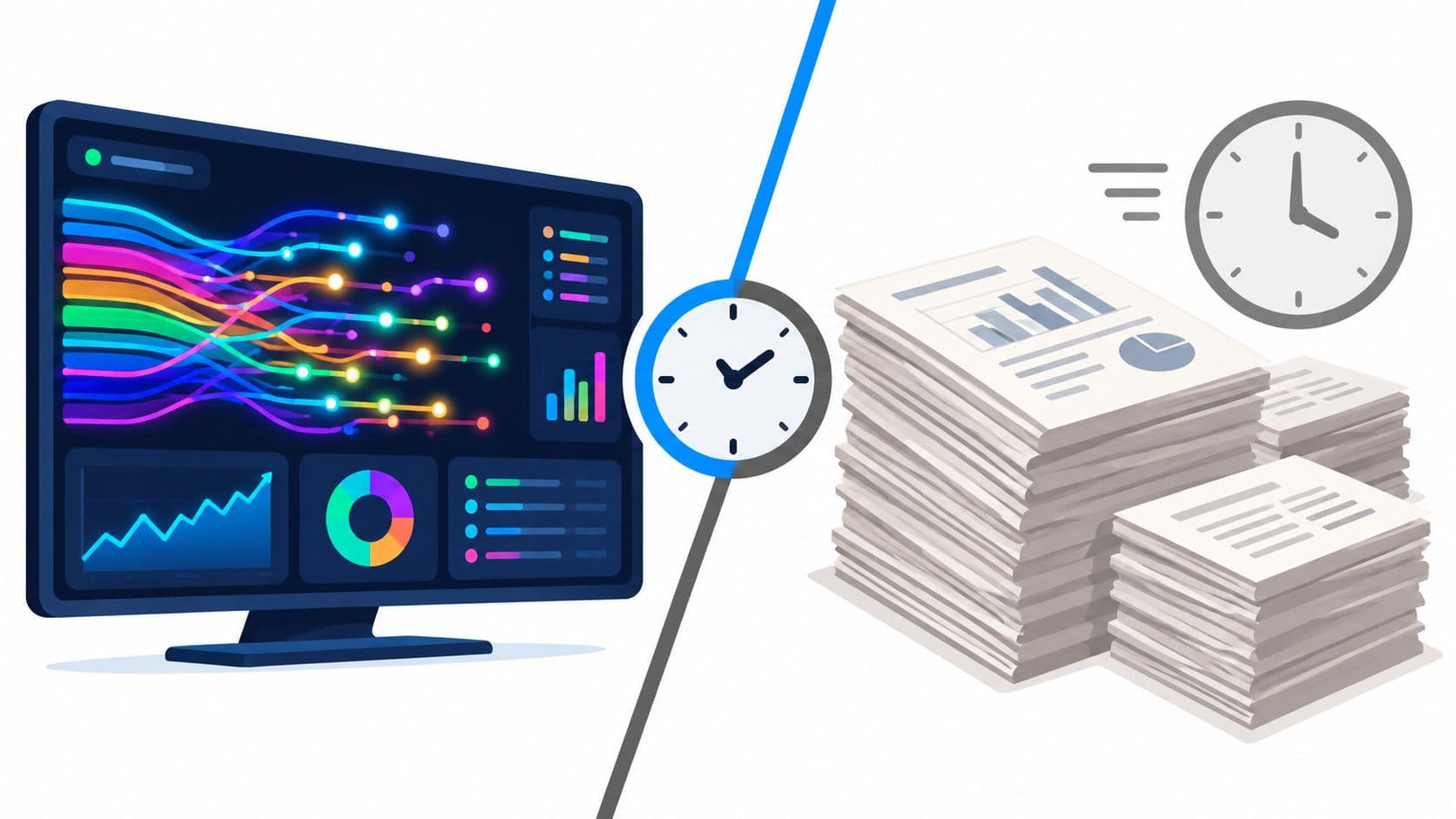
Let's be realistic—no one has time to manually read through thousands of customer conversations. It’s just not scalable. This is where AI-driven analysis becomes a total game-changer. Modern product intelligence platforms like SigOS can connect to all your channels and automatically surface the trends that matter.
Instead of a product manager losing days reading transcripts, the system can flag that "five enterprise customers mentioned an integration gap in the last week, representing $250,000 in ARR." It does the heavy lifting of separating the critical signals (high-impact, recurring problems) from the noise (one-off requests), freeing your team to focus on opportunities with a clear line to revenue.
This approach flips the script on product discovery, turning it from a reactive, manual chore into a proactive, automated engine. It ensures your roadmap is built on hard evidence, directly linking what you build to reducing churn and finding new expansion opportunities. To see how this plays out in the real world, check out these case studies on crafting product success from idea to acquisition. Every idea that makes it onto your roadmap should have to earn its place with data, not just someone's opinion.
Prioritizing Features with a Revenue-First Mindset

So, you’ve got a fantastic discovery engine pumping a constant stream of insights into your product backlog. Great. Now for the hard part: deciding what to build next. This is precisely where a promising new product development roadmap can go off the rails, turning into a battle of opinions and gut feelings.
For years, we’ve relied on frameworks like RICE (Reach, Impact, Confidence, Effort) to try and bring some objectivity to the chaos. They’re a decent starting point, but these older methods often have a blind spot for the single most important metric in SaaS: revenue.
Adopting a revenue-first mindset doesn’t mean you stop caring about user experience or technical debt. It’s about reframing every single initiative—from a minor bug fix to a massive new feature epic—through the lens of its financial impact. The question stops being "How many users will this touch?" and becomes "What is the dollar value of solving this problem?"
Beyond Traditional Scoring Models
The biggest weakness in frameworks like RICE is that "Impact" usually boils down to a subjective guess on a vague 1-to-3 scale. What does a "3" for impact really mean? It's ambiguous and leaves the door wide open for personal bias to creep in. To build a roadmap that actually drives the business forward, you have to quantify that impact in real money.
This is a fundamental shift in thinking. You start digging into the data from your discovery engine and tying it directly to financial outcomes.
- Churn Risk: That nagging bug isn't just an inconvenience. If it’s making enterprise customers threaten to cancel, it has a clear dollar value tied to their ARR.
- Expansion Opportunities: A missing integration isn't just a feature gap. It’s the blocker preventing a sales rep from closing a $100,000 expansion deal.
- Support Costs: A confusing workflow isn't just bad UX. It’s generating 200 support tickets a month and costing your team thousands in operational overhead.
By quantifying the cost of not solving a problem, prioritization becomes a business decision, not a product debate. You’re no longer just building features; you're making strategic investments in your product's financial health.
This approach brings a new level of rigor to your roadmap meetings. It’s a lot easier to justify fixing three specific bugs when you can state that the work will mitigate $50,000 in annual churn risk. Suddenly, that “cool” new feature with no clear path to revenue doesn’t seem so urgent.
Comparing Prioritization Frameworks
Choosing the right framework really depends on where your company is at and what you’re trying to achieve. An early-stage startup might get by with a simple impact/effort matrix, but as a SaaS business scales, you need something more sophisticated. Here's a quick look at how different methods stack up.
| Framework | Focus | Best For | Potential Pitfall |
|---|---|---|---|
| RICE | User-centric impact | B2C products or features aimed at broad user adoption. | The "Impact" score is often subjective and disconnected from revenue. |
| Kano Model | Customer delight | Understanding feature categories (basic, performance, delighters). | Can be complex to implement and doesn't directly prioritize based on effort. |
| MoSCoW | Requirement categorization | Projects with fixed deadlines or scope. | Can lead to stakeholders classifying everything as a "Must-Have." |
| Revenue-Impact | Financial outcomes | SaaS businesses focused on churn reduction and expansion. | Requires strong data pipelines to accurately connect problems to revenue. |
As you can see, a revenue-impact model is built specifically for the financial realities of a subscription business. It forces you to think about the levers that actually grow the company. A huge part of this is understanding how product decisions affect the lifetime value of a customer in SaaS, which is the ultimate goal.
Automating Revenue-Driven Prioritization
Let’s be realistic: manually connecting every support ticket, sales request, and piece of feedback to a dollar amount is an impossible task. This is where tools like SigOS come in. By integrating directly with your existing stack—Zendesk, Jira, Linear, and GitHub—this kind of analysis can be put on autopilot.
These systems can analyze all your incoming data, 24/7, and automatically identify which issues are tied to your highest-value accounts. You stop guessing and start getting concrete insights.
Imagine getting an alert that says, "This API bug is affecting three customers with a combined ARR of $450,000 who are up for renewal next quarter." That information is then pushed directly into your Jira or Linear backlog, complete with a revenue-impact score.
Your product team is no longer flying blind. They get a prioritized queue of work that is directly and continuously aligned with the company’s bottom line. This data-driven approach strips the emotion and politics out of roadmap planning, making sure your most valuable resource—developer time—is always focused on what will truly move the needle.
Getting Everyone on the Same Page: How to Communicate Your Roadmap
So you've crunched the numbers and have a prioritized list of what to build next. That's a great start, but it’s not a roadmap. It's just a backlog. The real magic happens when you turn that list into a living, breathing plan that gets the entire company fired up and pulling in the same direction.
A roadmap that just sits on a product manager’s hard drive is useless. Its power is only unlocked when it becomes the go-to source of truth for everyone, from the CEO down to the newest sales hire.
This isn’t about creating a rigid, old-school Gantt chart with deadlines set in stone. It's about telling a compelling story—the why behind the what. A great roadmap connects the daily grind of development work to the company's biggest goals. You're not just presenting a feature list; you're sharing a vision for how the product will solve bigger problems and drive real growth.
Speak the Right Language to the Right Audience
Your roadmap has to resonate with different people in different ways. The conversation you have with engineering is going to be completely different from your pitch to the executive board. The trick is to frame your plan around strategic themes, not just a granular list of features.
- For the C-Suite: They’re focused on outcomes, not output. Frame your roadmap around big-picture goals like "Cut Enterprise Churn by 15%" or "Dominate the Mid-Market in Q3." You have to tie these themes directly to revenue and market strategy.
- For Engineering: Your dev team needs the context to build elegant solutions. So, present the roadmap in terms of customer problems. A theme like "Streamline the New User Onboarding" is way more inspiring than a dry list of ten specific UI changes.
- For Sales and Support: These folks are on the front lines, and they need to see that you're listening. Frame the roadmap as "Solving Critical Blockers for Expansion Deals" or "Crushing Ticket Volume for Billing Issues." It shows them you get it and gives them solid talking points for their customer calls.
Find Your Communication Rhythm
Getting aligned isn't a one-and-done meeting. It's something you have to work on constantly. You can't just flash the roadmap on a screen at the quarterly all-hands and expect everyone to remember it. You need a steady, predictable communication rhythm.
This is where so many teams drop the ball. The data is pretty stark: over 50% of large teams admit their planning is inconsistent. This leads directly to failed projects, but getting it right pays off. A whopping 66% of companies that directly connect their strategy to their day-to-day processes report better business outcomes. You can dig into more of this data by checking out some key product development statistics on wearetenet.com.
To keep everyone in sync, build a simple communication cadence:
- Monthly Roadmap Check-ins: Grab key stakeholders from across the business for a quick meeting. Review progress against your themes and make any tweaks based on new data or feedback.
- Bi-Weekly Sprint Previews: Before each sprint planning, the product manager should spend five minutes recapping how the upcoming work ties back to the bigger roadmap theme. It’s a simple way to keep the "why" front and center.
- A Live, Shared Dashboard: Ditch the static slide decks. Use a tool that gives everyone a real-time, shareable view of the roadmap. This transparency builds a ton of trust and cuts down on those "Hey, when is my feature going to be ready?" DMs.
A roadmap is a communication tool first and a planning document second. Its main job is to create a shared understanding and keep everyone aligned.
Use Your Tools to Keep Alignment Flowing
The best product teams I've worked with maintain alignment by plugging their roadmap directly into the tools where the work actually happens. This creates a seamless connection between high-level strategy and individual tasks.
When your roadmap tool is integrated with platforms like Jira, Linear, or GitHub, the plan is no longer just some artifact you look at once a quarter—it becomes part of the daily workflow.
Think about it: an engineer opens a ticket in Jira and immediately sees the parent epic and the strategic theme it ladders up to. Right away, they have the context for why their work matters. In the same way, a support agent in Zendesk can link a customer ticket to a problem in SigOS, which in turn reinforces the priority of an initiative on your roadmap. This kind of integration is what transforms your new product development roadmap from a static document into a living, data-fed guide that truly unifies your team.
Creating Your Execution and Measurement Loop
Shipping a new feature feels like crossing the finish line, but it’s actually the starting pistol for the next race. The best SaaS teams know that a new product development roadmap doesn’t just stop when a ticket moves to “Done.” It’s a continuous loop where execution feeds measurement, and those insights kickstart the next cycle of discovery.
The real work begins after you start building. This final phase is all about closing the loop and tying your team's hard work directly to tangible business results. It demands an agile mindset, where the roadmap is treated as a living, breathing guide, not a contract carved in stone.
So many teams fall into the "launch and forget" trap. They celebrate the release, pop the champagne, and immediately jump to the next shiny thing in the backlog. This is a huge mistake. Without a system for measurement, you're flying blind. You have no real proof that the feature you just poured weeks or months into actually solved the customer problem you set out to fix.
From Execution to Evidence
To sidestep this common pitfall, you need to bake a feedback system into your process from day one. Before a single line of code is written, your team should have a clear hypothesis and know exactly which metrics will prove it right or wrong.
Treat it like a science experiment. Your hypothesis might be: "By redesigning our dashboard, we will decrease new user time-to-value, leading to a 10% increase in activation rates within the first 30 days."
Suddenly, your measurement plan becomes crystal clear. You know precisely what to track to validate your assumption. This shifts your entire product development process from just completing tasks to running a series of experiments designed to drive specific outcomes.
- User Adoption Metrics: Don't just count clicks. Track how many people are really engaging with the new feature. Are they trying it once and bailing, or is it becoming a core part of their daily workflow?
- Support Ticket Volume: Did the new feature simplify things or add confusion? A noticeable drop in support tickets related to that part of your product is a fantastic signal of success.
- Direct Customer Feedback: Go straight to the source. Use in-app surveys or schedule quick calls to ask users directly if the update hit the mark. This qualitative data is the perfect companion to your hard numbers.
Establishing a Virtuous Cycle
The insights you gather after a launch are pure gold. This is the fuel for your next round of discovery and prioritization, creating a virtuous cycle where the product gets better with every release. When you see that a new feature is a massive hit with your enterprise clients, that's a strong signal to double down on that theme.
On the flip side, if a feature flops with low adoption, it’s not a failure—it's a critical learning opportunity. Now you can go back to those users and dig into why it missed the mark, which stops you from wasting more engineering time on a flawed idea.
A feedback loop isn't just about measuring success; it's about learning from what doesn't work. The goal is to fail faster and cheaper, using post-launch data to kill bad ideas before they consume significant engineering resources.
This whole process keeps your roadmap firmly planted in reality. Instead of being guided by internal hunches and opinions, it's constantly shaped by actual user behavior and business impact.
This is the simple but powerful flow you're aiming for to keep the entire process aligned.
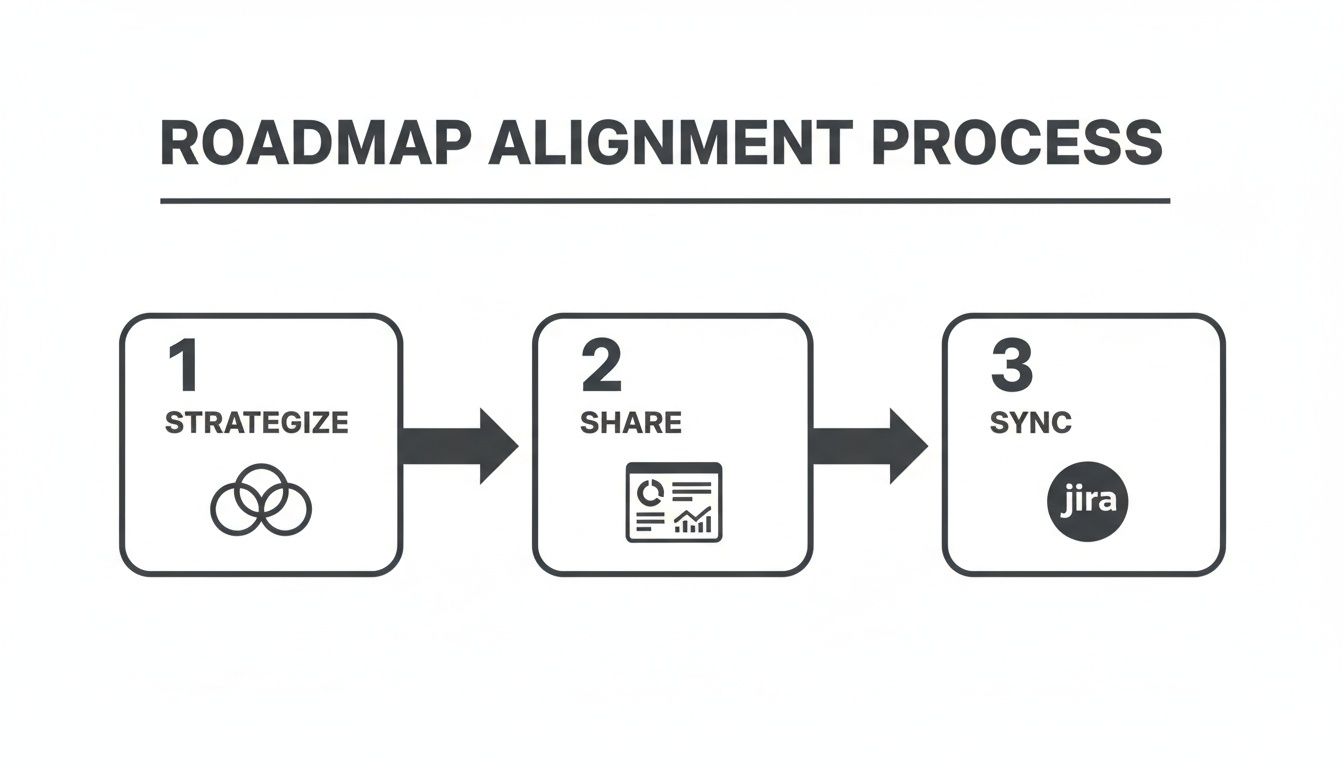
As the visual shows, your strategy has to be translated into shared plans, which are then synced with your execution tools like Jira to ensure everyone is pulling in the same direction.
Automating Your Feedback Loop
Trying to track all these data points manually is a recipe for burnout. This is where integrating your tool stack becomes a game-changer. By connecting your product analytics, support desk, and project management tools, you can put most of this feedback loop on autopilot.
For instance, a platform like SigOS can monitor user behavior post-launch and automatically bring key insights to your attention. It can flag if a new feature is causing a spike in rage clicks or, more positively, if it’s being rapidly adopted by your highest-paying customers.
That data can then be piped directly back into your product backlog in tools like Jira or Linear. Imagine getting an automated alert that says, "Feature X has a 75% adoption rate among power users, and we've seen three expansion requests related to it this week." That's an incredibly powerful signal to bring to your next planning meeting.
This tight integration between execution, measurement, and discovery guarantees your new product development roadmap is never stale. It becomes a dynamic, self-correcting system that continuously guides your team toward what truly matters: solving real customer problems and driving sustainable growth.
Common Questions About Product Roadmaps
Even with a great framework, you're going to run into some tricky questions when creating and managing your new product development roadmap. Let's walk through a few of the ones I see pop up all the time for product managers.
Getting these details right is what turns a roadmap from a document that gathers dust into one that actually guides your strategy. The goal is a process that feels less like a chore and more like a real, useful tool for your team.
How Often Should We Update Our New Product Development Roadmap?
Your roadmap should be a living document, not something carved in stone. For most SaaS companies, a major strategic review once a quarter is a good starting point. This rhythm keeps your product direction locked in with your bigger business goals and any shifts in the market.
But the real secret sauce is in the smaller, more frequent tweaks. You should be making minor adjustments constantly—maybe in your bi-weekly or monthly product syncs. This lets you react to new customer feedback or a competitor's move without having to wait for the next big planning session.
A roadmap isn't a "set it and forget it" artifact. The best ones are revisited all the time. Think minor course corrections happening weekly and major strategic realignments happening quarterly. That kind of agility is how you stay ahead.
When you use tools that feed you a constant stream of data, like SigOS, you can pivot even faster. This means you can tackle an urgent churn risk or seize a high-value expansion opportunity the moment it appears, not weeks or months down the line.
What Is the Biggest Mistake Teams Make When Creating a Roadmap?
By far, the most common and damaging mistake is becoming a "feature factory." This is what happens when your roadmap turns into a simple to-do list of features with arbitrary dates slapped on them. It’s an easy trap to fall into, and it kills your team's focus by shifting it from outcomes (solving real problems) to output (just shipping stuff).
A truly effective roadmap is always built around outcomes. It should be framed by strategic goals, like "Cut new user churn by 15% in Q3" or "Boost user activation for our core feature by 20%."
Taking this approach does a few crucial things for you:
- It gives your engineering and design teams the freedom to discover the best solution, rather than just building what was prescribed.
- It stops stakeholders from getting hung up on rigid timelines for specific features that might not even solve the actual problem.
- It guarantees every single development cycle is tied directly to a measurable impact on the business.
How Do I Get Sales and Support Teams to Truly Buy Into the Roadmap?
You can’t demand buy-in. You have to earn it through inclusion and transparency. The worst thing you can do is present a finished roadmap as if it came down from on high. Instead, you need to pull your sales and support teams into the discovery process from the very beginning.
They're on the front lines, and their daily conversations with customers are a goldmine of raw insight. You need to show them exactly how their feedback—from support tickets in Zendesk to notes from a sales call—directly shapes the roadmap priorities. When you finally present the plan, you can connect each initiative back to the specific pain points they've been hearing about for months.
When you close that loop, everything changes. It proves you're actually listening. It shows them that the product strategy is designed to make both the customer's life and their own jobs easier. Just like that, they go from being critics to your roadmap's biggest champions.
Ready to build a roadmap driven by revenue, not just requests? SigOS connects directly to your customer feedback channels and quantifies the dollar value of every bug and feature request. Stop guessing and start prioritizing with SigOS.
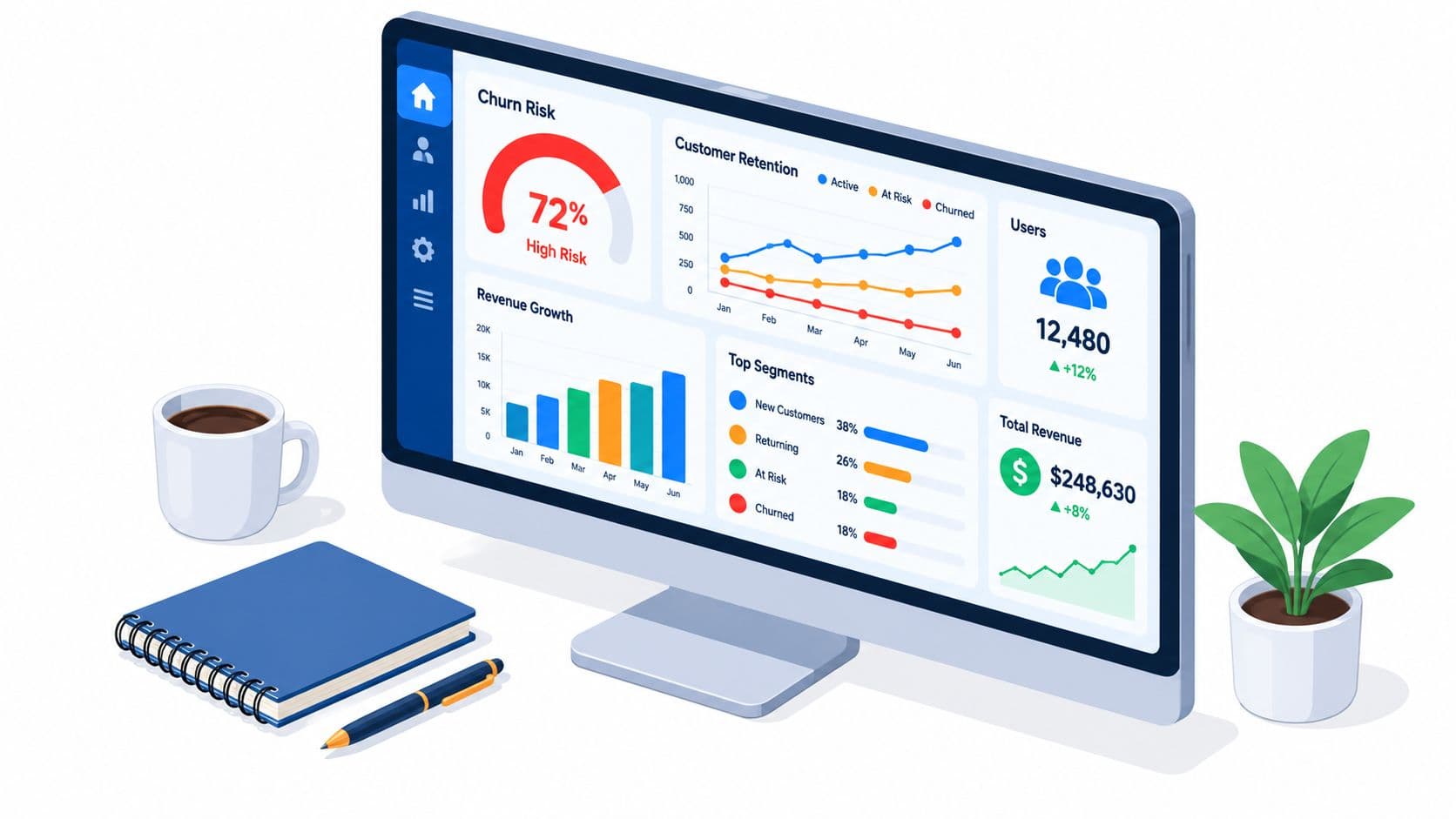
Ready to find your hidden revenue leaks?
Start analyzing your customer feedback and discover insights that drive revenue.
Start Free Trial →