Product Lifecycle Definition: 6 Stages for SaaS in 2026
Go beyond the classic product lifecycle definition. Learn the 6 stages, why the model fails for SaaS, and how to use data to map your stage and drive revenue.
Your roadmap probably looks familiar. Support wants bug fixes for an aging workflow that still drives renewals. Sales wants a missing feature that could unblock a high-value account. Engineering wants time to clean up brittle architecture before the next release makes it worse.
All three requests can be right. The problem is that many teams still make those calls with an outdated product lifecycle definition in mind. They assume the product is “in growth” because signups are up, or “in maturity” because revenue flattened, or “in decline” because complaints increased.
That logic breaks fast in SaaS.
A subscription product can look mature on a revenue chart while behaving like an early-stage product inside a newly launched feature set. A spike in support tickets can mean decay, or it can mean engaged customers are hitting the edges of something worth expanding. A flat quarter can be a warning sign, or just a pause before a second growth curve.
Your Product Lifecycle Definition Needs an Update
Teams frequently do not struggle because they lack effort. They struggle because they are using the wrong frame to interpret what they see.
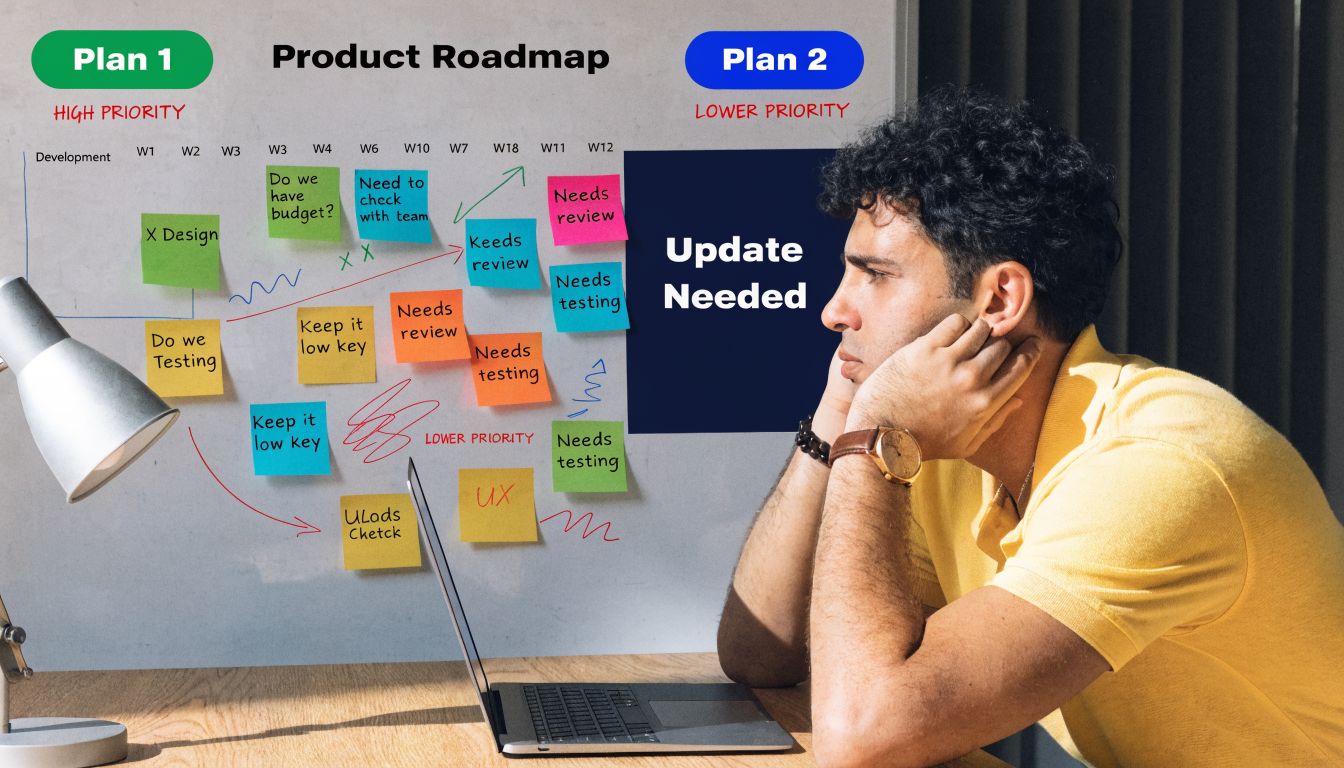
A classic product lifecycle model still helps. It gives teams a shared language for deciding when to prioritize acquisition, when to optimize conversion, when to defend retention, and when to consider repositioning or sunsetting. That's why the framework has lasted so long in business practice.
But in SaaS, the old “bell curve” view often creates false certainty. A product manager sees slowing growth and starts cost control too early. A support leader sees complaint volume climb and assumes the product is fading. A founder interprets enterprise feature requests as distracting edge cases when they may signal the next expansion path.
Where the confusion starts
The day-to-day mess usually comes from one hidden mistake. Teams treat lifecycle stage as a label instead of a diagnosis.
That matters because stage should change what you fund, what you measure, and what kind of customer signal you trust most. If you misread the stage, you misread the work.
Practical rule: When priorities conflict, don't ask which request is loudest. Ask which request fits the product's actual lifecycle state.
Here's what that looks like in practice:
- If the product is still proving fit: bugs that block activation matter more than broad platform cleanup.
- If the product is scaling: reliability, onboarding friction, and distribution constraints rise in priority.
- If the product is mature: retention risk, margin discipline, and targeted expansion usually matter more than novelty for its own sake.
- If the product is slipping: the key decision isn't “what feature next,” but whether to refresh, narrow, bundle, or retire.
A better working definition
For SaaS teams, a useful product lifecycle definition has to do more than describe a sequence. It has to help people make revenue-aware decisions with incomplete information.
That means reading lifecycle through behavior, not just topline performance. Revenue still matters. So do adoption, churn, support patterns, feature usage, implementation friction, renewal objections, and post-launch maintenance burden.
The model is still valuable. The way it's commonly applied isn't.
What Is the Product Lifecycle Model
A practical product lifecycle definition is simple. It's the map of how a product moves from idea to market presence to eventual reinvention or retirement.
The easiest way to think about it is like a human lifespan. Early on, the focus is survival and development. Later, it shifts to growth and capability. Then comes stability, followed by either renewal or decline. Products don't behave exactly like people, but the analogy works because strategy changes as the product ages.
The classic model still matters
The modern framework is usually traced to Theodore Levitt's 1965 Harvard Business Review article “Exploit the Product Life Cycle,” which became the foundational reference for lifecycle thinking in business and marketing, as summarized by Pragmatic Institute's overview of product lifecycle metrics.
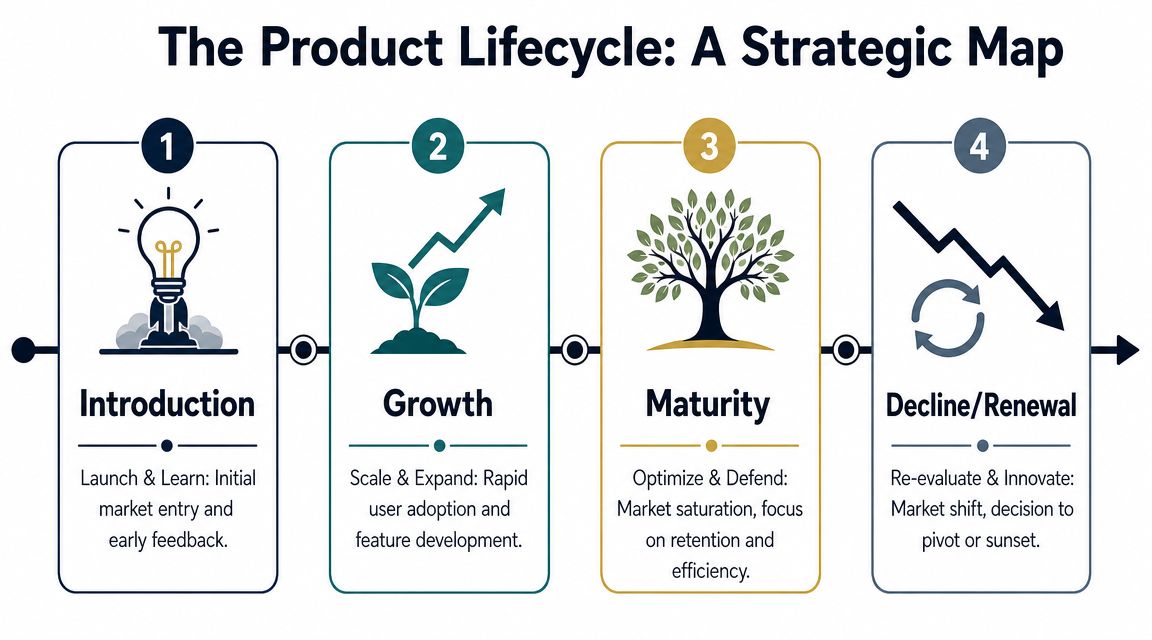
That model is durable because it explains a truth product leaders see every week. The right strategy changes as a product ages in the market. Early stages need awareness and adoption. Growth needs scale. Maturity needs efficiency and defense. Decline forces a decision about repositioning, harvesting, or sunsetting.
Why SaaS teams should widen the definition
In software, teams often reduce lifecycle to launch and what happens after launch. That's too narrow.
A stronger definition includes the full operating path around the product. Ideation, development, release, service, iteration, and retirement all belong in the same system. That's one reason product leaders often pair lifecycle thinking with discipline around process and handoffs. If your team needs a concrete planning view, this guide to the new product development process is useful for connecting pre-launch work to post-launch learning.
It also helps to connect lifecycle thinking to operational costs outside the roadmap itself. Mature products often carry hidden software overhead through tooling sprawl, unused seats, and governance gaps. Teams dealing with that side of operations can benefit from a practical look at optimizing software spend and compliance, especially when lifecycle decisions affect which systems stay, consolidate, or sunset.
The simple model is a starting point, not a verdict
The classic stages are still useful because they force strategic clarity:
- Introduction: get the product into the market and learn fast.
- Growth: scale demand and remove adoption friction.
- Maturity: protect share, improve retention, and run efficiently.
- Decline or renewal: decide whether to refresh, reposition, or exit.
A lifecycle model is most useful when it changes behavior. If it doesn't alter roadmap, messaging, support priorities, or investment levels, it's just a diagram.
A Stage-by-Stage Guide to the Product Lifecycle
One reason teams argue about lifecycle is that they use different stage models. Some work with four stages. Others use six. That difference matters because it changes how teams benchmark progress and allocate resources. TWI's explanation of product lifecycle models frames the lifecycle as a measurable state machine, where signals like sales acceleration, margin expansion, competitive intensity, and post-launch maintenance burden indicate movement between phases.
For SaaS work, six stages are usually more practical because they separate product creation from market entry.
Product lifecycle stages at a glance
| Stage | Primary Goal | Key Metrics & Signals | Team Focus (Product & Growth) |
|---|---|---|---|
| Idea | Identify a real problem worth solving | Market pain themes, sales objections, repeated customer requests, workflow gaps | Problem discovery, segmentation, opportunity sizing |
| Development | Build something usable and feasible | Prototype feedback, implementation risk, defect patterns, delivery confidence | Scope control, technical feasibility, design validation |
| Launch (Introduction) | Reach early fit and remove activation friction | Early adoption, onboarding drop-off, support confusion, first retention signals | Positioning, onboarding, fast bug response, tight feedback loops |
| Growth | Scale demand without breaking the product | Expanding usage, sales acceleration, rising recognition, increasing volume of product requests | Reliability, packaging, channel support, feature expansion that supports scale |
| Maturity | Defend revenue and improve efficiency | Slower growth, heavier competition, margin pressure, maintenance burden, renewal friction | Retention, pricing discipline, workflow optimization, differentiation |
| Decline | Decide whether to harvest, refresh, reposition, or sunset | Falling market share, obsolescence signals, shrinking relevance, support load with weak adoption | Sunset planning, migration paths, selective reinvestment, redesign decisions |
The early stages need restraint
Idea is where many teams already overspend. They hear demand from a few customers and mistake it for a durable market need. At this stage, the best product leaders stay disciplined. They look for repeated pain, not isolated enthusiasm.
Development is where teams can lose months by polishing before proving. Product managers should push for learning velocity. Engineering should reduce technical uncertainty. Growth shouldn't force broad campaigns around something the product team still can't explain cleanly.
If you want a practical checklist for what strong teams produce during this phase, Aakash Gupta's write-up on PDLC activities and deliverables for PMs is a useful companion.
Launch and growth are not the same job
A lot of SaaS teams call themselves “growth stage” as soon as they ship. That's usually wrong.
Launch is still a learning stage. Your job isn't to maximize reach yet. It's to learn who gets value fast, where onboarding breaks, which bugs hurt trust, and what language matches the customer's problem.
Growth begins when demand is becoming easier to scale than to discover. That usually shows up in cleaner adoption patterns, stronger recognition, and pressure on product capacity rather than pressure on basic comprehension. If your team is trying to improve this motion, this piece on adoption of product is a helpful lens because growth often stalls on adoption mechanics before it stalls on market demand.
In launch, teams ask, “Does this solve a meaningful problem?” In growth, they ask, “Can more of the right customers succeed with it without heroic effort?”
Maturity rewards discipline
Mature SaaS products often suffer from a strange problem. They still make money, so teams tolerate inefficient decisions around them.
That's when the roadmap fills with edge-case requests, customer support carries too much product education, and engineering spends more time preserving old workflows than building the next useful improvement. Maturity doesn't mean the product is done. It means the strategy has changed. Retention, packaging, segmentation, and margin discipline now matter more than shipping novelty every sprint.
Decline is a decision point, not a failure label
Decline gets treated as a shameful stage. It isn't. It's a strategic signal.
Sometimes the right answer is to sunset cleanly. Sometimes it's to narrow the use case, rebuild around a better customer segment, or refresh the offer around a new capability. The worst move is drifting into decline while pretending you're still in growth.
The SaaS Lifecycle Is Not a Straight Line
The traditional lifecycle chart suggests a smooth progression. Launch, growth, maturity, decline. Clean curve. Predictable transitions.
That isn't how software behaves in the wild.
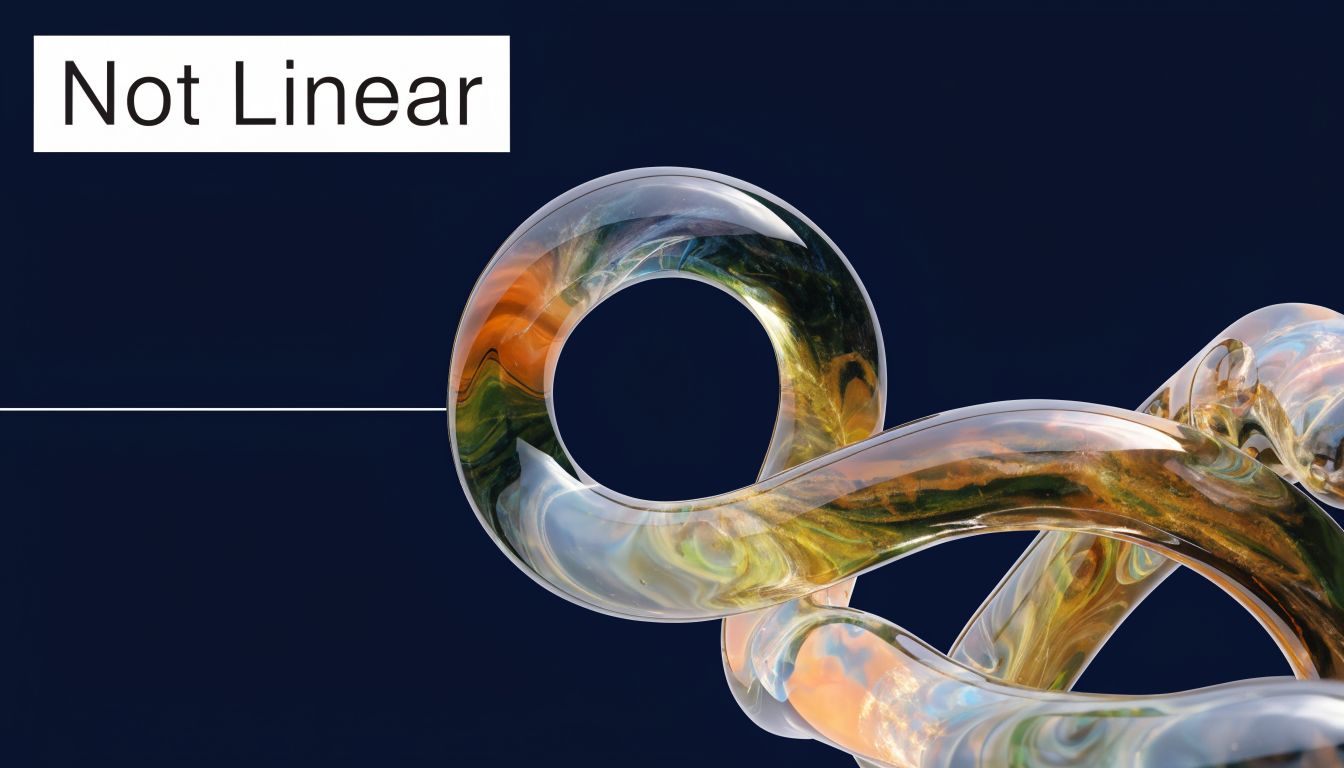
SaaS products get reintroduced through major feature sets. They find second growth through pricing changes, channel partnerships, or expansion into adjacent teams. They plateau in one segment while taking off in another. They can even look like they're declining when an underlying issue is that an important workflow has become stale and needs reinvestment.
Why revenue curves mislead
A flat revenue line doesn't tell you whether the product is saturated, under-monetized, poorly packaged, or waiting on one painful product bottleneck to be fixed.
The same goes for support volume. A rising ticket count can reflect real decay. It can also indicate active usage from customers who are pushing deeper into the product. Looking only at revenue or only at complaints causes teams to confuse noise with stage transition.
Research from ICAgile states that products rarely follow a strictly linear path through the product lifecycle. That matters more in SaaS than in traditional one-time purchase categories because recurring revenue, frequent releases, and feature-led repositioning constantly reshape the curve.
What non-linear paths look like in practice
A few common patterns show up repeatedly:
- Feature-led reintroduction: a mature core product launches a new capability that behaves like a startup inside the existing base.
- Segment split: SMB demand levels off while enterprise adoption starts accelerating.
- Renewal through packaging: usage is healthy, but the offer needs repackaging before growth resumes.
- False decline: complaints rise because customers want the product to do more, not because they're ready to leave.
Here's a useful explainer on why that dynamic matters operationally.
The cost of getting the stage wrong
Misdiagnosis is expensive because it changes what teams do next.
If you think you're in maturity, you'll optimize. If you're at the edge of a second growth curve, optimization can starve the very work that would enable expansion. If you think you're in decline, you may sunset a workflow that customers still value but currently find frustrating.
A support spike during “maturity” doesn't automatically mean decline. It may mean the product has reached feature saturation and needs another round of innovation.
That's why a modern product lifecycle definition has to accommodate loops, stalls, relaunches, and partial renewals. SaaS products don't move like consumer packaged goods on a shelf. They move like living systems with continuous inputs from users, releases, support, and go-to-market teams.
How to Map Your True Lifecycle Stage with Data
If the lifecycle path is non-linear, stage diagnosis has to come from evidence. Not instinct. Not a quarterly narrative. Not whichever team argued hardest in planning.

A stronger approach starts with a broader operating view. In product lifecycle management, the lifecycle spans the full sequence from conception through service and disposal. For SaaS, that means post-launch signals are part of lifecycle management, not a separate support problem, as outlined in Wikipedia's overview of product lifecycle and PLM.
Read behavior across systems
The raw inputs already exist. They just sit in different tools and get interpreted in isolation.
The signals that usually matter most are:
- Support signals: ticket themes, repeat incident patterns, escalation reasons, time-to-resolution changes
- Sales signals: deal blockers, repeated objection language, expansion requests, stalled procurement conversations
- Usage signals: feature adoption patterns, depth of engagement, drop-offs after release, return behavior
- Success signals: onboarding friction, renewal risks, requests for workarounds, implementation fatigue
Used together, these reveal whether the product is struggling to find fit, trying to scale, defending a mature base, or slipping toward irrelevance.
Replace labels with evidence
A helpful operating habit is to stop asking, “What stage do we think we're in?” and start asking a tighter set of questions.
- **Where is customer energy going?**Are customers exploring more use cases, or concentrating around a smaller safe subset?
- **What kind of friction is rising?**Activation friction points to earlier-stage problems. Maintenance burden and workflow fatigue often point to maturity. Confusion after a major release can indicate reintroduction.
- **Are requests additive or compensatory?**Additive requests suggest expansion potential. Compensatory requests usually mean customers are patching around weak fundamentals.
- **Which signals correlate with revenue risk or revenue upside?**Not every complaint matters equally. Some issues frustrate users but don't change buying or renewal behavior. Others drive churn or expansion.
If your team needs a way to segment those patterns over time, cohort analytics is one of the most useful lenses because lifecycle stage often becomes visible when different customer groups behave differently after onboarding, pricing changes, or feature launches.
A practical before-and-after model
The old way looks like this. Revenue flattens. Leadership calls the product mature. Support volume rises on a legacy workflow. The roadmap shifts toward cost reduction and minor UX cleanup.
The better way asks what changed underneath the surface. Are the tickets tied to a heavily used feature? Are the complaining accounts high-retention customers? Did usage deepen after the last release but expose a reliability issue? Did sales start hearing the same request from expansion opportunities?
That's where product intelligence becomes useful. Platforms such as SigOS combine support tickets, chat transcripts, sales calls, and usage metrics so teams can see which patterns line up with churn risk, expansion potential, or urgent product friction. In practice, that can change the interpretation of a “mature” feature from low-priority maintenance to a revenue-protection initiative if the issue is clustered among valuable accounts.
The best lifecycle diagnosis usually comes from pattern correlation, not from a single dashboard.
What works and what doesn't
What works:
- Cross-functional signal review: product, support, success, and sales looking at the same evidence
- Stage diagnosis at the workflow level: not just the product as a whole
- Regular reclassification: especially after packaging changes, major releases, or segment shifts
What doesn't:
- Using revenue alone as the lifecycle label
- Treating support data as operational noise
- Assuming one product has one stage at a time
- Confusing loud requests with strategic importance
The practical payoff is clarity. Teams stop debating abstract stage labels and start making decisions based on customer behavior that affects retention, adoption, and expansion.
From Definition to Decision Making
A useful product lifecycle definition isn't academic. It's operational.
The classic model still gives product teams a strong foundation because it explains why strategy changes over time. But SaaS products rarely move in a clean line. They restart, loop, split by segment, and re-enter growth through new capabilities or sharper positioning. That's why static stage labels often produce bad roadmap calls.
The better move is to treat lifecycle as a living diagnosis. Watch how customers adopt, where they struggle, which requests repeat, which issues threaten renewals, and where new demand is forming. Read the product through behavior across support, sales, success, and usage data.
When teams do that, prioritization gets sharper. Bug fixing stops being reactive. Feature work becomes easier to justify. Mature areas get optimized without starving promising ones. Declining workflows get redesigned or retired with intent instead of denial.
The point isn't to abandon lifecycle thinking. It's to upgrade it.
If your roadmap still depends on a simple revenue curve and a quarterly gut check, you're probably misreading at least one important part of your product. The teams that outperform don't just define the lifecycle. They use customer evidence to locate themselves inside it, then act accordingly.
If you want that kind of visibility, SigOS is built to help product, support, and growth teams connect customer behavior to revenue impact so lifecycle decisions come from real signals instead of guesswork.
Keep Reading
More insights from our blog
Ready to find your hidden revenue leaks?
Start analyzing your customer feedback and discover insights that drive revenue.
Start Free Trial →