The 12 Best Product Roadmap Software Tools for 2026
Discover the top 12 product roadmap software tools. Our guide compares features, pricing, and integrations to help you build data-driven roadmaps.

From Gut Feel to Revenue-Driven: The New Era of Roadmapping
Building a product roadmap often feels like a high-stakes balancing act. You're juggling customer feedback, internal stakeholder requests, technical debt, and ambitious growth targets. Moving beyond intuition-based decisions to a data-informed strategy is the single biggest challenge for modern product teams. The right product roadmap software transforms this chaotic process into a clear, strategic system that connects development efforts directly to business outcomes.
This guide is built to help you find the best platform for your specific needs, whether you're a startup PM, a growth leader, or a CTO. We'll cut through the marketing noise to give you a real-world look at the top 12 tools on the market. Adopting a systematic approach, much like the principles of business process automation, is key to making this transition effective, ensuring your roadmap workflows are repeatable and efficient.
Inside, you will find a detailed breakdown of each tool, including:
- Ideal Use-Cases: Who is this software really for? (e.g., small agile teams, enterprise-scale organizations).
- Key Feature Analysis: A look at what makes each tool unique, beyond the standard feature list.
- Pros & Cons: An honest assessment of strengths and limitations based on real usage.
- Critical Integrations: How well it connects with your existing stack (Jira, GitHub, Zendesk, etc.).
- Pricing Tiers: A clear summary to help you budget accordingly.
We provide screenshots and direct links for every platform so you can see it in action and explore further. Our goal is to equip you with the insights needed to select a tool that not only visualizes your strategy but actively helps you prioritize features that drive revenue and customer value.
1. Productboard
Productboard is a well-established, end-to-end product management platform that excels at connecting customer discovery with delivery. Its core strength lies in creating a traceable line from raw customer feedback to a prioritized roadmap item, making it one of the most complete choices for evidence-based product roadmap software. Teams that need a single source of truth for consolidating insights from sales, support (via Zendesk or Intercom), and analytics will find its structure particularly useful.
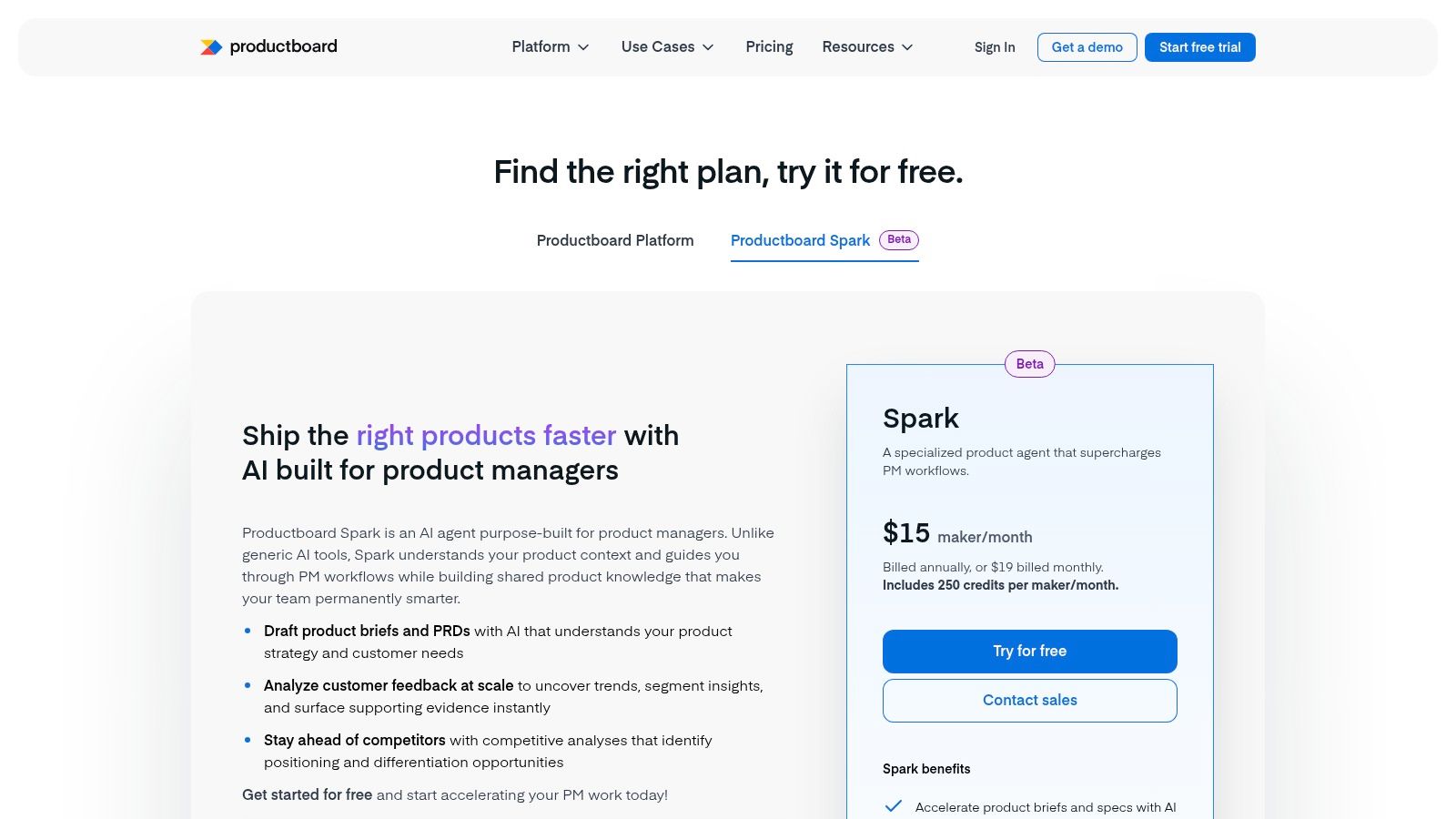
The platform’s standout feature is the Customer Portal, which allows teams to share ideas, collect votes, and provide status updates directly to stakeholders. This transparency helps manage expectations and builds community engagement. Internally, the Insights board connects these feedback fragments to feature ideas, allowing product managers to quantify customer importance and make defensible prioritization decisions. This process is fundamental to a solid product strategy, ensuring development effort is directed toward high-impact work.
Key Details
- Best For: Mid-market to enterprise B2B SaaS companies focused on customer-led growth and needing strong stakeholder alignment tools.
- Key Integrations: Jira, Azure DevOps, GitHub, Slack, Microsoft Teams, Zendesk, Intercom.
- Pros: Excellent for discovery and feedback consolidation; mature integrations with engineering tools create a smooth workflow from idea to execution.
- Cons: Pricing for its primary tiers is no longer public, requiring a sales call. The emerging AI assistant (Spark) is a separate, paid add-on, and the platform lacks a native Linear integration, which requires API workarounds.
- Pricing: Custom pricing for most tiers. A basic "Essentials" plan is available for individuals or small teams.
Website: https://www.productboard.com
2. Aha! Roadmaps
Aha! Roadmaps is an enterprise-grade strategic planning tool designed for organizations that require a high degree of governance and reporting. Its primary strength is the rigid, top-down hierarchy connecting high-level strategy to individual releases and features. This makes it an exceptional choice for portfolio-level management where clear communication and roll-up reporting are critical, solidifying its position as a go-to product roadmap software for large, complex organizations.
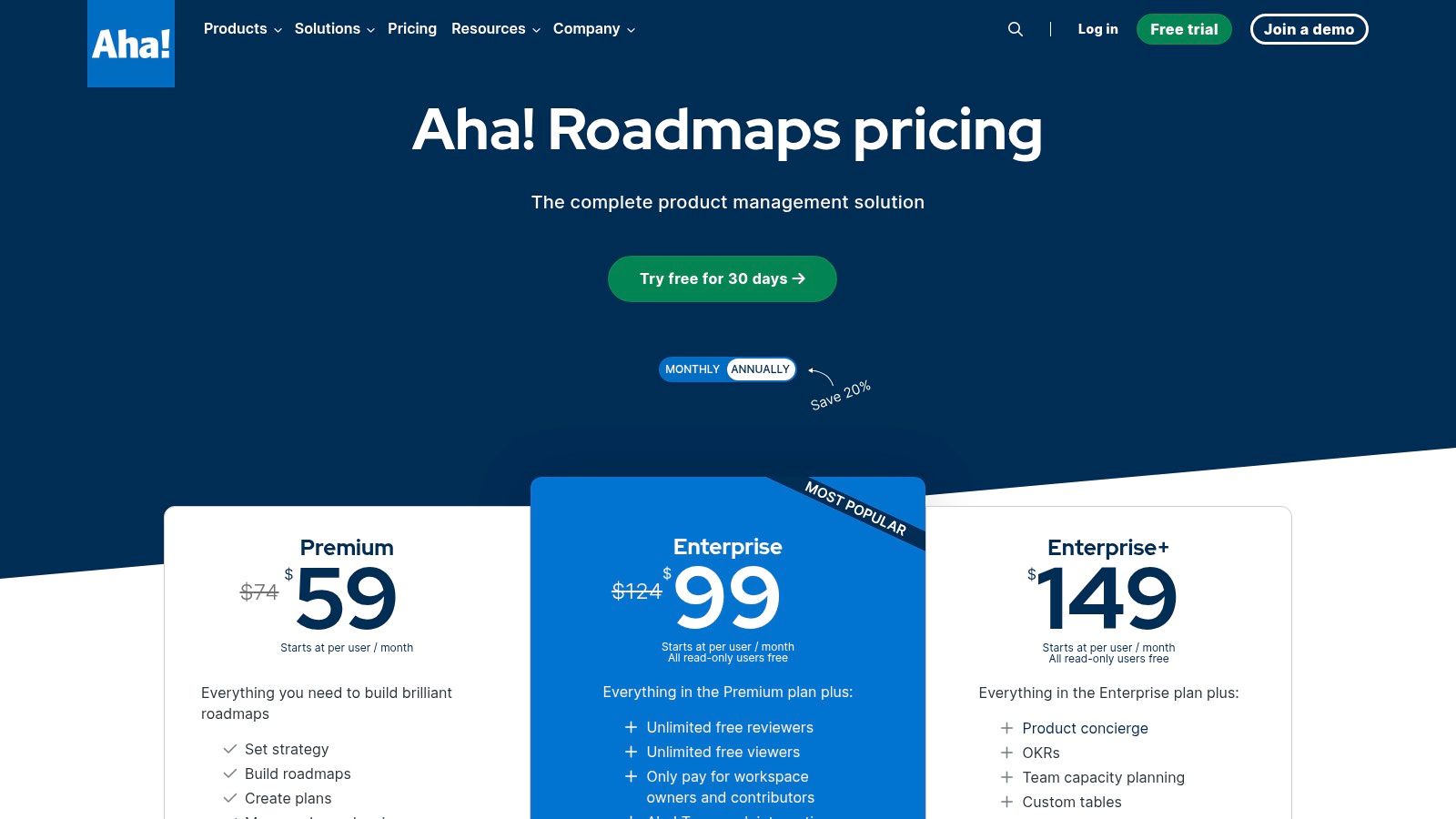
The platform includes robust Ideas portals across all plans, enabling direct feedback collection and engagement. A key differentiator is its rich presentation and sharing capabilities, which allow teams to create polished, executive-ready reports directly from their roadmap data. This structured approach helps enforce disciplined backlog prioritization techniques by tying feature work directly to declared business initiatives. The recent addition of an AI assistant with pooled credits on paid plans further helps teams analyze feedback and accelerate planning.
Key Details
- Best For: Large enterprises or regulated industries needing strong governance, portfolio management, and detailed reporting capabilities.
- Key Integrations: Jira, Azure DevOps, Rally, GitHub, GitLab, Slack, Salesforce.
- Pros: Exceptional for large-scale strategic alignment and governance; unlimited viewers/reviewers on Enterprise plans reduce costs for stakeholder access.
- Cons: Can feel heavy and overly complex for smaller, more agile teams. Many advanced integrations and optional modules like Discovery and Whiteboards are priced as separate add-ons.
- Pricing: Starts at $59/user/month (Premium plan). A higher-tier Enterprise plan includes advanced security and unlimited reviewers.
Website: https://www.aha.io/roadmaps/pricing
3. Jira Product Discovery
For teams deeply embedded in the Atlassian ecosystem, Jira Product Discovery offers a native solution that minimizes friction between planning and execution. It's built directly on Jira Cloud, providing a tight connection to Jira Software where development work happens. This makes it an excellent choice for product teams who want to keep discovery, prioritization, and roadmapping within a familiar environment, avoiding the context switching required by third-party product roadmap software.
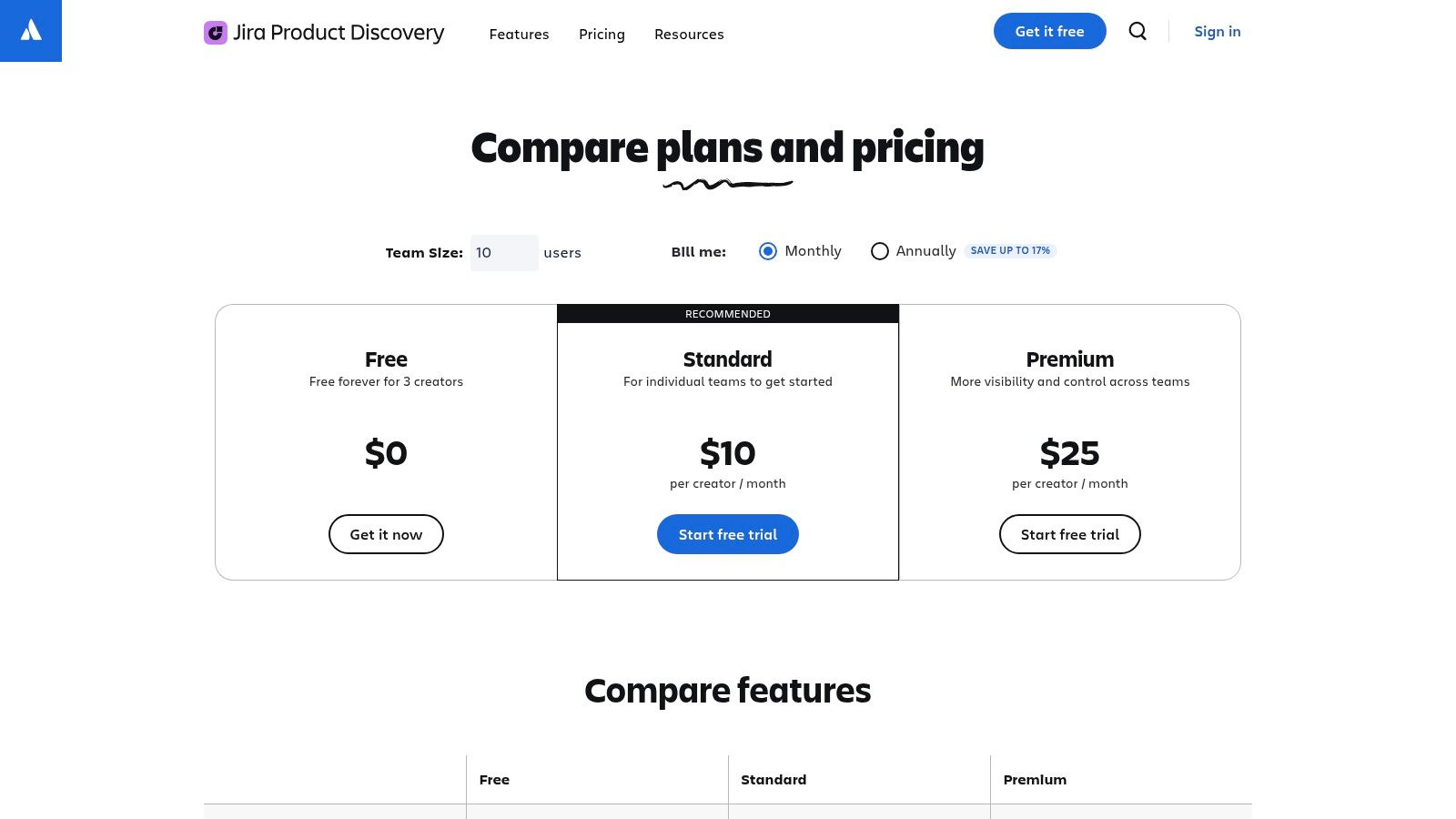
The platform’s key value is its seamless integration, which allows product managers to capture ideas, link them to insights from Confluence or other sources, and then convert prioritized items directly into Jira epics with one click. It provides customizable prioritization views with metrics like impact and effort, helping teams make informed decisions. Its approach to sharing involves published, read-only roadmaps for external stakeholders and contributor access for internal teams, keeping everyone aligned. This direct link from idea to epic is a core tenet of effective product roadmap development, ensuring plans are actionable.
Key Details
- Best For: Product teams of any size already using Jira Cloud for development who prefer a unified toolchain and transparent pricing.
- Key Integrations: Native connections to Jira Software and Confluence are its core strength. Other integrations rely on the broader Atlassian marketplace.
- Pros: Seamless handoff to Jira with very low context switching; clear, transparent per-creator pricing and a generous free tier.
- Cons: It is a cloud-only product with no Data Center option. Its customer feedback management capabilities are lighter than specialized discovery tools.
- Pricing: Free for up to three creators. The Standard plan is priced per creator, with unlimited contributors being free.
Website: https://www.atlassian.com/software/jira/product-discovery/pricing
4. ProductPlan
ProductPlan is a purpose-built visual roadmapping tool designed with one primary goal in mind: clear communication. It shines for teams that need to present beautiful, easy-to-understand roadmaps to a wide range of stakeholders, from executives to the broader company. Instead of trying to be an all-in-one product management suite, it focuses on being best-in-class product roadmap software for planning, prioritizing, and sharing your vision.
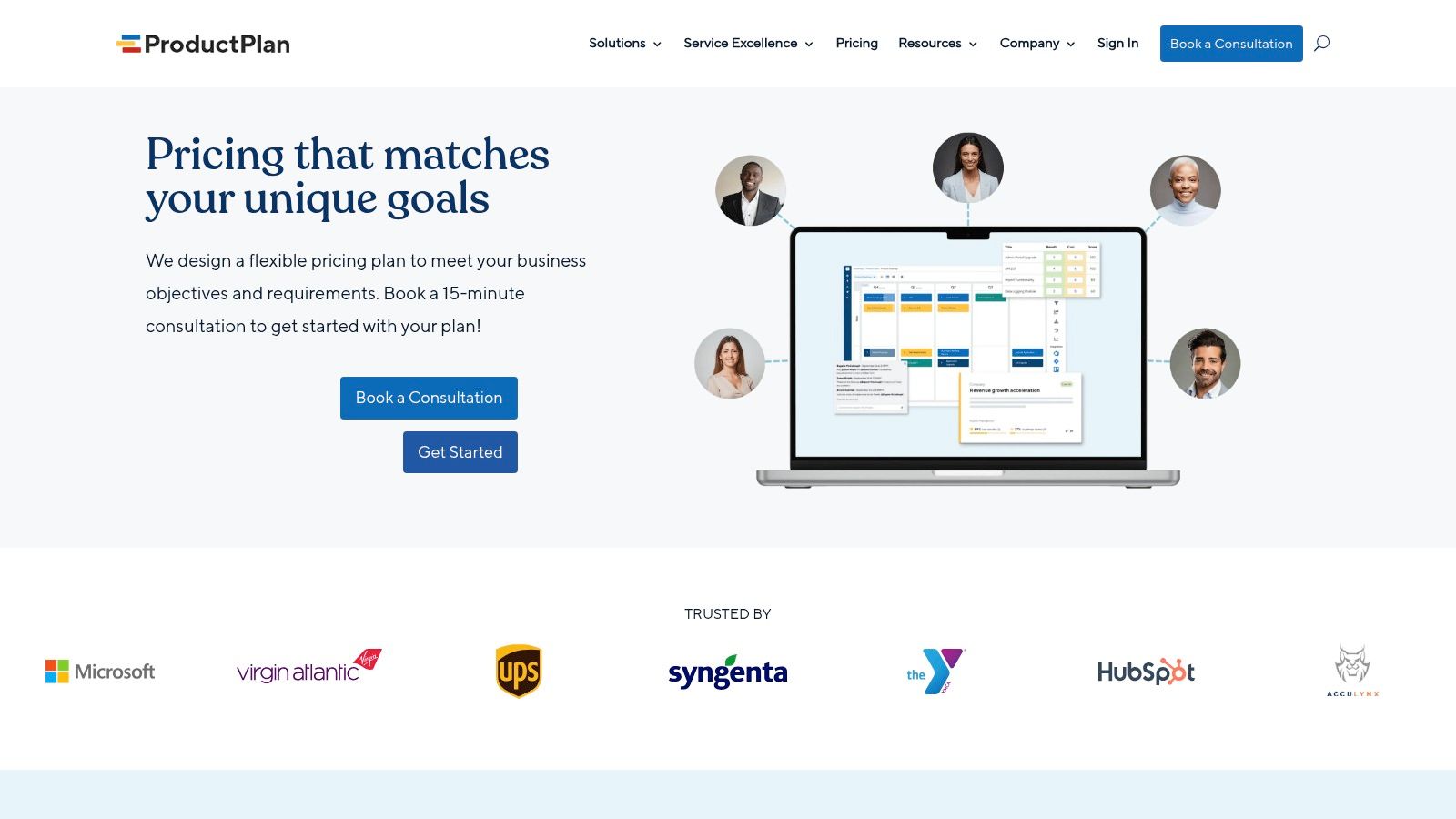
The platform’s standout characteristic is its licensing model, which includes unlimited free viewers. This approach removes the friction and cost associated with giving read-only access to sales, marketing, and leadership teams, promoting widespread alignment. With its drag-and-drop interface, customizable portfolio views, and dedicated prioritization boards, product managers can quickly build and adapt plans without a steep learning curve. It also supports OKR tracking, connecting strategic objectives directly to the features on your roadmap.
Key Details
- Best For: Organizations of any size that prioritize roadmap visibility and need to communicate plans effectively across many departments.
- Key Integrations: Jira, Azure DevOps, GitHub, Slack, Trello, Confluence.
- Pros: Exceptional at creating visually appealing and shareable roadmaps; the unlimited viewers model simplifies procurement and encourages transparency.
- Cons: Pricing requires a sales conversation for its main business plans. Its focus is more on planning and communication than deep customer feedback consolidation, unlike specialized discovery tools.
- Pricing: Custom pricing for Business and Enterprise plans. A basic "Basic" plan is available for individuals getting started.
Website: https://www.productplan.com/pricing/
5. Roadmunk by Tempo
Roadmunk by Tempo is a highly visual and accessible platform that excels at creating, managing, and sharing roadmaps across an organization. Its primary advantage is its flexibility in visualization, allowing teams to switch between timeline, swimlane, and list views effortlessly to suit different audiences, from executive leadership to engineering teams. This makes it a strong contender for companies that prioritize clear communication and stakeholder alignment through polished, shareable artifacts.
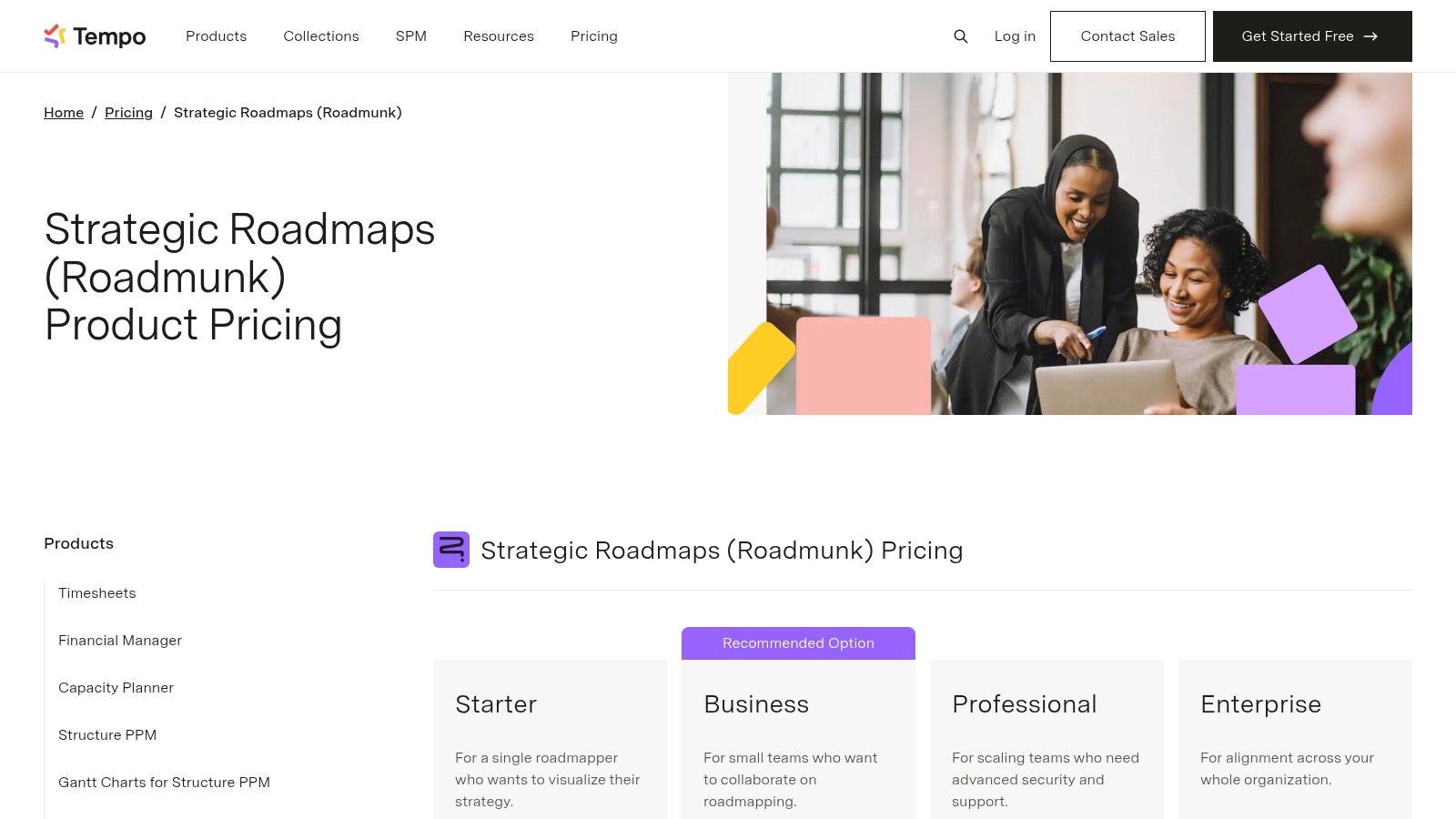
The platform includes built-in idea and feedback management, providing a direct channel to capture customer needs without leaving the tool. Its standout capability is portfolio roadmapping, which lets product leaders roll up multiple product or team roadmaps into a single master view, complete with dependency tracking. This is essential for coordinating cross-team initiatives and identifying potential bottlenecks early. As a dedicated product roadmap software, Roadmunk’s editor/reviewer pricing model also offers predictable costs for growing teams.
Key Details
- Best For: Organizations of all sizes that need strong, presentation-ready roadmap visualization and portfolio management to align multiple teams and stakeholders.
- Key Integrations: Jira, Azure DevOps (advanced syncs require higher tiers), Slack, SSO via SAML.
- Pros: Straightforward pricing with a transparent editor/reviewer model; powerful visualization and sharing features make stakeholder communication simple.
- Cons: Contracts are annual-only, which reduces flexibility. Advanced features like two-way syncs and increased reviewer limits are gated behind more expensive plans.
- Pricing: Starts at $19/month per editor for the "Starter" plan. Tiers for "Business" and "Professional" add more reviewers and advanced integrations.
Website: https://roadmunk.com/pricing/?utm_source=openai
6. ProdPad
ProdPad is a discovery-led product management platform centered on building outcome-oriented roadmaps. It excels at connecting ideas and customer feedback directly to roadmap initiatives, creating a strong evidence trail for every decision. As a piece of product roadmap software, its philosophy is less about timelines and more about connecting problems to solutions, ensuring development work is always backed by real-world validation. This makes it a great fit for teams wanting to move away from feature-factory thinking.
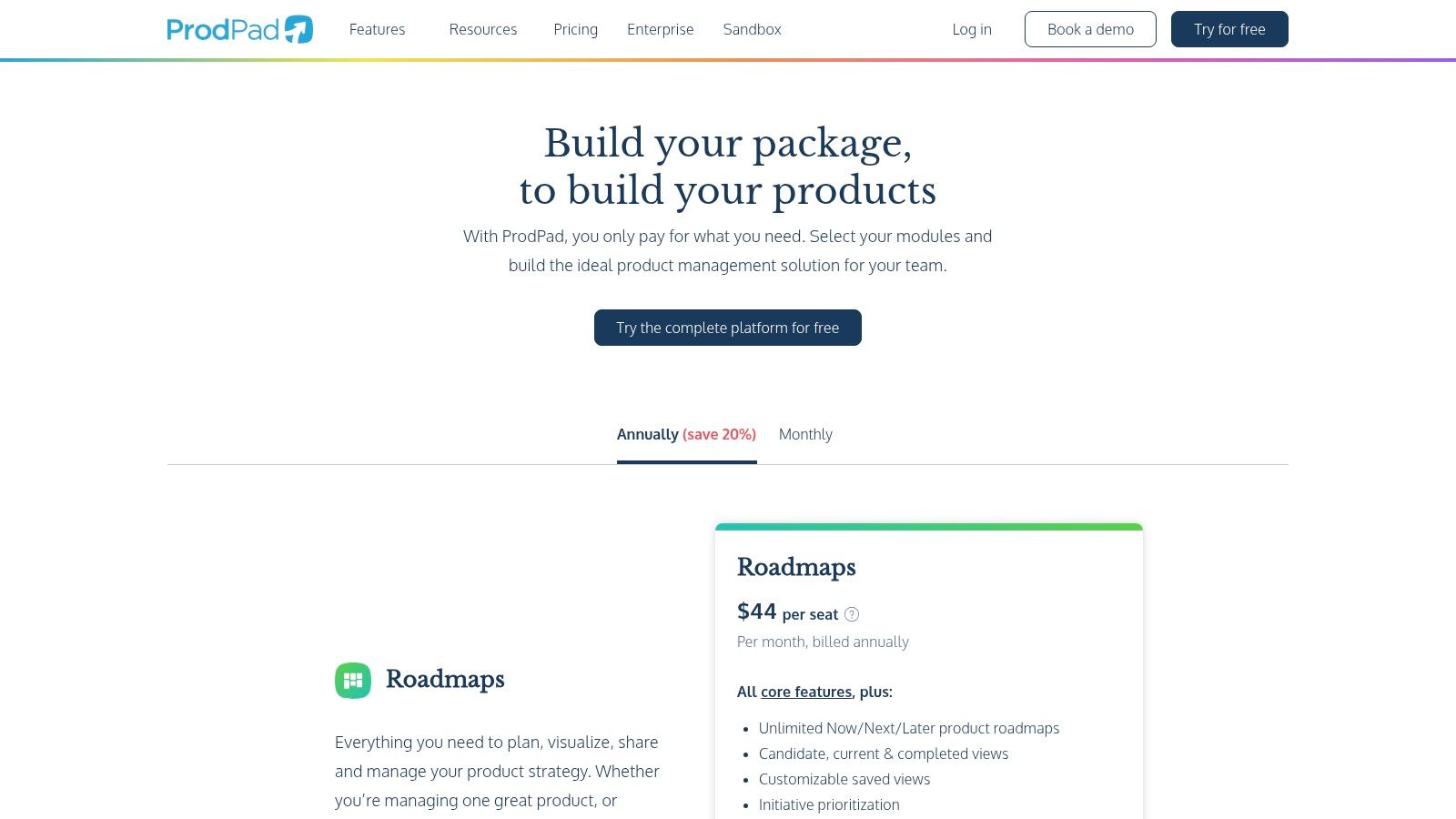
One of ProdPad's most practical features is its "unlimited free reviewers" model. This approach significantly lowers the barrier for internal stakeholders like sales, support, and marketing to contribute feedback and context without adding to subscription costs. The platform provides solid integrations for handoff, with the ability to push prioritized ideas into Jira, GitHub, and Linear, and it offers a two-way status sync with Jira. Recent additions of AI-powered feedback summaries help teams quickly digest and categorize incoming customer insights from tools like Intercom and Zendesk.
Key Details
- Best For: Product teams adopting an outcome-driven mindset who need a strong system for collecting and validating ideas before committing to development.
- Key Integrations: Jira, GitHub, Linear, Azure DevOps, Slack, Microsoft Teams, Intercom, Zendesk, Zapier.
- Pros: Strong emphasis on evidence-based decision-making; the no-cost reviewer model is excellent for company-wide feedback collection and reduces stakeholder friction.
- Cons: The platform's interface and terminology can feel opinionated and may require an adjustment for teams accustomed to traditional Gantt charts or timeline-based roadmaps. Its modular pricing requires careful selection of add-ons to estimate the final cost.
- Pricing: Modular pricing based on editor seats and selected add-ons. You can estimate costs on their pricing page before committing.
Website: https://www.prodpad.com/pricing/?utm_source=openai
7. airfocus
airfocus is a highly modular and flexible product management platform designed for teams that need to tailor their workflows. Its core differentiator is a building-block approach, allowing product managers to construct their own workspace with apps for prioritization, roadmapping, and feedback. This makes it an adaptable piece of product roadmap software for organizations that don't fit into a rigid, one-size-fits-all system, with a strong focus on enterprise needs like data residency options for the US and EU.
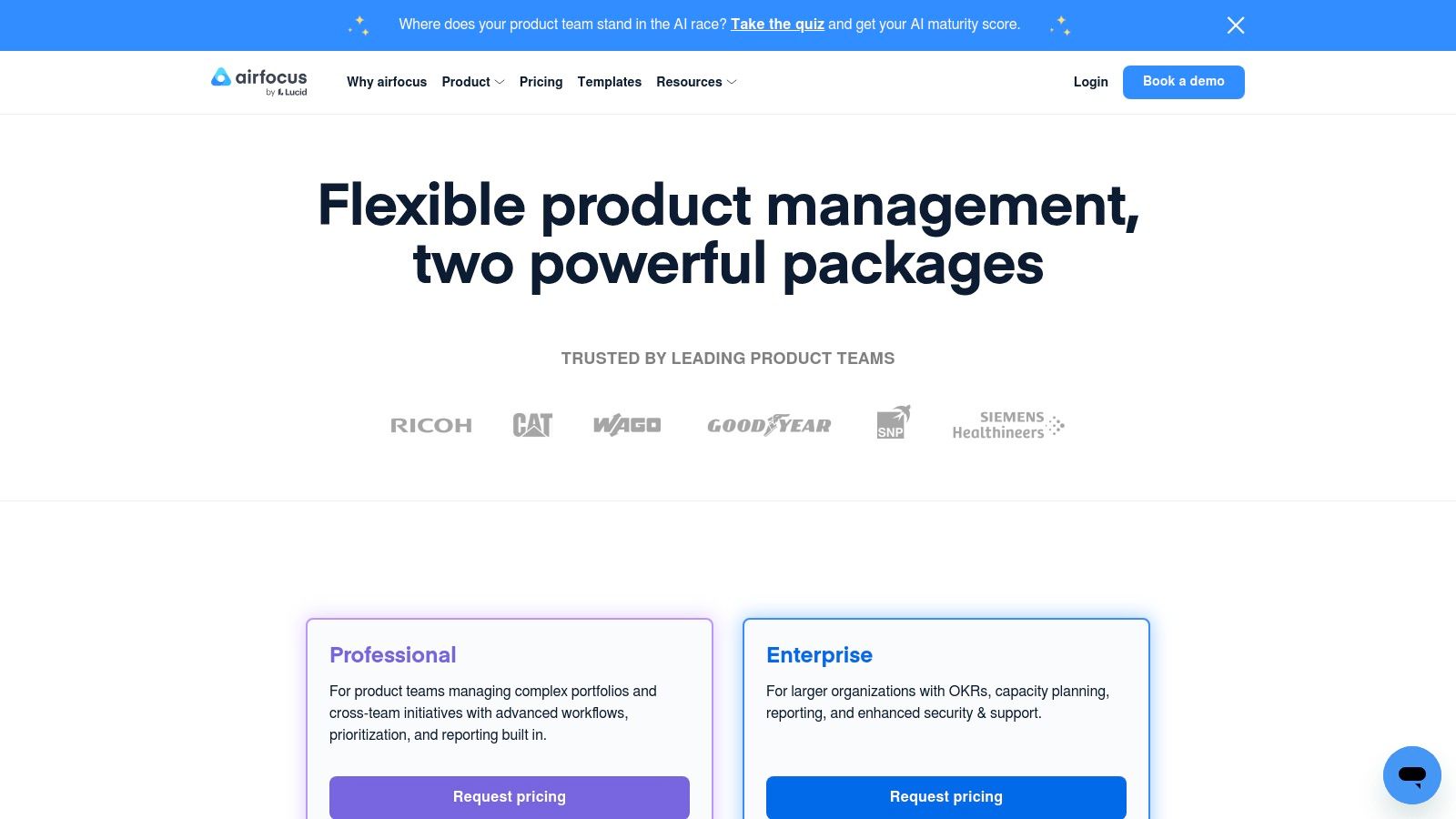
The platform’s standout features are its advanced prioritization frameworks, including weighted scoring and a collaborative "Priority Poker" game to build team consensus. It also provides robust support for connecting OKRs directly to initiatives, ensuring strategic alignment from top to bottom. Users can create branded customer portals for feedback collection and share updates with an unlimited number of free contributors, which is a major benefit for managing stakeholder communication at scale without inflating costs. This combination of customization and governance makes it a powerful choice for regulated or security-conscious industries.
Key Details
- Best For: Enterprise and mid-market companies needing a customizable platform with strong governance, security features, and collaborative prioritization tools.
- Key Integrations: Jira, Azure DevOps, GitHub, Slack, Trello, Intercom, Zendesk, Salesforce.
- Pros: Highly customizable with its modular app system; unlimited free contributors/viewers on all plans; offers data residency options for compliance.
- Cons: Pricing is request-only with no public self-serve free trial available. Key features like SSO are packaged as add-ons for lower tiers, which can increase the total cost.
- Pricing: Custom pricing for all tiers (Professional, Enterprise, Enterprise+). A sales call is required for a demo and quote.
Website: https://airfocus.com/pricing/
8. Craft.io
Craft.io is a strategy-first product management and roadmapping platform designed to connect high-level business objectives directly to the work being done by development teams. Its main strength is creating a clear, hierarchical link from OKRs and top-down strategy to epics and features. This makes it an excellent choice for organizations that need a structured and transparent way to ensure their development efforts are always aligned with strategic goals, making it a powerful piece of product roadmap software.
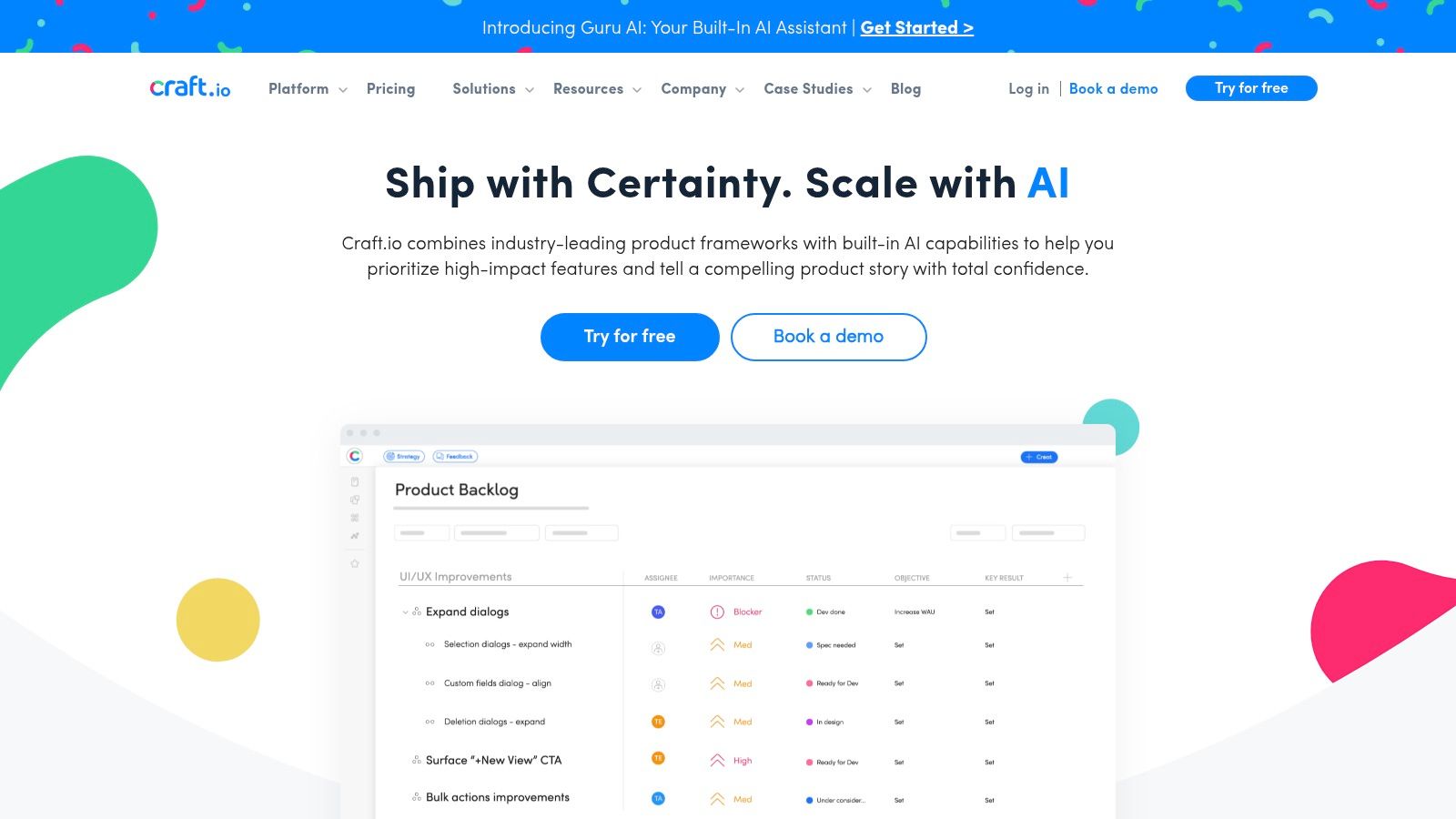
The platform provides a dedicated space for defining strategy and objectives before diving into feature planning. With built-in prioritization frameworks like MoSCoW and custom scoring, product managers can make objective decisions about what to build next. Craft.io also includes robust tools for user story mapping and release planning, allowing teams to visualize user journeys and group features into logical releases. This combination of strategic alignment and tactical planning tools gives teams a comprehensive view from the "why" all the way to the "how."
Key Details
- Best For: Product teams in mid-sized to large organizations that prioritize a top-down, strategy-driven approach to roadmapping.
- Key Integrations: Jira, Azure DevOps, GitHub, GitLab, Targetprocess, Okta. Many other integrations are supported via Zapier.
- Pros: Strong native alignment between strategy, OKRs, and the roadmap; combines prioritization matrices and portfolio-level roadmap views effectively.
- Cons: Public pricing is limited, and enterprise features like SCIM/SSO may require engaging with sales. Integrations with non-developer tools often rely on Zapier.
- Pricing: A free "Essential" plan is available. Paid plans ("Pro" and "Enterprise") require a quote.
Website: https://craft.io/
9. Dragonboat
Dragonboat positions itself as a "Product OS," moving beyond simple feature roadmapping to offer a complete product portfolio management platform. Its strength lies in connecting strategic objectives (OKRs) directly to resource allocation and engineering capacity. This makes it a powerful choice for organizations with multiple product teams that need a top-down view of investments and outcomes. Leaders can use it to create a responsive product roadmap software system that aligns development effort with business goals.
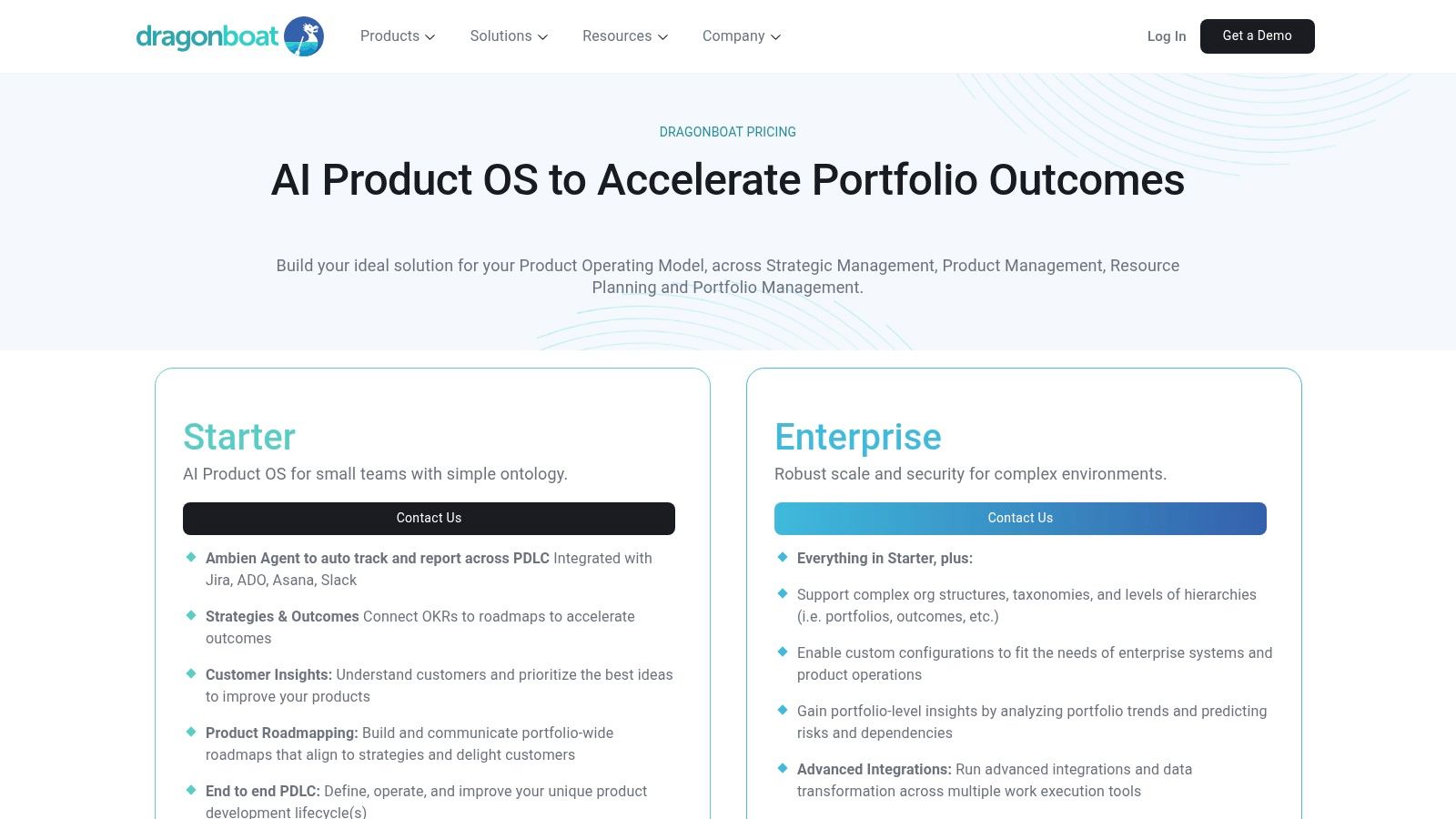
The platform excels at scenario planning, allowing managers to model different investment strategies and see their impact on timelines and resource needs. Its portfolio-wide roadmaps provide executives with a clear line of sight into progress across various product lines. A notable benefit is the inclusion of up to 100 free read-only and requestor seats on its Starter plan, which encourages broader organizational transparency and participation without inflating costs.
Key Details
- Best For: Scale-ups and enterprises with multiple product lines needing to manage complex portfolios and align resource allocation with strategic OKRs.
- Key Integrations: Jira, Azure DevOps, GitHub, Shortcut, Asana, GitLab, Slack, SSO (Okta, SAML).
- Pros: Excellent for cross-product portfolio visibility and ROI allocation; scales effectively to handle complex organizational structures and diverse engineering tool stacks.
- Cons: Pricing is sales-led and not fully public for higher tiers, creating a barrier to evaluation. The platform has a steeper learning curve than simple roadmap tools and delivers the most value in enterprise or multi-product contexts.
- Pricing: A "Starter" plan is available with a public price point. "Enterprise" and "Enterprise+" tiers require a sales call for custom pricing.
Website: https://dragonboat.io/pricing/
10. Canny
Canny is a dedicated customer feedback and roadmap platform that excels at creating a direct, transparent loop between user requests and product development. It focuses on collecting, prioritizing, and communicating feedback through public boards where users can submit ideas and vote on existing ones. This makes it an effective piece of product roadmap software for companies that want to build a community-driven development process and keep users informed every step of the way.
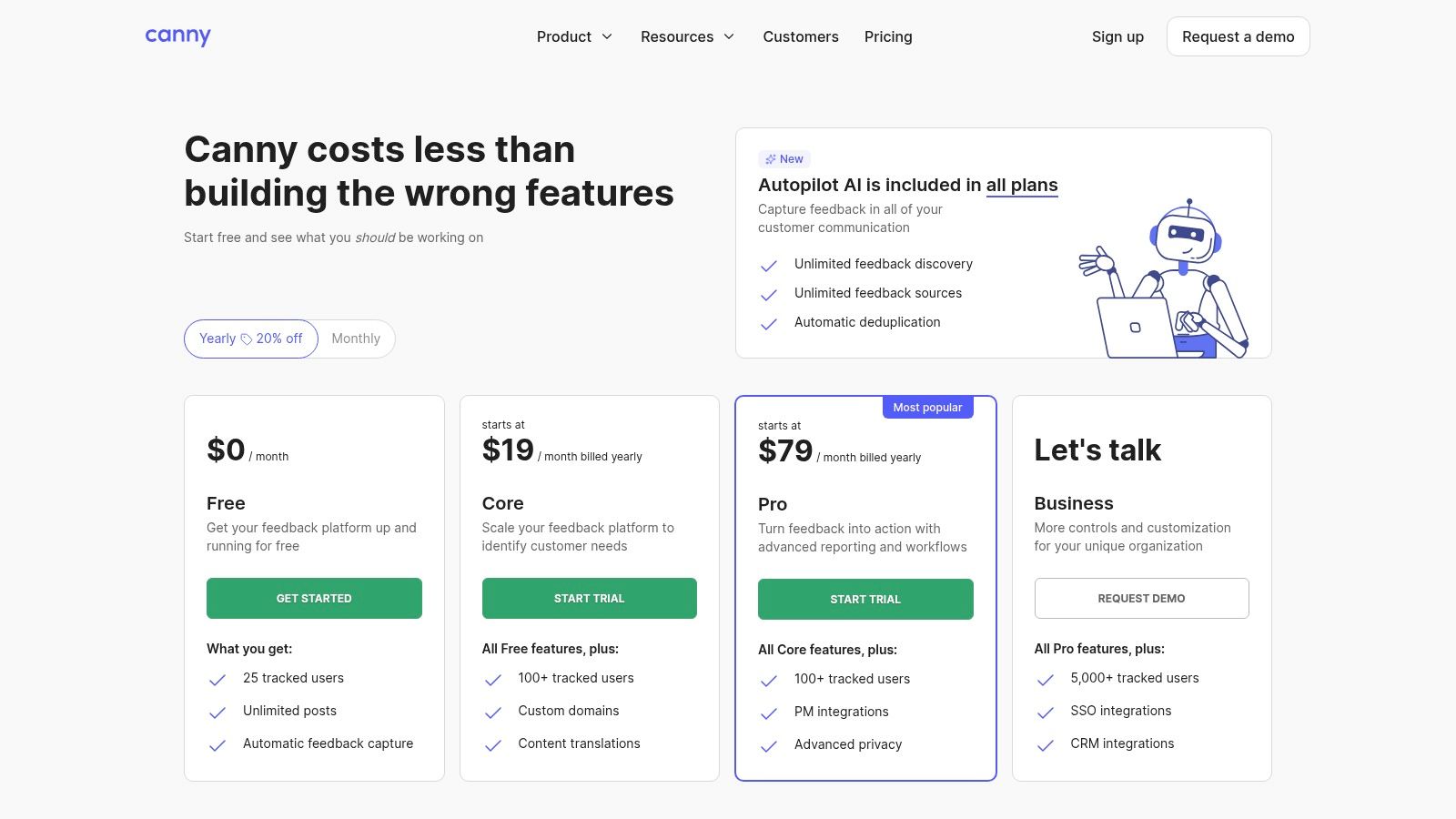
The platform’s strength is its simplicity in operationalizing feedback. Its "Autopilot" AI feature automatically triages and deduplicates incoming suggestions, reducing manual overhead for product teams. Once a feature is prioritized and shipped, Canny’s integrated changelog allows teams to close the loop by announcing updates directly to the users who requested them. This tight integration of feedback collection, roadmap visualization, and communication sets it apart for product-led companies.
Key Details
- Best For: Startups and SMBs, particularly in SaaS, that want a straightforward, public-facing way to manage customer feedback and communicate their roadmap.
- Key Integrations: Jira, Linear, GitHub, Slack, Microsoft Teams, Intercom, Zendesk, Salesforce.
- Pros: Very quick to set up and systematize a feedback-to-roadmap workflow; transparent pricing model is easy to understand and scales with tracked users.
- Cons: The roadmapping capabilities are lighter than what is found in full product management suites; the cost can increase significantly as the number of tracked users grows.
- Pricing: Starts with a free plan for up to 100 tracked users. Paid plans start at $99/month, scaling based on user count and feature access.
Website: https://canny.io/pricing?utm_source=openai
11. Pendo
Pendo is a product experience platform that uniquely combines quantitative product analytics with qualitative in-app engagement tools. While its core strength is understanding user behavior, its product roadmap software module allows teams to connect those insights directly to planning. This makes it an excellent choice for product managers who want to ground their roadmap decisions in hard data, such as feature adoption rates, user flows, and direct feedback from in-app surveys and NPS scores.
The platform stands out by creating a closed loop between product usage, user sentiment, and strategic planning. Teams can identify which features are underperforming through analytics, then use in-app guides to drive adoption or gather feedback via polls. These findings directly inform what gets prioritized on the roadmap. Its Listen and Validate modules further support discovery by helping teams manage ideas and validate concepts with specific user segments before committing development resources, ensuring the roadmap reflects genuine user needs.
Key Details
- Best For: Data-centric product teams at any scale who want to link user analytics and in-app feedback directly to their roadmap prioritization process.
- Key Integrations: Salesforce, Zendesk, Jira, Slack, HubSpot, Marketo, and over 85 others across various ecosystems.
- Pros: Combines analytics and in-app engagement with roadmaps for data-driven planning; offers a flexible MAU-based pricing model for web and mobile.
- Cons: Most commercial capabilities require sales engagement and custom pricing. The roadmaps and in-app assets in the free tier are Pendo-branded.
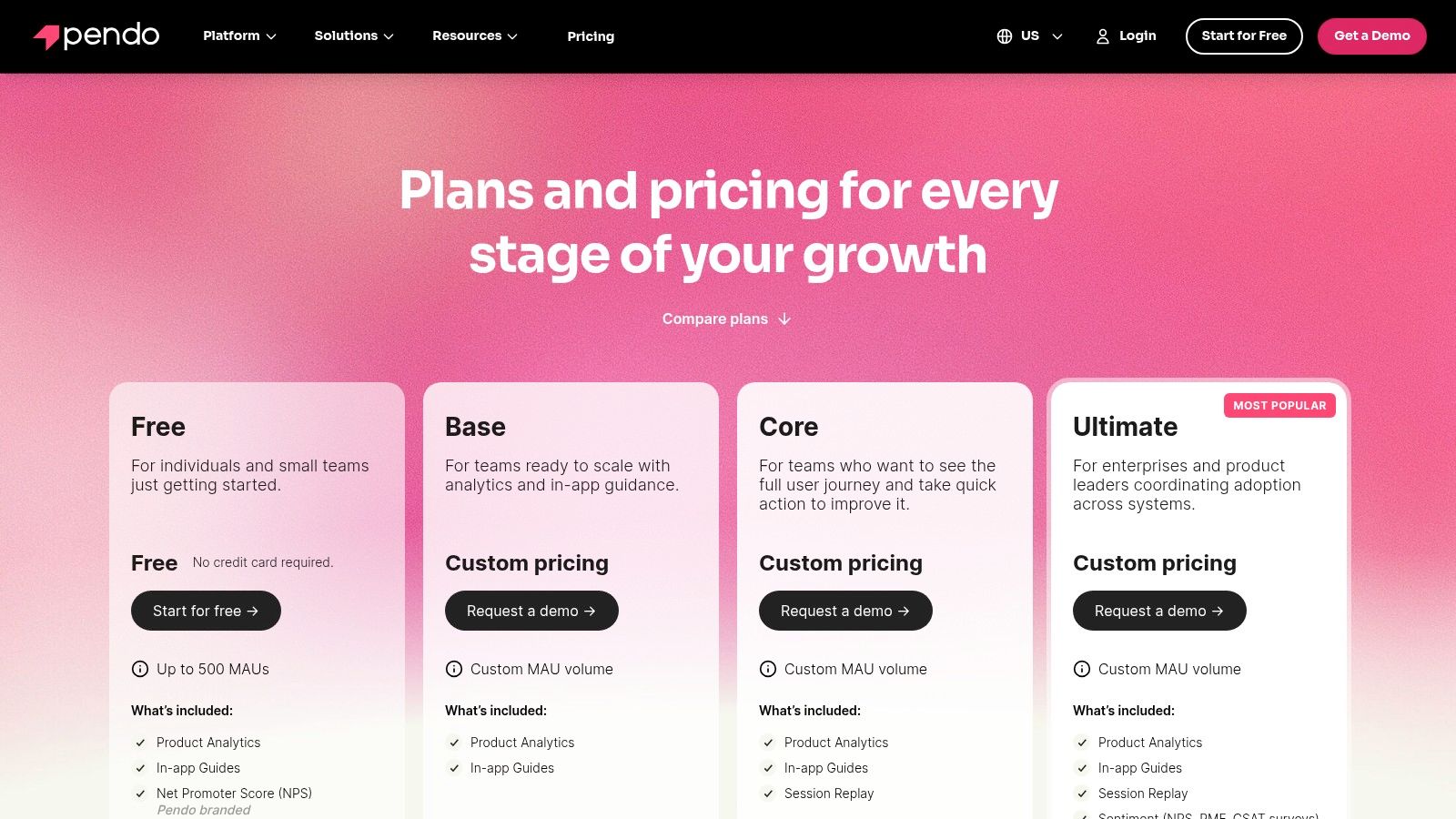
- Pricing: A generous "Free" plan is available for up to 500 MAUs. "Growth" and "Portfolio" tiers require custom quotes.
Website: https://www.pendo.io/pricing/
12. ClickUp
ClickUp is an all-in-one work management platform that has gained popularity for its flexibility in handling a wide range of use cases, including those for product roadmaps. Rather than being a specialized tool, it offers a suite of customizable features like Timeline, Gantt, and Board views that can be configured to function as effective product roadmap software. It is best suited for teams that prefer to consolidate their tasks, documents, and planning into a single workspace to minimize tool sprawl and simplify workflows.
The platform’s power comes from its high degree of customization. Teams can use custom fields to track initiative status, priority, or impact scores, and set milestones to mark key release dates. The Goals feature allows for connecting high-level objectives directly to the tasks and projects that support them, creating a clear line of sight between strategy and execution. This makes it a practical choice for organizations where roadmaps must live alongside the day-to-day project management activities of the development team.
Key Details
- Best For: Teams of any size looking for a single, highly customizable platform to manage tasks, docs, and roadmaps without investing in a dedicated product management suite.
- Key Integrations: GitHub, GitLab, Slack, Microsoft Teams, HubSpot, Figma, and an extensive app marketplace with hundreds of other tools.
- Pros: Its all-in-one nature can significantly reduce tool costs and context switching. The per-user pricing is affordable compared to many specialized roadmap tools.
- Cons: It is not a dedicated customer feedback or discovery tool, so roadmap governance is largely a do-it-yourself process. Users have reported frequent changes to pricing and packaging, so it's wise to confirm terms before scaling.
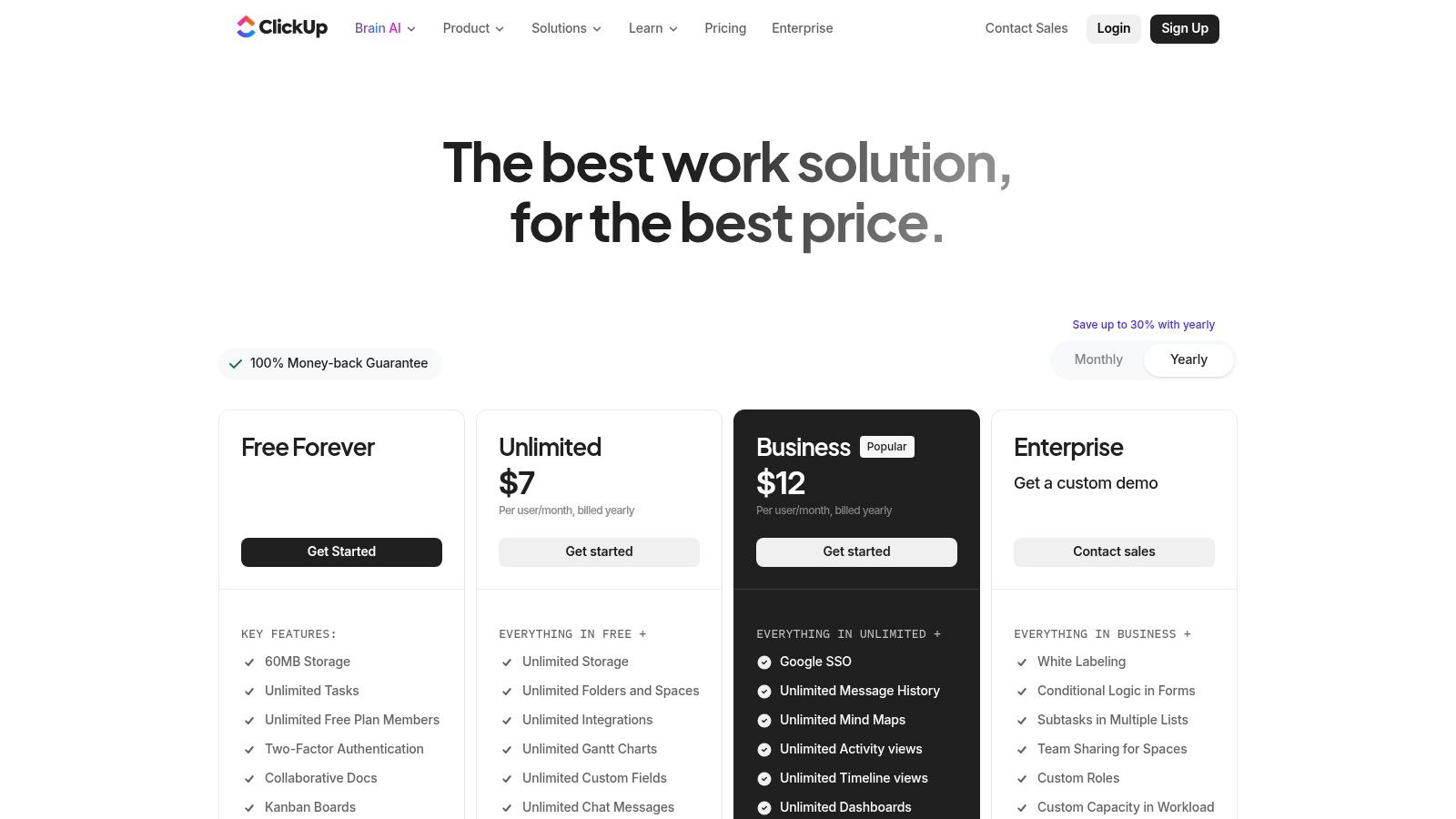
- Pricing: Offers a free plan for personal use. Paid plans with more advanced features start at $7 per member/month (billed annually) and scale to Enterprise tiers.
Website: https://clickup.com/pricing?utm_source=openai
Top 12 Product Roadmap Tools Comparison
| Tool | Core capabilities | UX / Quality ★ | Value & Pricing 💰 | Target audience 👥 | Unique selling points ✨🏆 |
|---|---|---|---|---|---|
| Productboard | Discovery + feedback → roadmap, integrations to delivery | ★★★★ | 💰 Mid / tiered, Spark AI add-on | 👥 PM teams needing discovery traceability | ✨ Portal for stakeholders, strong discovery workflows |
| Aha! Roadmaps | Strategy-to-release hierarchy, portfolio reporting | ★★★★ | 💰 Enterprise / sales-priced | 👥 Enterprise PMOs & strategy teams | 🏆 Governance, roll-up strategy & rich reporting |
| Jira Product Discovery | Native discovery + handoff to Jira & Confluence | ★★★★ | 💰 Clear per-creator + generous free tier | 👥 Jira-centric dev/product teams | ✨ Seamless Jira handoff, low context-switch |
| ProductPlan | Visual portfolio roadmaps, stakeholder communication | ★★★ | 💰 Sales-configured, audience-based | 👥 Roadmap communicators & execs | ✨ Unlimited viewers, clear stakeholder visuals |
| Roadmunk | Visual roadmaps, dependencies, sharing & feedback intake | ★★★★ | 💰 Predictable tiering, annual contracts | 👥 PMs needing publishable roadmaps | 🏆 Strong publishing/sharing and portfolio views |
| ProdPad | Outcome-focused discovery, idea→roadmap evidence chain | ★★★★ | 💰 Modular pricing, reviewer-friendly | 👥 Discovery-led PM teams | ✨ Unlimited free reviewers, evidence-backed roadmaps |
| airfocus | Prioritization frameworks + flexible roadmaps | ★★★★ | 💰 Request-only, add-ons for enterprise features | 👥 Teams needing scoring & governance | ✨ Priority Poker, data residency & custom hierarchy |
| Craft.io | Strategy-first roadmaps, OKR/epic alignment & story maps | ★★★ | 💰 Limited public pricing / sales-led | 👥 Strategy-aligned product teams | ✨ Strong OKR-to-epic alignment and story mapping |
| Dragonboat | Portfolio product OS: investment, capacity & ROI tracking | ★★★★ | 💰 Sales-led, enterprise tiers | 👥 Portfolio leaders & PM leaders | 🏆 Resource & scenario planning at scale |
| Canny | Feedback portals, voting, public roadmaps & AI triage | ★★★★ | 💰 Transparent, low entry; scales with users | 👥 Customer-feedback centric teams | ✨ Autopilot AI for dedupe/triage, changelogs |
| Pendo | Product analytics + in-app guides, NPS & roadmaps | ★★★★ | 💰 MAU-based, free tier with branding | 👥 Data-driven PMs & growth teams | 🏆 Combined analytics + in-app engagement |
| ClickUp | All-in-one work hub (tasks, docs, timelines, goals) | ★★★ | 💰 Affordable per-seat tiers, free plan | 👥 Teams wanting single tool for work & roadmaps | ✨ Broad app ecosystem, combines tasks & roadmaps |
Building Your Strategic Engine
We've explored a wide range of powerful product roadmap software, from all-in-one platforms like Productboard and Aha! to more focused tools like Canny and Jira Product Discovery. The central theme is clear: modern product management is no longer about static, top-down plans. It’s about building a dynamic, responsive strategic engine fueled by data, customer feedback, and clear business objectives.
The right tool acts as the chassis for this engine. It provides the structure to connect your vision to daily execution, align cross-functional teams, and communicate progress transparently. Whether you're a startup needing the lean simplicity of Roadmunk or an enterprise standardizing with Dragonboat's portfolio management, the goal remains the same: create a single source of truth for your product's direction.
Key Takeaways for Selecting Your Tool
Making the right choice requires looking beyond feature lists and focusing on your team’s unique context. Here are the critical decision factors to guide your selection:
- Team Size and Maturity: A small, agile team might find the comprehensive nature of a tool like Aha! or Craft.io to be overkill. In contrast, a simpler tool like ProductPlan might not scale to meet the complex portfolio and dependency management needs of a large organization.
- Methodology and Workflow: Does your team live in Jira? Jira Product Discovery offers the tightest integration. Are you committed to a continuous discovery process? ProdPad is built specifically for that. Your existing workflows should guide, not fight, your tool choice.
- Integration is Non-Negotiable: Your roadmap tool cannot be an island. Its ability to seamlessly pull in data from customer feedback platforms (like Zendesk, Intercom, Canny) and sync with engineering backlogs (Jira, GitHub, Linear) is fundamental to its success. Without these connections, your roadmap will quickly become a stale artifact.
- Balancing Simplicity and Power: There is a direct trade-off between ease of use and feature depth. Tools like Roadmunk and ProductPlan excel at creating beautiful, easy-to-share roadmaps. Platforms like Productboard and airfocus offer more complex systems for scoring, prioritization, and feedback management, which come with a steeper learning curve.
From Implementation to Strategic Impact
Choosing your product roadmap software is just the first step. True value comes from its thoughtful implementation and integration into your company’s culture. Plan for a phased rollout, starting with a pilot team to work out the kinks and build internal advocacy. Develop clear guidelines on how to submit ideas, what data is needed for prioritization, and how different roadmap views should be used for different audiences (e.g., executive, sales, engineering).
This process is a core part of your organization's overall technology strategy. As you add more specialized software, maintaining a clear view of your entire tech stack becomes essential for security, cost-efficiency, and operational health. For any organization, the effective management of its entire software ecosystem, including specialized tools like product roadmap software, is a key component of a robust strategic engine. Delve deeper into software asset management to ensure optimized use and compliance.
Ultimately, your roadmap is a communication document. Its purpose is to build confidence, create alignment, and articulate a compelling vision for the future. The software you choose should make this process of storytelling and strategic alignment easier, not harder. By grounding your choices in real data and customer needs, you transform your roadmap from a simple list of features into a powerful engine for sustainable growth.
Ready to connect your roadmap directly to revenue and user behavior? The tools above help you organize what to build, but SigOS tells you why. Integrate product intelligence from SigOS to automatically surface which features drive upgrades, which are used by your most valuable customers, and where to invest for maximum business impact.
Keep Reading
More insights from our blog

Ready to find your hidden revenue leaks?
Start analyzing your customer feedback and discover insights that drive revenue.
Start Free Trial →