What Is Early Warning System and How It Prevents Churn
What is early warning system? Learn how SaaS early warning systems detect churn risk, key signals, types and how to build one that acts before revenue is lost.
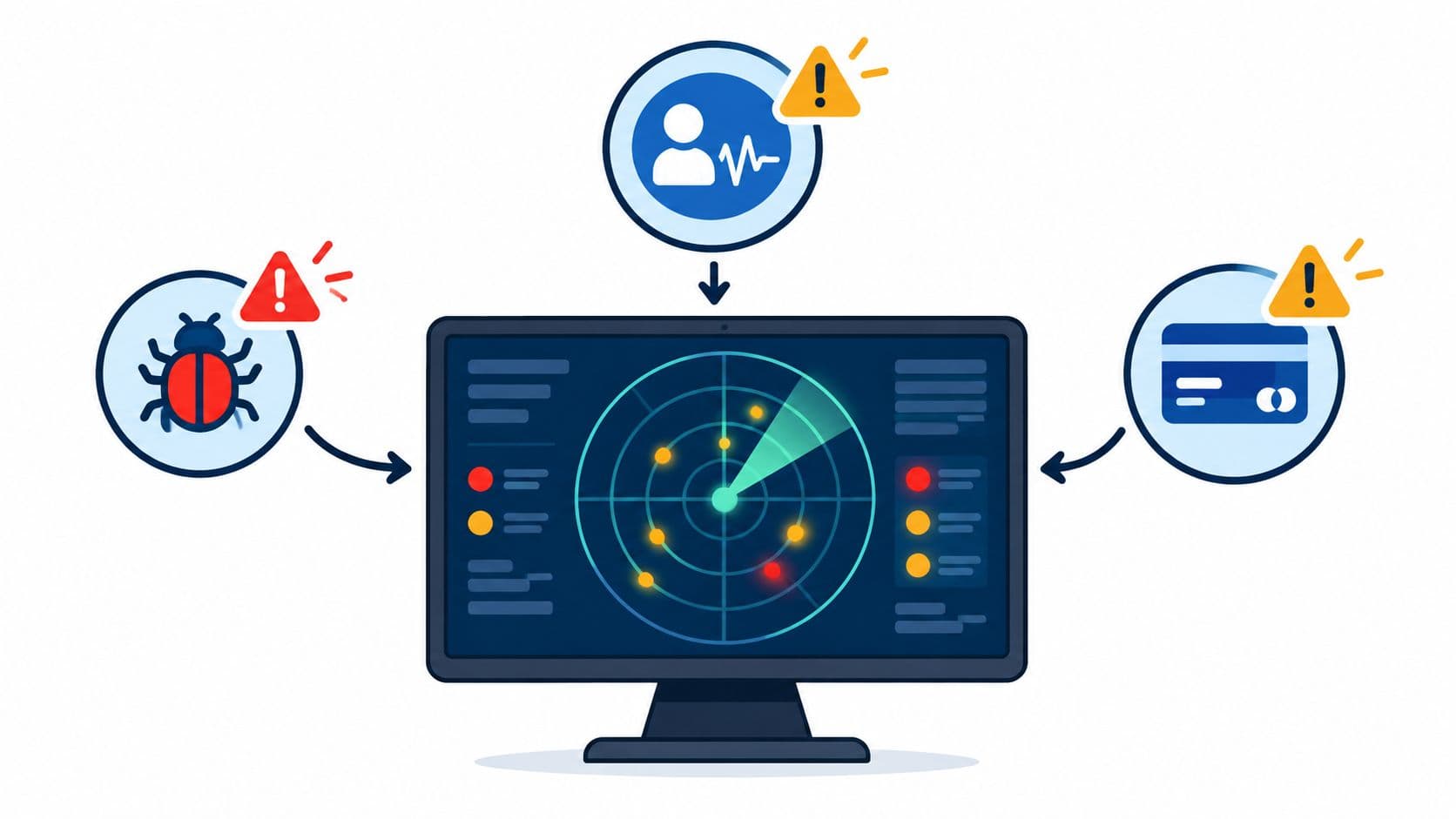
A renewal date appears on the calendar, but the account has been drifting for weeks. Logins are less frequent, a key workflow is untouched, support conversations are becoming more urgent, and the customer's internal champion has stopped joining calls. By the time the account owner sees the cancellation request, the most useful intervention window has already closed.
That's the problem an early warning system solves. It connects faint signals to a decision while there's still time to change the outcome. In disaster management, that may mean moving people away from a flood zone. In SaaS, it may mean fixing a blocked workflow, involving an executive sponsor, or addressing a product gap before renewal risk becomes an executive decision.
The useful question isn't only “what is early warning system?” It's also: what signals should a product team watch, how much lead time is enough, and how does an alert become action rather than noise?
Why Most Teams Notice Churn Too Late
A typical churn post-mortem starts with a clear ending. The customer didn't renew. The account team searches through notes, support tickets, product analytics, and billing records, then discovers that the warning signs were scattered across systems.
One report showed declining usage. Support had logged repeated questions about the same workflow. A product manager knew the requested capability was missing, while finance had seen a downgrade request. No single signal looked conclusive, so nobody treated the account as urgent. The organization had information, but it lacked a connected decision chain.
That distinction matters. Late detection isn't always a data shortage. Often, teams have plenty of data but no operating model for turning weak, distributed signals into an owner, a response, and a deadline.
Latency is the hidden cost
Early warning systems are built around the time between a detectable signal and an intervention. The UNDRR definition of an early warning system describes an end-to-end process that links hazard monitoring, forecasting, risk assessment, communication, and preparedness so people can act before harm occurs.
SaaS teams face the same constraint. A usage decline detected before a renewal conversation leaves room for investigation. The same decline discovered after a cancellation email is mostly historical information.
Practical rule: A signal has business value only when someone can still make a different decision because of it.
This is why dashboards alone rarely prevent churn. A dashboard can describe what happened, but an early warning workflow must identify what changed, estimate why it matters, and route the next action to the person who can influence the account.
The disaster-response metaphor fits better than it first appears
A flood warning doesn't protect anyone merely because a sensor detected rising water. The warning must be interpreted, delivered through a usable channel, understood by the community, and connected to a practical response.
The SaaS equivalent is a revenue-risk signal that reaches the correct account owner with enough context to act. Product, support, success, finance, and growth teams need a shared view of risk rather than separate fragments that only become visible during a post-mortem.
The rest of the model follows from that principle: detect earlier, combine evidence, calibrate urgency, communicate clearly, and make intervention easy.
What an Early Warning System Really Means in SaaS
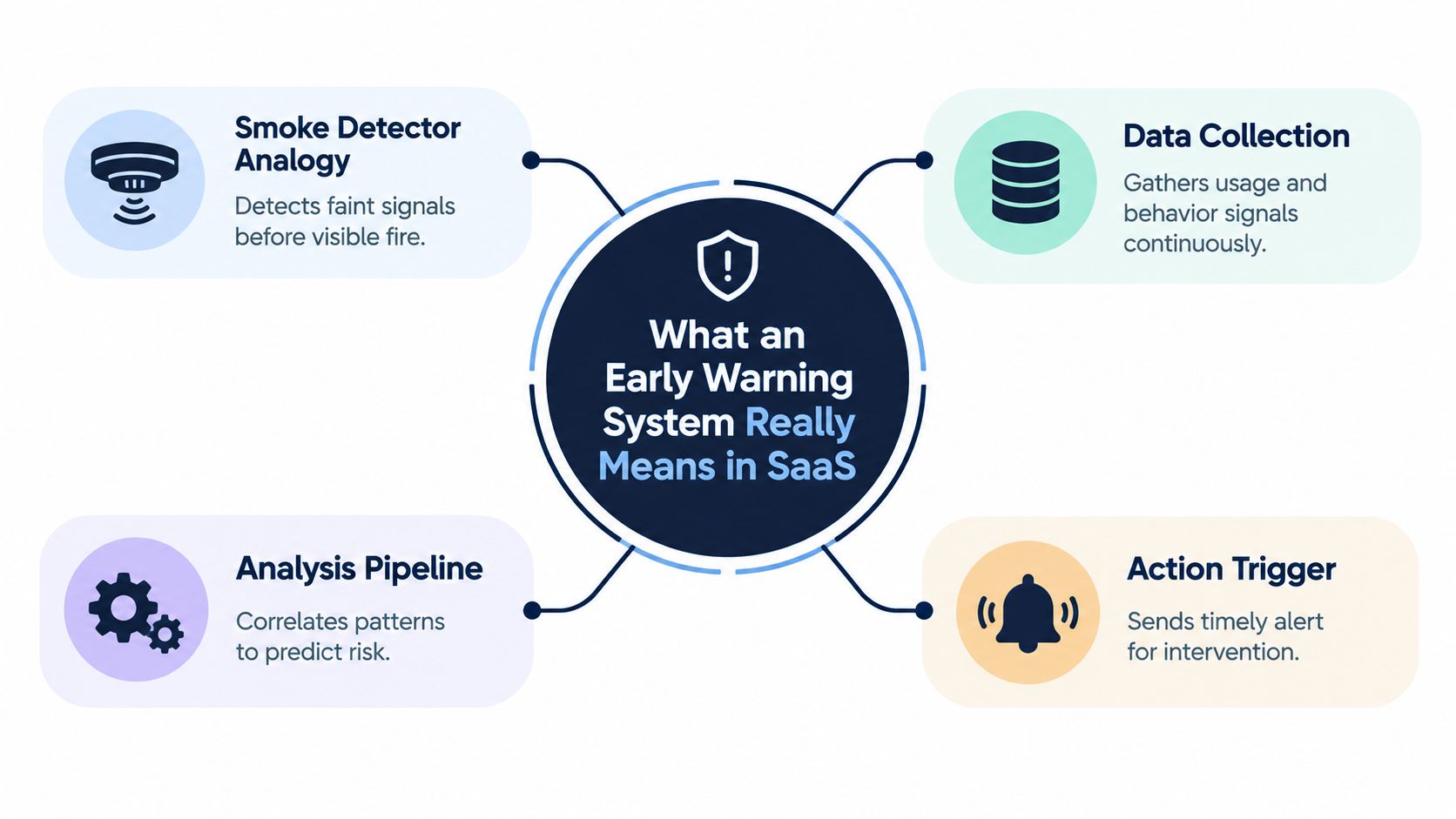
In SaaS, an early warning system is a complete pipeline for turning risk signals into timely action. It connects data collection, interpretation, risk assessment, communication, and preparation, so teams can respond while the outcome remains changeable.
The four parts of the chain
Data collection brings together the evidence behind account risk. A SaaS system may use product activity, support tickets, chat transcripts, sales-call notes, billing events, and customer feedback. Each source covers a different angle. Usage may show disengagement, while support language can explain the frustration behind it.
Analysis turns individual events into meaningful patterns. The system can compare current behavior with an account's normal use, detect repeated friction around a feature, or connect a product issue with a shift in stakeholder sentiment. This helps teams separate a meaningful change from ordinary variation.
Risk assessment gives that pattern operational meaning. A lower login count may be harmless for an occasional-use workflow. Reduced use of a core process may point to an adoption problem. The same event can carry different levels of risk depending on the customer's workflow, goals, and history.
Communication and preparedness turn an assessment into a possible intervention. An alert should name the account, explain what changed, show the supporting evidence, and suggest the next step. Product teams can use leading and lagging indicators to distinguish signals that leave time for intervention from metrics that confirm an outcome after it has already formed.
Why timing determines value
A warning that arrives after a customer has chosen a competitor may be accurate, yet it provides little room to change the decision. Early warning design therefore focuses on the delay between the first detectable signal and the action that addresses it. In technical systems, that chain depends on sensors, processing, communication, and distribution. In SaaS, the equivalent is an event pipeline connected to analytics, workflows, and a clearly assigned owner.
Latency is the point where information loses value. A usage decline detected before a renewal conversation can prompt investigation, product help, or an account review. The same decline found after a cancellation email mainly describes the past.
A useful warning should answer four questions:
- What changed?
- Why might it matter?
- Who should respond?
- What can that person do now?
Customer conversations can supply context that product analytics miss. Teams can follow product updates on SupportGPT to track developments in AI-assisted support operations and consider how conversation signals inform product and retention decisions.
The central definition is simple: a SaaS early warning system is a connected process that detects emerging customer risk early enough to change the outcome. It is a decision chain linking behavioral, technical, and financial evidence to human action, rather than a dashboard, health score, or automated email standing alone.
Three Types of Early Warning Signals Every Product Team Should Track
Churn risk rarely announces itself through one perfectly labeled event. It emerges from different signal families, each revealing a different part of the customer's experience.
Behavioral signals show what customers do. Technical signals show what the product or service is making difficult. Financial signals show whether risk has reached a commercial decision point. Strong coverage combines all three instead of asking one data source to explain everything.
| Signal Type | What It Monitors | Early Risk It Reveals | Example Metric |
|---|---|---|---|
| Behavioral | Product usage and stakeholder activity | Adoption decline or loss of habit | Change in use of a core workflow |
| Technical | Errors, incidents, and support friction | Product reliability or usability problems | Repeated error-related tickets |
| Financial | Billing and commercial activity | Budget pressure or renewal intent | Payment failure or downgrade request |
Behavioral signals reveal changing habits
A customer may still log in while abandoning the workflow that creates value. That's why raw activity can mislead. Track depth and continuity of use, feature adoption, invited-user participation, and engagement from the roles that originally defined success.
Behavioral data also needs a baseline. A seasonal customer and a daily operations team shouldn't receive the same interpretation for a quiet week. Behavioral pattern recognition provides useful context for thinking about repeated actions, deviations, and the difference between isolated events and meaningful change.
Technical signals expose friction before executives name it
Support tickets often contain the earliest explanation for a usage decline. Look for repeated error descriptions, unresolved workflows, rising escalation intensity, and customers asking for workarounds. A system outage is obvious, but smaller recurring failures can create the same retention risk gradually.
Technical signals also help product teams avoid blaming the customer for “low adoption.” If users repeatedly encounter confusing navigation or a blocked integration, their behavior may be a product-quality signal rather than a training problem.
Financial signals show that risk is becoming explicit
Payment failures, downgrade requests, procurement objections, contract questions, and reduced seat commitments carry commercial meaning. They often arrive later than behavioral or technical signals, but they can sharply increase urgency.
The best analysis connects these families. A payment issue alone may be administrative. A payment issue alongside declining usage and unresolved support friction deserves coordinated intervention. For better discovery conversations, teams can use structured feedback questions for product insights to uncover the customer's desired outcome, obstacles, and changing priorities.
How Early Warning Systems Detect Churn Before It Happens
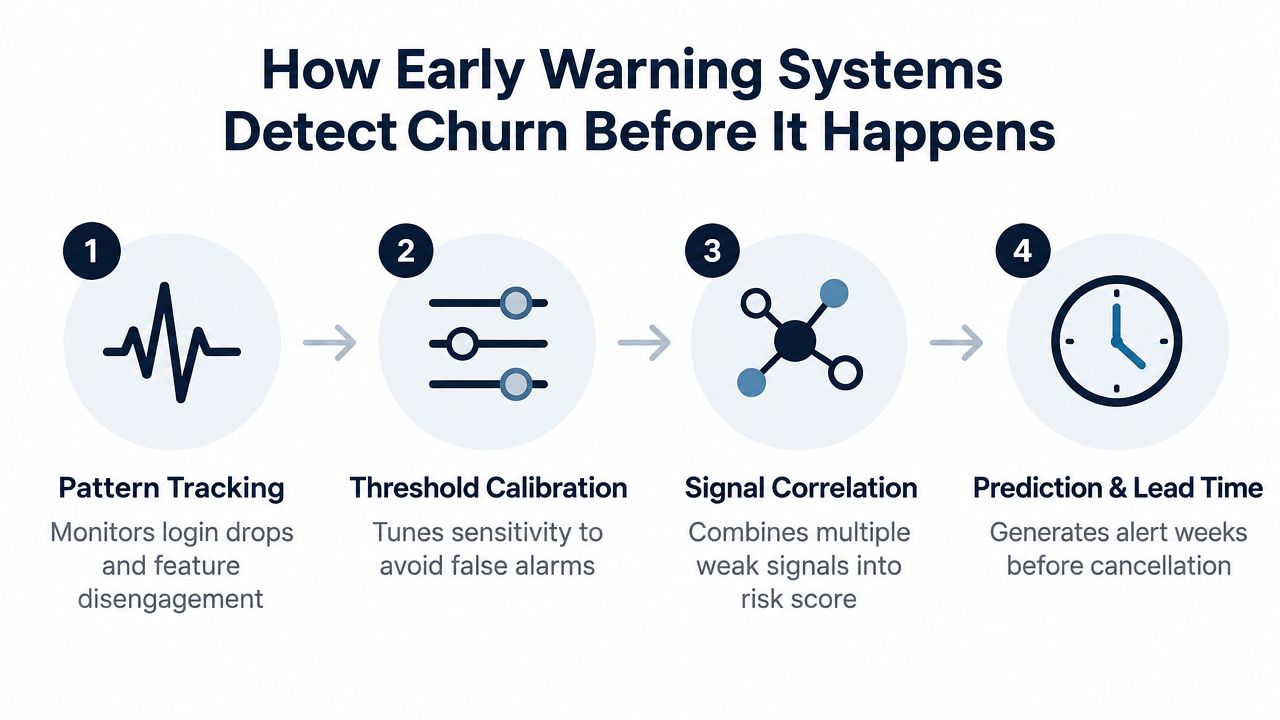
Detection starts with change, not cancellation. A system watches for deviations in customer behavior, product experience, and commercial activity, then tests whether those deviations form a coherent risk pattern.
Technical literature treats lead time as a measurable design constraint. Warning systems can operate from seconds to weeks depending on how clearly the precursor appears, and non-automated pipelines may require one to several days to remain operationally useful, as discussed in this technical review of early warning systems. In SaaS, the exact horizon depends on the renewal cycle, account complexity, and the speed of the intervention.
Thresholds need context
A threshold is a decision boundary, not a universal truth. A sharp usage drop may indicate risk for a daily-use product, while a monthly workflow can remain healthy with infrequent sessions. Teams should calibrate thresholds against account type, user role, product area, and normal operating rhythm.
Poor calibration creates two failure modes. If thresholds are too sensitive, alert fatigue teaches teams to ignore warnings. If they're too strict, the system reports risk only after the customer has already disengaged.
Correlation beats isolated alerts
A single weak signal usually needs interpretation. Several related signals can create a stronger case:
- Engagement change: A core workflow is used less often than the account's established pattern.
- Friction increase: Support conversations repeat the same unresolved obstacle.
- Stakeholder loss: The champion or operational owner stops participating.
- Commercial movement: The customer asks about reducing scope, cost, or commitment.
The system should explain the combination, not just output a score. An account owner can act on “core workflow usage declined, unresolved integration issue repeated, and champion disengaged” more effectively than on an unexplained red label.
A useful warning is specific enough to start a conversation, not so certain that it replaces judgment.
The following video offers a visual introduction to the mechanics of detecting emerging risk before an obvious business outcome:
Business Value of Acting Early Instead of Reacting Late
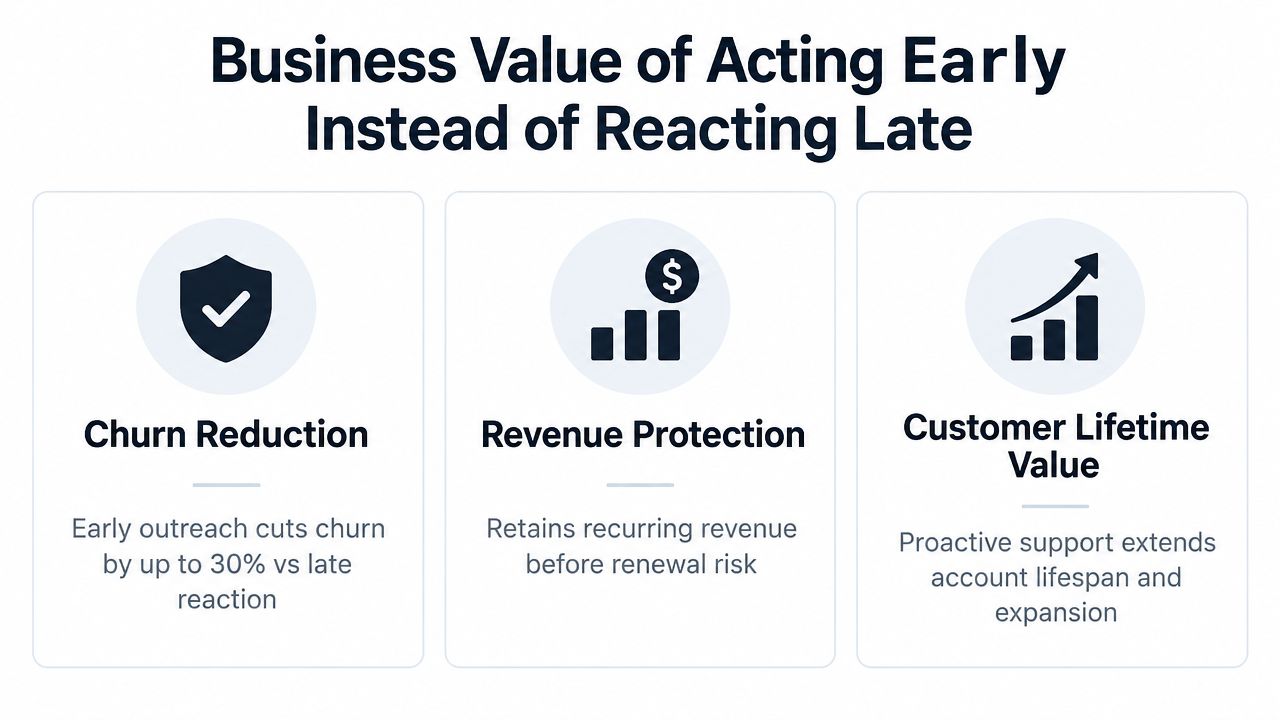
Early warning creates value by preserving choices. Before a renewal decision is final, a team can investigate a workflow, involve an executive sponsor, repair an integration, adjust onboarding, or align the roadmap with a validated customer need. After cancellation, those same actions may only explain the loss.
The global disaster-management record illustrates why actionability matters. By the end of March 2024, 108 countries, representing 55% of all countries worldwide, had reported multi-hazard early warning systems, more than double the number reporting them in 2015, according to the WMO global status update. A later UN and WMO update reported 119 countries, or 60% of all countries, with reported systems, alongside uneven coverage, including 43% of small island developing States and 44% of least developed countries.
Those figures show that system presence is measurable, but presence alone isn't protection. A warning must reach people and support a response. SaaS teams face the same distinction between having an alert and changing an account outcome.
Revenue teams need prioritization, not just detection
A product issue affecting one low-value workflow and the same issue blocking a strategic account shouldn't receive identical treatment. Early warning systems help teams prioritize by combining customer impact, account importance, urgency, and available intervention.
That creates a shared language across functions:
- Product teams see which problems are linked to retention risk.
- Customer success teams know which accounts need outreach and why.
- Support teams can escalate repeated friction before it becomes a renewal objection.
- Revenue teams can distinguish expansion opportunities from accounts approaching contraction.
The financial logic is straightforward. Protecting recurring revenue requires action before the customer makes a final decision. Early signals also help teams spend limited human attention where intervention has the greatest potential value.
The UNDRR global reporting record notes that 2.1 billion people were pre-emptively evacuated between 2015 and 2022, with 64% of those evacuations occurring in Asia-Pacific. The lesson for SaaS isn't that customer accounts resemble evacuation zones. It's that a warning becomes valuable when it changes behavior early enough to reduce harm.
Building an Early Warning System That Actually Gets Acted On
Start with ownership. Every alert needs a destination, and every destination needs a response path. A churn-risk signal that lands in an unmonitored dashboard has no more operational value than a weather warning that never reaches the exposed community.
Design the alert around a decision
Define the action before choosing the trigger. If the response is a customer conversation, include the account context and the evidence behind the warning. If the response is a product investigation, create an issue with affected workflows, related feedback, and commercial impact.
Threshold design should balance sensitivity and trust. Teams can begin with a small set of high-confidence conditions, review false positives with account owners, and refine the rules as they learn. Documentation matters because different teams may interpret the same signal differently.
A practical workflow might look like this:
- Collect context: Join usage events with support, billing, and account information.
- Assess the change: Compare current behavior with the account's own operating pattern.
- Assign urgency: Separate an emerging concern from an immediate intervention.
- Route the alert: Send it to the owner in the system where work already happens.
- Record the outcome: Capture whether the signal was valid and what response followed.
Close the last-mile gap
The 2026 synthesis of last-mile early warning research found that warnings often fail to produce timely protective action in geographically isolated, socially marginalized, or economically vulnerable communities. That finding applies beyond disaster response. A technically accurate SaaS warning can also fail if the recipient doesn't understand it, trust it, or know what to do next.
Use plain language, clear urgency, and a direct owner. Integrate with systems such as Zendesk, Intercom, Jira, or Linear so the alert becomes work rather than another notification. Teams can also use this guide to set up alerts with clearer triggers and response expectations.
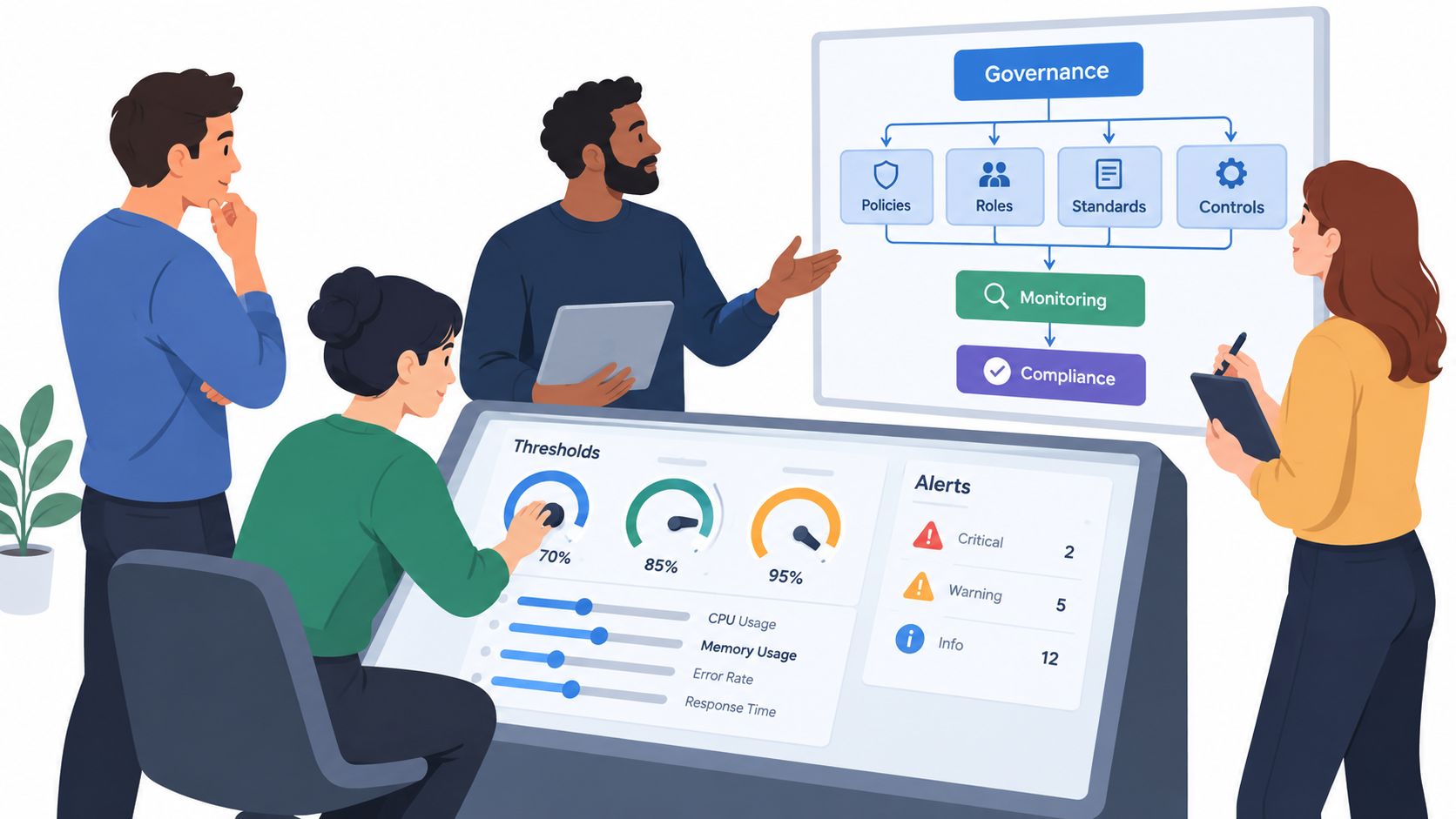
Governance completes the design. Product, success, support, finance, and revenue leaders should agree on definitions, escalation rules, data access, and review routines. Forecasting accuracy matters, but coordination determines whether the organization can act before the warning expires.
Real World Examples and Lessons for SaaS Teams
Global early warning systems show the difference between national coverage and practical protection. By the end of March 2024, reported multi-hazard systems had reached 108 countries, but later reporting identified 119 countries, or 60% of all countries, with reported systems. The WMO 2025 global status report also highlights persistent gaps in social components, coordination, vulnerability and exposure data, and whether people understand and act on warnings.
The scale of protective action can be substantial. UNDRR reporting records 2.1 billion pre-emptive evacuations between 2015 and 2022, while also noting that only 38% of countries had multi-hazard monitoring and forecasting systems in that reporting. The contrast is instructive: systems can support large-scale action, yet major parts of the warning chain can remain incomplete.
SaaS teams can apply the same lessons without copying disaster infrastructure directly:
- Signal Integration: Combine behavioral, technical, and financial signals instead of relying on one health score.
- Local context: Interpret changes against account type, workflow importance, and customer goals.
- Communication: Route warnings to the person who can intervene, using language they can act on.
- Governance: Agree on ownership, escalation, privacy, and feedback loops before alerts become business-critical.
- Continuous improvement: Review false positives, missed risks, and successful interventions to refine detection.
The strongest system doesn't predict every cancellation. It gives people enough context and lead time to make better decisions consistently. That's the core answer to what is early warning system in a SaaS environment: a revenue-risk pipeline that turns emerging evidence into coordinated action before churn becomes irreversible.
SigOS helps product and revenue teams connect support conversations, sales calls, customer feedback, and usage patterns to emerging churn or expansion signals. Visit SigOS to see how its product intelligence workflows can route revenue-critical alerts into the tools your teams already use.
Ready to find your hidden revenue leaks?
Start analyzing your customer feedback and discover insights that drive revenue.
Start Free Trial →