A Guide to Software for Feedback in 2026
Explore the best software for feedback. Our guide covers key features, different types, and how to choose the right tool to boost revenue and retention.

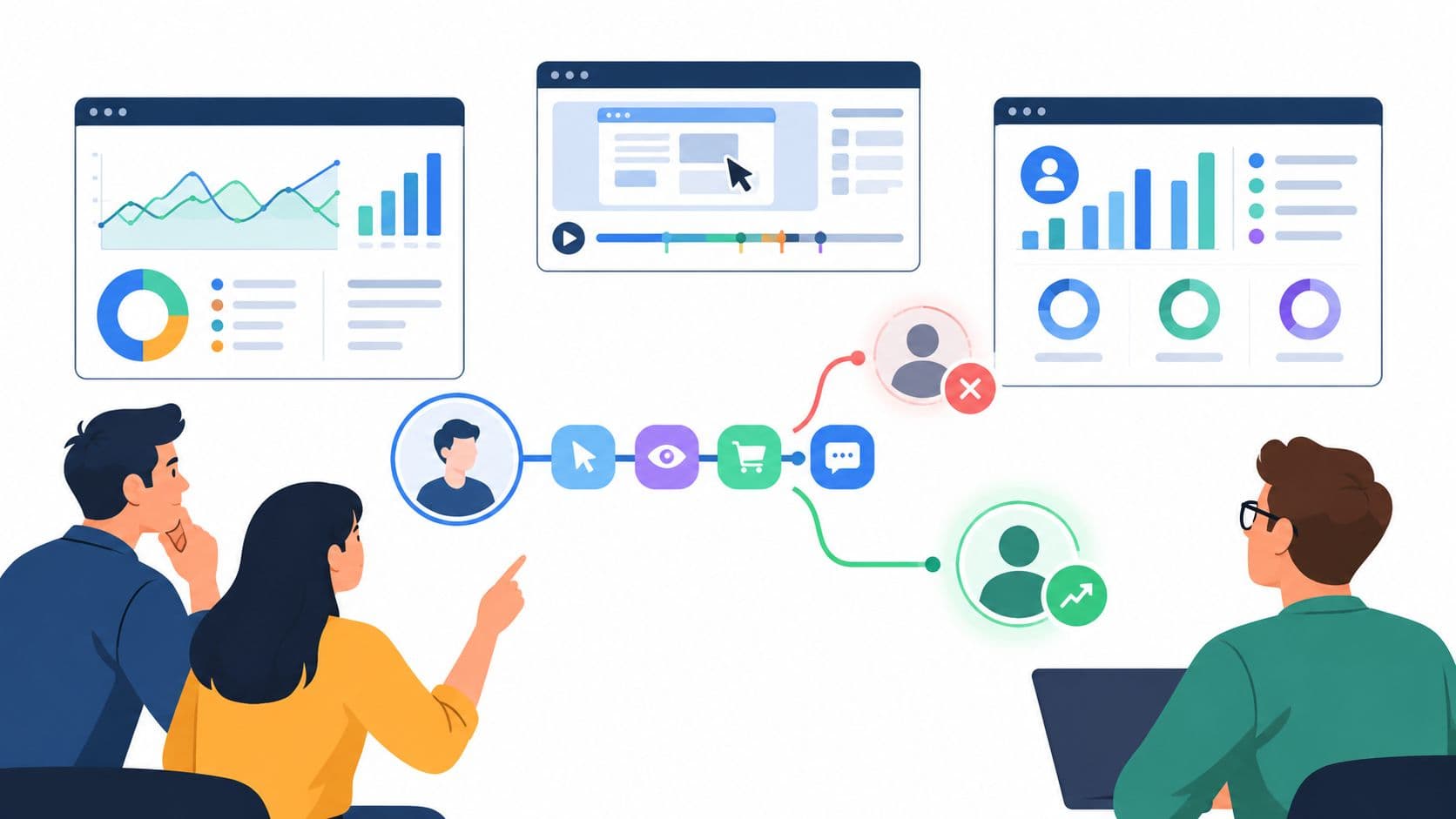
Think of all the places your customers talk to you. You've got support tickets, sales calls, survey responses, and even social media DMs. All of this feedback is like a constant stream of signals, but without a way to process it, it’s just noise.
Feedback software is what turns that noise into a clear signal. It acts as the central hub for all this customer communication, pulling everything together to show you what truly matters to your business, your product, and your bottom line.
What Is Software for Feedback and Why Does It Matter Now?
Let's be honest, collecting feedback isn't new. For years, we relied on digital suggestion boxes or the occasional survey. It was a well-intentioned but flawed approach. Trying to build a product strategy from that is like trying to understand a symphony by only hearing a few random, disconnected notes. You miss the context, the patterns, and the real story.
Today’s feedback software is a different beast entirely. It's less like a suggestion box and more like a translator. It takes all those scattered customer signals—from frustrated support tickets to glowing NPS comments—and translates them into a language the whole business can understand: actionable intelligence.
The Evolution from Listening to Understanding
The big shift is this: we've moved beyond simply listening to customers. The real goal now is to understand them by connecting their words to a tangible financial impact. It’s no longer enough to just collect feedback; we have to tie it directly to business outcomes.
This isn't just a nice-to-have; it's a competitive necessity. Product managers and growth leaders can't afford to make decisions based on guesswork. They need clear, data-driven answers to mission-critical questions, like:
- Which specific bugs are causing the most customer churn?
- What new feature is being requested most often by our highest-paying accounts?
- Is this spike in support tickets a minor hiccup or the first sign of a major problem?
The goal has shifted from simply ‘listening’ to customers to truly ‘understanding’ their financial impact and predicting their next move. This is where dedicated software for feedback becomes indispensable.
The Market Reflects a New Priority
This intense focus on customer experience is driving explosive growth. The global customer feedback software market was valued at a massive USD 1,828.4 million in 2023 and is on track to hit over USD 4.2 billion by 2033.
Why the surge? Because businesses that get this right see real results, including up to 20-30% better retention rates. You can dive deeper into the full market analysis to see these trends for yourself.
By turning qualitative comments into hard, quantitative metrics, these tools empower your teams to build products customers don’t just love, but are happy to pay—and keep paying—for.
Finding the Right Tool for Your Business Needs
Choosing the right feedback software can feel overwhelming. The market is packed with options, all promising to unlock crucial customer insights, and it’s easy to get lost in the feature lists and marketing jargon.
The secret is to stop looking for a single "best" tool and instead find the right tool for the job at hand. Think of it like a mechanic's toolbox. You wouldn't use a sledgehammer to tighten a tiny bolt, and you wouldn't use a precision screwdriver to break rusted lug nuts. The software you need depends entirely on what you’re trying to achieve.
To make sense of the options, it helps to start by understanding your current process. This simple decision tree shows when it’s time to graduate from manual methods to a dedicated tool.
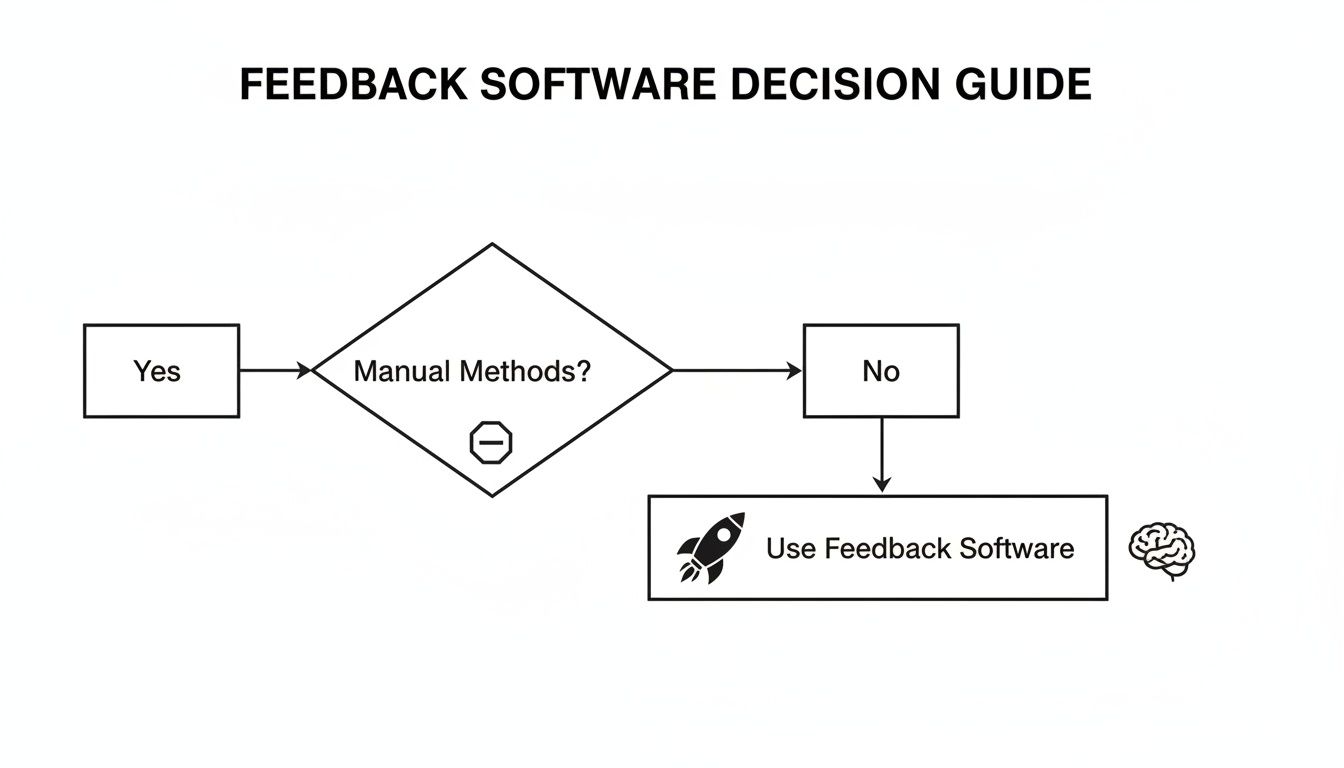
As you can see, the moment spreadsheets and manual tracking start to break is the perfect time to bring in software to scale your efforts and get much deeper insights. Most feedback tools fall into one of four main categories.
To help you quickly grasp the landscape, this table breaks down the four main types of feedback software, what they do best, and where you're likely to see them in action.
Comparison of Feedback Software Categories
| Category | Primary Goal | Common Use Case | Example Tools |
|---|---|---|---|
| Surveys & NPS | Directly ask for and quantify customer sentiment. | Sending a post-purchase survey or a quarterly NPS poll. | SurveyMonkey, Typeform |
| Support & Analytics | Capture unstructured feedback during support interactions. | Analyzing helpdesk tickets to find recurring complaints. | Zendesk, Intercom |
| In-App Feedback | Collect contextual feedback from within a product. | Reporting a bug directly from the screen where it occurred. | Hotjar, Pendo |
| Voice of Customer (VoC) | Aggregate and analyze feedback from all sources. | Tying feedback trends from all channels to churn rate. | Sigos, Medallia |
Each category serves a unique purpose. A well-rounded feedback strategy often involves using more than one type of tool to cover all your bases—from actively soliciting opinions to passively mining insights from daily operations.
Surveys and NPS Platforms
These are the tools you use to actively ask customers for their opinions. Think classic surveys, short polls, and of course, the Net Promoter Score (NPS) questionnaire. They are fantastic for gathering structured, quantitative data at key moments in the customer journey, like right after a purchase or following a support call.
The catch? They only capture what customers are willing to tell you when prompted. While that information is incredibly valuable, it’s just one piece of the puzzle. To pick the right one, an in-depth survey software comparison is a great place to start your research.
Support and Analytics Systems
This category covers your helpdesk, ticketing systems, and live chat platforms. While their day job is customer support, they are absolute goldmines of "passive" and unfiltered feedback. Every single support ticket and chat log is a raw, honest account of customer pain points, feature ideas, and real-world usability problems.
While many modern support systems have some built-in analytics, their primary focus is on operational efficiency—resolving tickets fast. Their real power for feedback is capturing that immediate, unvarnished voice of the customer right when something goes wrong.
In-App Feedback Tools
These tools let users give you feedback without ever leaving your app or website. You’ve definitely seen them—they're the little "Feedback" widgets in the corner, the pop-up asking you to rate a new feature, or the form that lets you highlight a bug on the screen.
Their superpower is context.
By capturing feedback at the moment of friction or delight, in-app tools provide a direct line to the user experience, eliminating the guesswork often associated with generalized survey responses.
When a user reports a bug from the exact screen where it happened, the feedback is instantly more specific and actionable.
Voice of Customer Platforms
This is the most comprehensive category. A Voice of Customer (VoC) platform is like a central intelligence hub for all your customer feedback. It pulls in data from all the other sources—surveys, support tickets, in-app comments, social media, and even sales call transcripts.
These platforms use AI to connect the dots, spot emerging trends across different channels, and—most importantly—tie that feedback to hard business metrics like revenue and churn. You can see how this works by exploring a dedicated customer feedback analysis tool to centralize all that data.
This holistic approach is why the feedback and reviews software market is projected to grow from **16.73 billion in 2025 to **19.56 billion in 2026. With over 90% of consumers reading reviews before making a purchase, businesses can no longer afford to have a fragmented view of what their customers are saying.
What to Look For: The Core Features of a Great Feedback Platform
When you start shopping for feedback software, it's easy to get distracted by sleek dashboards and promises of instant insight. But a pretty interface is just window dressing. The real value comes from a platform's ability to dig through mountains of customer comments and surface clear, actionable priorities for your team.
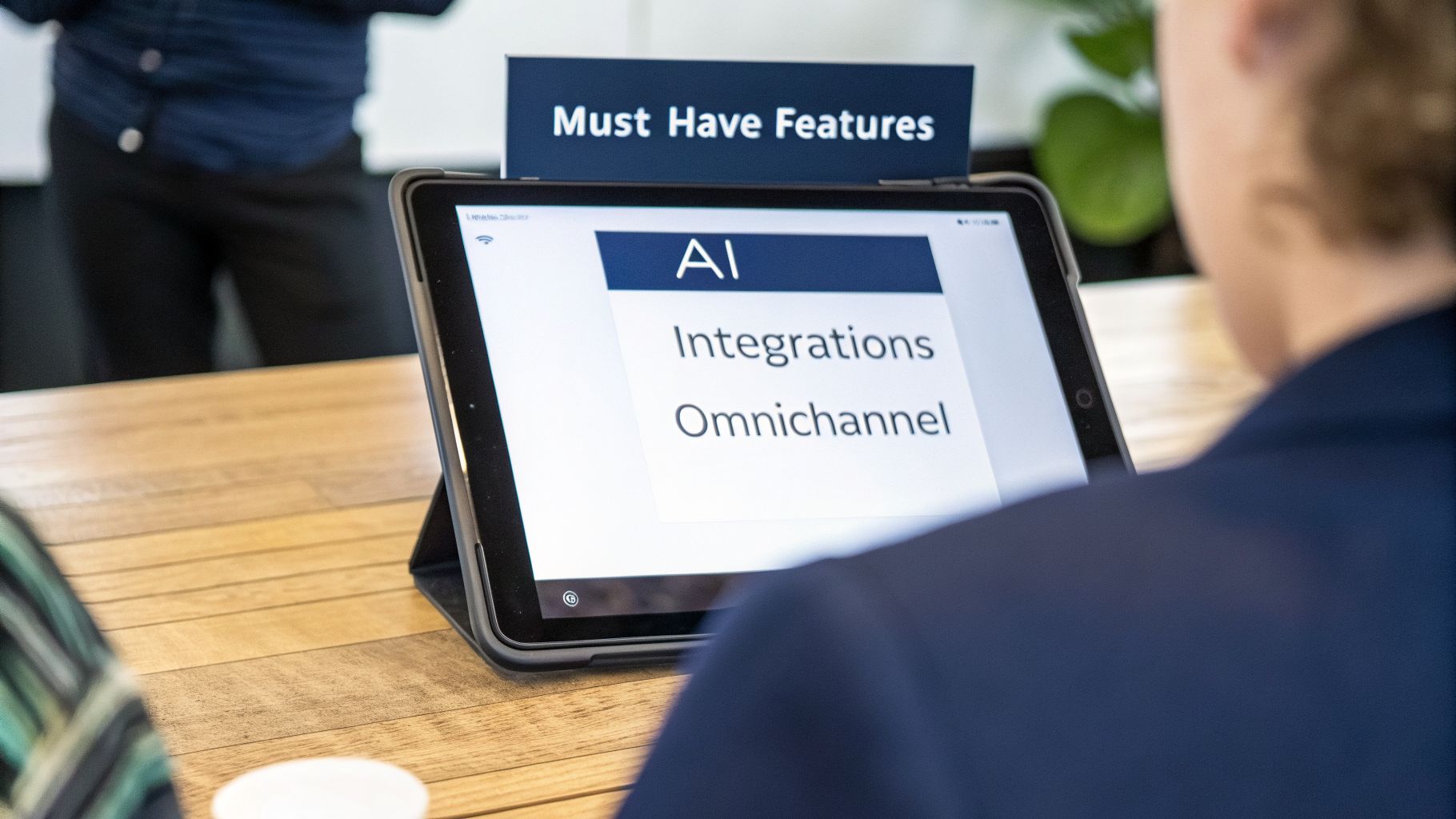
Instead of just ticking off a checklist, think of these features as essential capabilities that answer the most pressing questions your business has. Let's cut through the marketing fluff and focus on the features you genuinely can't do without.
AI-Powered Sentiment and Trend Analysis
This is the engine of any modern feedback tool. Simply searching for keywords just doesn't cut it anymore. You need AI-powered sentiment analysis that grasps the nuance and emotion behind what a customer is saying. It’s the difference between knowing a customer is "confused" versus "frustrated"—a distinction that completely changes how you respond.
Beyond sentiment, a great system has to automatically group related feedback into trends. One support ticket about a login error might be a fluke. But when the AI flags 50 similar tickets from different channels in a single week, you’re not looking at a one-off problem; you're looking at an emerging fire that needs immediate attention.
Omnichannel Data Collection
Your customers are talking about you everywhere. They're in support tickets, live chats, sales call transcripts, surveys, and app store reviews. A truly effective feedback platform has to plug into all of these sources. If you're only looking at survey responses, you're getting a skewed, incomplete picture of reality.
The real magic happens when you bring together both solicited feedback (like surveys) and unsolicited feedback (like support tickets). This unified view means you're not just hearing from the most vocal customers, but getting the full story from everyone.
By pulling data from every touchpoint, the software can spot patterns you would have otherwise missed, creating a single source of truth for your entire customer experience.
Revenue Impact Scoring
This is the feature that elevates feedback software from a simple listening post to a powerful strategic tool. The best platforms don't just show you what your customers are saying; they show you how much it's costing you. Revenue impact scoring is all about tying customer feedback directly to financial outcomes.
This capability works by linking specific issues or feature requests back to the customer accounts that reported them. It finally gives you concrete answers to critical business questions:
- Which bug is causing the most pain for our highest-value enterprise clients?
- How much monthly recurring revenue (MRR) is at risk because of this broken integration?
- Which new feature could unlock the most deals currently sitting in our sales pipeline?
This is the driving force behind the growth of the real-time feedback software market, which is on track to expand from **2.09 billion in 2025 to **4.14 billion by 2030. Platforms that can quantify the revenue impact of feedback are providing companies with a clear roadmap for prioritizing work that directly protects and grows revenue. You can dig deeper into how this technology is shaping the future of customer engagement.
When you can prioritize fixes and features based on their dollar value, you can be confident that your engineering team is always working on what truly matters most.
Creating a Seamless Feedback and Development Workflow
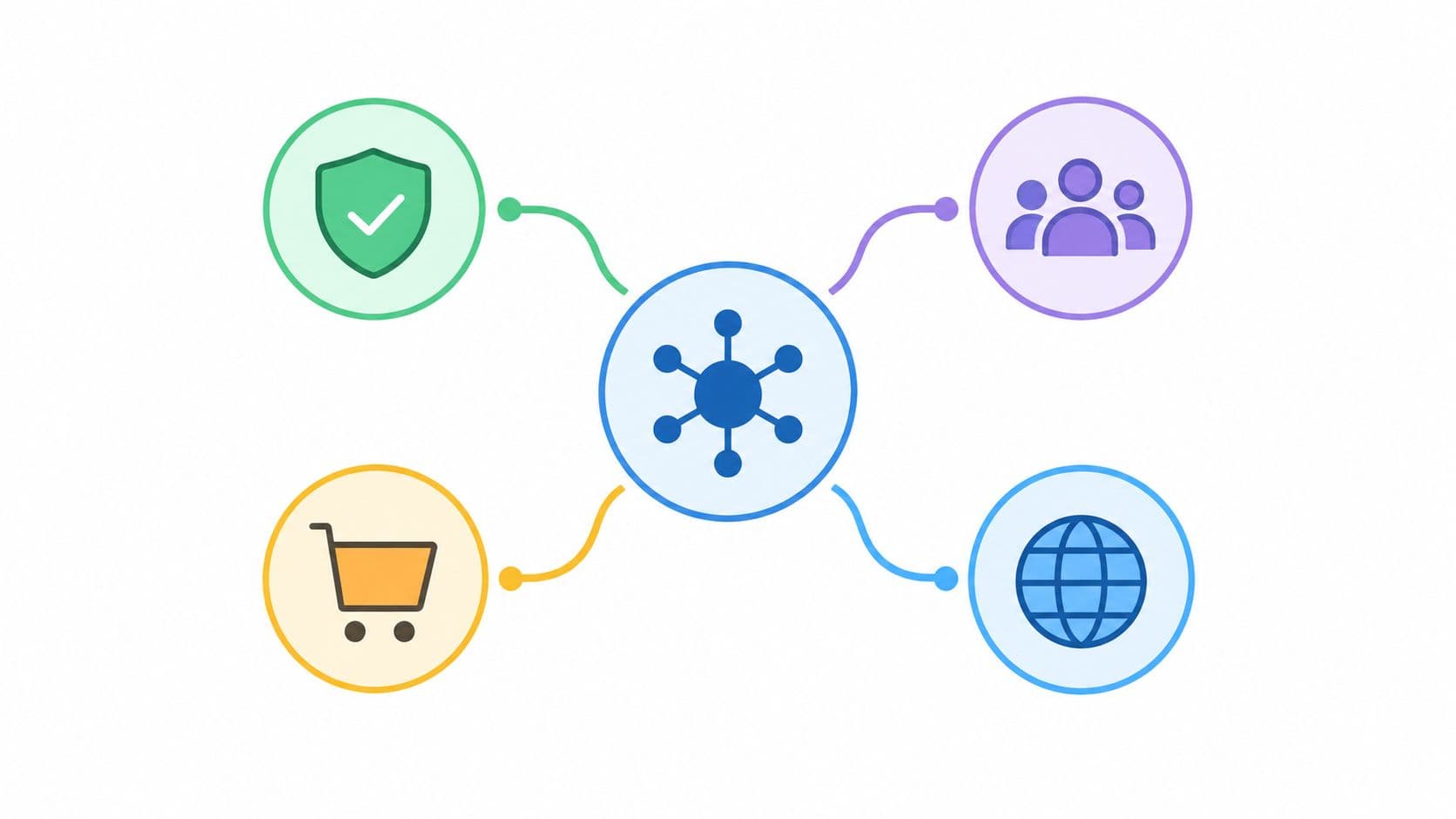
The best feedback software is more than just a collection box for customer comments. Its real value comes to life when it acts as the central hub connecting all your tools, automatically moving insights from customer conversations straight into your development cycle.
Without that connective tissue, your most valuable feedback gets stranded. It ends up in forgotten spreadsheets or gets buried in a noisy Slack channel, never actually making it to the product team that can act on it.
Think of it as the nervous system for your product. A customer mentions a bug in a Zendesk ticket. Your feedback platform instantly recognizes it as a critical issue popping up for several high-value accounts. Before anyone has to lift a finger, a detailed ticket appears in Jira, complete with all the context your engineers need. No more copying and pasting.
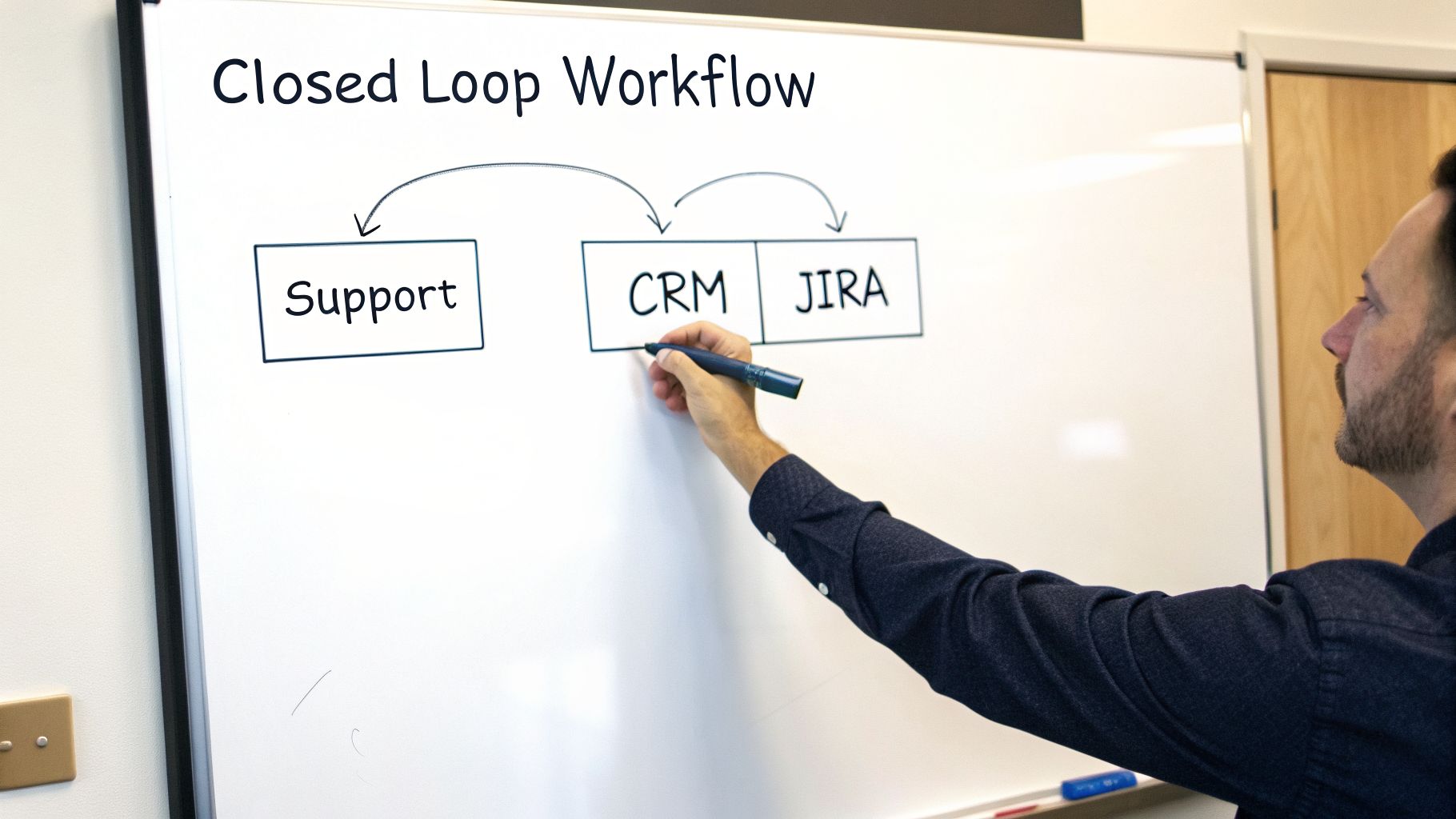
This kind of closed-loop system makes sure nothing important ever falls through the cracks. It builds a permanent bridge between your customer-facing teams and the people building your product.
From Conversation to Code
This is where you turn stray comments into actual code. When a customer success manager flags a conversation in Intercom, that data doesn't just sit there. The feedback tool automatically pulls in more context—like the customer’s MRR from your CRM or their recent activity—before sending it to the right team.
This process gives you a single source of truth for every piece of feedback. A bug report is no longer just a bug report. It’s now a bug report from a $50,000/year customer at risk of churn, with direct links to five other accounts experiencing the exact same problem.
Suddenly, arguments over what to build next disappear. Instead of relying on gut feelings or who shouts the loudest, your product managers can make prioritization calls based on clear, revenue-driven data. A great first step is understanding how to collect feedback from customers in a way that fuels this integrated workflow.
The Practical Outcomes of Integration
Connecting your systems isn't just about convenience; it's about building a smarter, more responsive product organization. The results are tangible and almost immediate.
- Improved Efficiency: You eliminate hours of manual work spent copying, pasting, and triaging feedback. Your product team gets to focus on high-level strategy, not administrative busywork.
- Faster Response Times: Critical issues are automatically flagged and routed to engineering. This drastically cuts down the time it takes to acknowledge a problem and start working on a solution.
- Data-Driven Prioritization: You can be confident your engineering team is always working on the bugs and features that matter most to customer retention and your bottom line.
- Enhanced CRM Data: Your customer profiles in tools like Salesforce get richer. Sales and success teams gain a much deeper, qualitative understanding of account health and customer needs.
Vetting Your Vendor on Security and Data Privacy
When you bring in a feedback tool, you're handing over the keys to your most precious asset: your customer data. In a world of tight regulations like GDPR and CCPA, security and data privacy aren't just nice-to-haves; they're the bedrock of customer trust.
Think of it this way: you're not just buying software, you're entering into a partnership. You need absolute confidence that your vendor will treat your customers' sensitive information with the same rigor and care that you do. This means you have to dig deeper than their marketing slicks and really grill them on their security posture and data governance.
Security isn't just about ticking a box to prevent a data breach. It’s about a deep, verifiable commitment to protecting customer data at every single touchpoint—from how it's encrypted to who on their team can even access it.
Key Security Questions to Ask
Before you sign on the dotted line, your security audit should be just as thorough as your feature comparison. As you look at potential vendors, you'll need to size up their security and compliance credentials. While there are dedicated SOC 2 software solutions that can help streamline this, you still need to ask the tough questions directly.
Here are the non-negotiable questions you need clear answers to:
- Data Encryption: Is customer data encrypted both while it's moving across the internet (in transit) and when it's sitting on their servers (at rest)? Ask them to specify the encryption standards they use.
- Compliance Certifications: Can they show you proof of compliance with key standards like SOC 2 Type II, ISO 27001, GDPR, and CCPA? These aren't just acronyms—they're third-party validation that a vendor's security controls are up to snuff.
- Data Anonymization: Does the platform have solid tools for anonymizing data or automatically stripping out personally identifiable information (PII) from feedback?
- AI Model Training: This one is critical for any AI-powered platform. Do they use your customer data to train their global AI models? A vendor you can trust will be crystal clear that your data is never used to train models for their other customers.
If a vendor gets cagey or can’t give you straight, confident answers to these questions, consider it a major red flag. Putting security first from day one is how you protect your customers, your reputation, and your business.
Building the Business Case for Feedback Software
Let's be honest: when you're asking for budget, leadership wants to see the numbers. They need to understand how a new piece of software isn't just another cost center but a direct contributor to the bottom line. It's not enough to say it will help you "listen to customers." You have to prove it will protect and grow revenue.
Think of it this way. Without a proper system, your product roadmap is often a collection of educated guesses and reactions to the loudest voice in the room. But when you plug feedback directly into your financial data, that roadmap transforms into a clear investment strategy. You stop guessing and start making calculated bets on the work that will actually keep customers from leaving and attract new ones.
Your job is to connect the dots between customer pain points and their financial impact. This is how you show that the software will pay for itself, often many times over.
Quantifying the Business Impact
To get that "yes" from the finance team, you need to speak their language. That means framing the investment around tangible business outcomes like reducing churn, boosting expansion revenue, and making your engineering team more efficient.
A business case isn't a feature list. It's a simple P&L for the software itself. You're showing how measurable gains in retention and efficiency will dwarf the subscription cost.
Start with customer churn. It's a metric every executive understands. Given that a 5% reduction in churn can increase profits by 25-95%, quantifying the revenue at risk from your top customer-reported issues becomes an incredibly powerful argument.
You can build your case with simple, compelling math:
- Churn Reduction Value: Imagine the software helps you spot a single bug that's frustrating accounts worth $25,000 in MRR. Fixing that bug is no longer just a task—it's a high-return investment to save that revenue.
- Expansion Revenue Opportunity: What if the platform shows that a specific feature is a deal-breaker for prospects in your pipeline, representing $500,000 in potential new business? Suddenly, building that feature becomes a clear-cut strategic decision.
- Developer Productivity Gains: How many hours do your product and engineering teams waste every week manually sifting through feedback spreadsheets and support tickets? Automating that triage can free up hundreds of hours a year, which translates directly into faster development and salary savings.
When you present a financial model like this, you shift the conversation entirely. The question is no longer, "Can we afford this?" It becomes, "Can we afford not to do this?" To help you get started, we've put together a practical return on investment template you can use to build your own business case.
Frequently Asked Questions
Even after you've done the research, a few practical questions always seem to pop up when considering a new piece of software. It's completely normal. Let's walk through some of the most common questions we hear to help you make a confident decision.
How Do I Convince My Leadership to Invest in Feedback Software?
When you’re trying to get your leadership team on board, you have to speak their language: money. Forget talking about fancy features and focus squarely on the financial impact.
A great place to start is with churn reduction. Build a business case using industry benchmarks—for example, it's widely cited that a 5% reduction in customer churn can boost profits by anywhere from 25-95%. Frame the software not as a cost, but as a direct investment in revenue protection.
You can also point out the efficiency gains. Show them how much time your product and support teams are currently wasting manually sifting through tickets and survey responses. By automating that analysis, you're freeing them up to focus on work that actually drives the business forward.
What Is the Difference Between a Survey Tool and a Full Feedback Platform?
This is a crucial distinction. A simple survey tool is designed for active data collection. Think of it as deliberately asking a question at a specific time, like sending an NPS survey right after a customer makes a purchase. It’s great for getting structured answers to direct questions you already know to ask.
A full feedback platform, however, is built for continuous, passive analysis. It works in the background, constantly pulling in unstructured feedback from all the places your customers are already talking—support tickets, sales calls, app store reviews, and live chats. It’s smart enough to find the patterns for you.
Instead of just collecting answers, a true platform identifies emerging trends, calculates their business impact, and plugs those insights directly into your workflow. You get the full picture without ever having to send another survey.
How Long Does It Take to See Value From Feedback Software?
The time-to-value really depends on the type of tool you choose. Basic survey tools can be set up and running in a matter of hours. You build a survey, send it out, and you have data.
More sophisticated platforms that need to connect with multiple data streams might take a few days to a week to get fully configured. The good news is that modern, AI-powered platforms can start delivering value almost instantly. Once you connect your data sources, like Zendesk or Intercom, they can begin surfacing major trends right away.
It's not uncommon to see your first high-impact, revenue-linked priorities bubble to the top within the first week, giving you a quick win and immediate direction.
Ready to transform your customer feedback from noise into revenue-driving signals? SigOS uses AI to connect feedback to financial impact, helping you build a product your customers love and are happy to pay for. Explore the platform today.
Keep Reading
More insights from our blog
Ready to find your hidden revenue leaks?
Start analyzing your customer feedback and discover insights that drive revenue.
Start Free Trial →